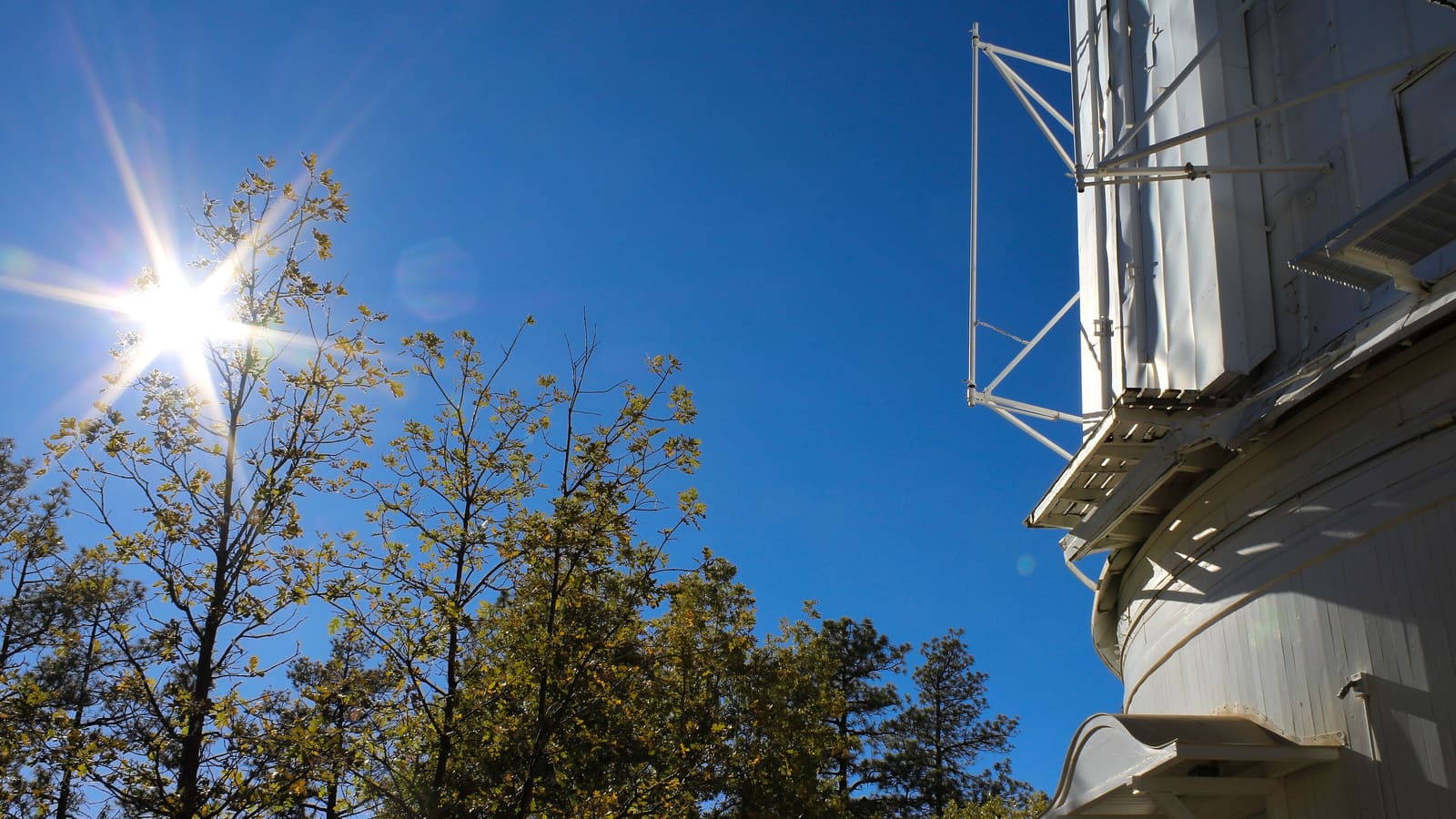
Lowell Observatory is the reason Pluto was discovered. In February 1930, astronomer Clyde Tombaugh sat at a telescope on this hill and found a faint dot moving against the star field — a planet-sized object 3.67 billion miles from the Sun. Seventy-five years later, astronomers would argue about whether it counted as a planet. The original photographic plates that started that debate are still here, and you can see them.
That's the short version of why Lowell Observatory is worth visiting. The longer version includes a new 40,000-square-foot facility, one of the best observatory experiences for families anywhere in the country, and the legitimately exceptional view through a century-old telescope on a clear night at 7,000 feet in the world's first International Dark Sky City.
I visited during both daytime and an evening program. Here's what you actually need to know.
What Makes Lowell Different from Other Observatories
Most observatories you can visit are either purely historical (you look at old equipment) or purely educational (you look at static displays). Lowell manages to be both a working research institution and a compelling visitor experience simultaneously.
The Pluto Discovery Telescope still sits in its original dome. You can walk up to it. The staff who give tours are astronomers and educators who can explain what's happening scientifically without dumbing it down. And the evening telescope viewing program uses real research-grade instruments to show you actual galaxies, nebulae, and star clusters — not simulated images.
The Marley Foundation Astronomy Discovery Center, which opened in late 2024, added a dimension the original campus couldn't offer: immersive, interactive exhibits that make the science accessible to visitors who don't already have a background in astronomy. The combination now covers the full spectrum from curious kid to serious enthusiast.
The New Marley Foundation Astronomy Discovery Center
If you've visited Lowell before the Discovery Center opened, it's worth returning. This 40,000-square-foot facility changed the scope of what a day visit here can be.
The Rooftop Dark Sky Planetarium
The rooftop planetarium is the most unexpected element. Unlike a traditional domed planetarium show, this one uses the actual Flagstaff night sky as its backdrop — the facility is designed to function as both an indoor experience and an open-air dark sky platform. The dark sky shows run in the evening and are distinct from the telescope viewing program.
The 180-Seat LED Theater
A curved LED screen approximately 160 degrees wide and a ceiling screen combine to create something that's genuinely hard to describe without sounding like marketing. The astronomy presentations here are visceral in a way static exhibits aren't — the scale of what they're showing registers physically. The theater runs multiple shows per day including evening-specific programming.
Practical note: The theater shows are included with general admission. You don't need a separate ticket unless you're attending a ticketed special event.The Interactive Exhibit Hall
Two stories of exhibits designed to be touchable and exploratory, with a specific emphasis on making astronomy accessible to children ages 6–14. The exhibit designers clearly thought about what engages a kid who's been told astronomy is "cool" but doesn't yet have a framework for why. The solar system scale models, spectrometer stations, and the timeline of the universe installation are the standouts.
This is also where the Pluto debate gets a fair treatment — both sides of the "is it a planet?" argument presented without condescension. The historical context (Flagstaff-born discovery, the role of Arizona in planetary astronomy) is genuinely interesting for adults too.
Planning Your Visit: The Practical Details
Ticket Prices (2026)
Ticket pricing tiers at Lowell can shift seasonally and for special events. Always verify current prices at lowell.edu before booking — do not rely on any hardcoded figure you find online, including in this guide, which may be outdated.
As of this writing, general admission covers all daytime programs: campus tours, exhibit halls, daily science talks, constellation tours, and the Discovery Center. Evening telescope viewing programs are typically available as an add-on or included in evening admission. Book in advance for evening programs — summer nights sell out weeks ahead.
Hours
Daytime hours run year-round. Evening programs run seasonally and are weather-dependent (the telescopes require clear skies). Check the current schedule at lowell.edu/visit before planning your evening — monsoon season (July–August) can cause program cancellations on short notice.
Where to Buy Tickets
Buy online at lowell.edu/tickets, or check availability via Viator for free cancellation flexibility up to 24 hours before. Walk-up tickets are available but evening programs frequently sell out, particularly in June and July.
Advance booking is strongly recommended for:- Any evening telescope viewing program
- Summer weekends (school groups and Phoenix day-trippers fill capacity fast)
- The Astrophotography Course (limited seats, popular)
Getting There
Lowell Observatory is at 1400 W Mars Hill Road, about a 10-minute walk from downtown Flagstaff (or a 3-minute drive). From Heritage Square, head west on Route 66 and turn right onto Mars Hill Road — the dome is visible from the road.
Parking: Free parking lot on campus. Fills quickly in summer on weekends. Arriving before 10 AM or after 4 PM gives you better odds of a spot. Walking from downtown: The hill is steep — about 300 feet of vertical over the walk. Most visitors drive, but if you're staying downtown and feel like the walk, it's a legitimate option and the view from Mars Hill Road looking back over Flagstaff is good.How Long Should You Plan to Spend?
- Daytime visit only: 2–3 hours covers the exhibits, a campus tour, and one science talk
- Full day visit + evening program: 5–6 hours total (come for afternoon, stay through telescope viewing at dusk)
- With young kids: Budget extra time for the interactive hall — kids don't move quickly through it
Top-Rated Tours & Activities
Book guided hikes, stargazing tours, Grand Canyon day trips, and more.
Browse ToursWe earn a small commission if you book — at no extra cost to you.
The Evening Telescope Viewing Program
This is the reason most people visit, and it delivers. The Clark Refractor Telescope — the same instrument used at Lowell for over a century — shows you real objects in the night sky, not a projected image. On a clear night, the rings of Saturn, Jupiter's cloud bands, and distant galaxies are visible with a detail that's difficult to communicate in words.
The viewing experience is sequential: observatory staff rotate visitors through the main telescopes while explaining what you're seeing. Lines form, but they move. The staff are excellent at calibrating their explanation to whoever's looking through the eyepiece.
What you might see (weather and season-dependent):- Planets (Saturn, Jupiter, Mars — when in favorable position)
- Star clusters (Pleiades, M13 in summer)
- Nebulae (Orion Nebula in winter, Ring Nebula in summer)
- Galaxies (Andromeda is naked-eye visible from here on clear nights)
Astrophotography Course
A small-group evening course (recently offered on Tuesday nights) that teaches you to photograph deep sky objects using Lowell's telescopes. Check lowell.edu for the current schedule and price. This is genuinely niche, genuinely excellent, and not something you can replicate at a standard tourist attraction. If you have any interest in astrophotography, it's worth the planning.
Daytime Programming
Even if you're not staying for an evening telescope session, a daytime visit has more to offer than most people expect:
- Campus tours: 45-minute guided tour of the historic campus including the original domes
- The Pluto Discovery Telescope: The actual instrument Tombaugh used in 1930. You can walk up to it and look through it during daytime tours
- Science talks: Short daily talks on astronomy topics, calibrated for general audiences
- Constellation tours: Walking tours of the campus grounds oriented around the night sky, held in late afternoon
Lowell Observatory with Kids
The Discovery Center is explicitly designed for children and it shows. The interactive hall is the right length of time for a family with kids — not so long they lose interest, not so rushed it feels like a checkbox. The 180-seat theater presentations are the highlight for younger kids; the scale and visual impact register even for children who don't understand the science yet.
Evening telescope viewing is great for kids 8 and up. Younger children may lose patience in the line, and the telescopes require them to stand still and look through a small eyepiece — manageable for most kids over 7 or 8. The Discovery Center's rooftop platform is more accessible for younger children's evening attention spans.
Age note: Dogs are not permitted inside any Lowell Observatory facilities. The Mars Hill hiking trail from the parking lot is dog-accessible, but plan accordingly if you're traveling with pets.Combining Lowell Observatory with the Rest of Your Flagstaff Day
Best daytime combination:- Morning: Buffalo Park hike or Heritage Square walk
- Afternoon: Lowell Observatory daytime visit (arrive 2–3 PM)
- Evening: Stay for telescope viewing, then walk down the hill to downtown for dinner
Find the Best Hotel Deals in Flagstaff
Compare prices across 100+ hotels. Free cancellation on most bookings.
Check Hotel PricesWe earn a small commission if you book — at no extra cost to you.
Frequently Asked Questions
How much are Lowell Observatory tickets?
Ticket prices change seasonally and by program type. General daytime admission, evening programs, and special events are priced differently. Check current prices at lowell.edu/visit — do not rely on figures from third-party guides that may be outdated.
Is Lowell Observatory worth visiting?
For most visitors, yes — particularly if you stay for an evening telescope program. The daytime visit alone is a solid 2–3 hours on a well-designed campus. The evening program, on a clear night, is one of the best observatory experiences available to the public anywhere in the Southwest.
Can you see planets at Lowell Observatory?
Yes, during evening telescope viewing sessions when planets are favorably positioned. Saturn's rings and Jupiter's cloud bands and moons are the most reliably visible and impactful for first-time telescope viewers. Ask the staff what's up on your specific visit night.
Is Lowell Observatory good for kids?
The Marley Foundation Astronomy Discovery Center (opened 2024) is explicitly designed for families. The interactive exhibit hall is best for ages 6–14; younger children enjoy the visual spectacle of the theater presentations. Evening telescope viewing works well for kids 8 and up.
What is the Lowell Observatory Discovery Center?
The Marley Foundation Astronomy Discovery Center is a 40,000-square-foot facility that opened at Lowell in late 2024. It includes a rooftop dark sky planetarium, a 180-seat LED theater with a 160-degree curved screen, and a two-story interactive exhibit hall. It significantly expanded Lowell's capacity for both daytime and evening programming.
Can you walk to Lowell Observatory from downtown Flagstaff?
Yes — it's about a 10-minute walk up Mars Hill Road from Heritage Square. The hill is steep (approximately 300 feet of vertical gain), but the walk is pleasant and the view back over Flagstaff is a good payoff. Most visitors drive, but walking is a legitimate option if you're staying downtown.
Are dogs allowed at Lowell Observatory?
Dogs are not permitted inside any Lowell Observatory facilities. There is a hiking trail accessible from the observatory parking lot on Mars Hill where dogs on leashes are permitted. Plan accordingly if you're traveling with pets — our Flagstaff pet-friendly guide covers dog-friendly alternatives.