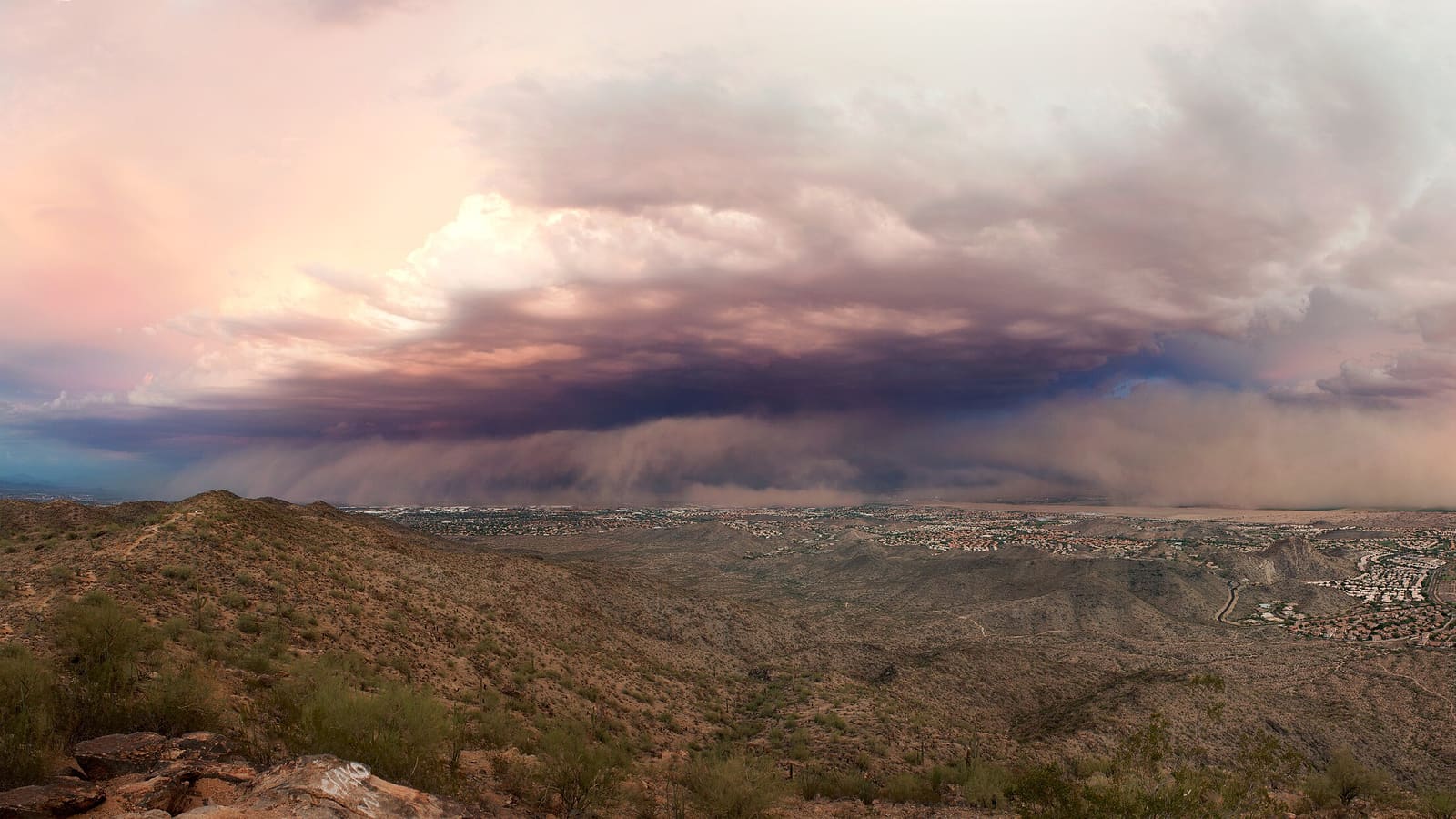
The Big Picture: A Desert Climate With Two Very Different Halves
Glendale sits in the same Valley climate as the rest of metro Phoenix — classified as a hot semi-arid ("steppe") desert climate, with clear skies most of the year and very little rainfall overall. What little precipitation the area does get is concentrated in two windows: a summer monsoon stretch — the National Weather Service fixes it at June 15 through September 30 — that can bring sudden downpours and dust storms, and a lighter pattern of winter rain. Outside of those windows, expect sun on most days regardless of when you visit.
The temperature swing across the year is the part that catches first-time visitors off guard. Winter days commonly sit in the mid-to-upper 60s Fahrenheit, while peak summer regularly pushes past 100°F and can climb well past 110°F on the hottest days of July. There's no in-between season that stays mild for long — spring and fall are transitions, not destinations in themselves, though they're genuinely pleasant while they last.
Winter Into Spring (Roughly November Through April): Glendale's Best Weather
This stretch is when Glendale's weather does the least work against you. Winter days typically run in the mid-to-upper 60s with cooler nights, occasionally dropping into the 40s after dark — light-jacket weather in the evening, comfortable in the sun during the day. This window overlaps with Glendale in winter being one of the more popular times to visit, partly because the weather cooperates and partly because it lines up with holiday events like Glendale Glitters downtown.
Spring warms up quickly. March and April push daytime highs into the 80s and sometimes the low 90s, still comfortable for being outside but noticeably warmer than a January afternoon. This is also Cactus League spring training season at Camelback Ranch, and the warming weather is part of what makes it a good match — pleasant enough for a day at the ballpark without the summer heat that shows up a month or two later.
Summer (Roughly May Through September): When the Heat Takes Over
Summer in Glendale isn't subtle. May and June ramp up fast, and by July — typically the hottest month — daytime highs regularly clear 100°F and can push past 110°F on the worst days. Overnight lows barely offer relief in peak summer, often staying in the 80s. This is the season where outdoor plans need to be built around the heat rather than in spite of it: mornings and evenings are workable, midday generally isn't.
It's not a reason to skip Glendale entirely if summer is when your trip lands. Glendale in summer leans on indoor options — arena events at Desert Diamond Arena, air-conditioned shopping and dining at Westgate, and museums — plus lower demand and often better prices on lodging than the busier cooler months.
What to Pack for Each Season
**Winter (December–February):** Layers. A light jacket or sweater for evenings and early mornings, short sleeves for midday sun, and sunscreen even though it doesn't feel like "sun season" back home — Arizona's desert sun is strong year-round.
**Spring (March–April):** Light, breathable clothing for daytime, something layerable for cooler mornings, sunscreen and a hat if you'll be outside for stretches — ballpark visits especially.
**Summer (May–September):** Minimal, breathable fabrics, a wide-brim hat, sunglasses, and more sunscreen than you think you need. Pack for indoor time too — you'll likely be ducking into air conditioning more than you would in cooler months.
**Fall (October–November):** Similar to spring — start in warm-weather clothing for early October, add layers as the month goes on and temperatures ease back down.
Summer Heat Safety Basics
If your trip does land in the hot months, a few basics go a long way. Avoid strenuous outdoor activity between roughly 10 a.m. and 4 p.m., which is when heat risk is highest. Drink water consistently through the day rather than waiting until you're thirsty, and skip relying on caffeine or alcohol to keep you hydrated. Wear light-colored, loose clothing and a hat, and take breaks in shade or air conditioning rather than pushing through.
Pay attention to official heat alerts if you're visiting during the summer — the National Weather Service issues Heat Advisories and Extreme Heat Warnings when conditions turn dangerous, and some outdoor trails in the broader Phoenix area close during the worst of it. Know the signs of heat illness (dizziness, nausea, heavy sweating, headache, weakness) and treat any of them as a reason to get indoors and cool down, not push through the rest of the day's plans. For more on timing a trip around both weather and Glendale's event calendar, see best time to visit Glendale.