By The Lowdown Guide Editorial Team · Last updated: 2026-07-03
The National Park Service states that traditional rim-to-rim hiking, in either direction, will not be possible beginning October 16, 2026. A section of the North Kaibab Trail — between Redwall Bridge, about 2.5 miles north of the Manzanita Rest Area, and the northern end of Cottonwood Campground — closes to all public access at 11:59 p.m. on October 15, 2026 for Transcanyon Waterline rehabilitation, and the closure is expected to remain in place until roughly February 2027. The Park Service notes there are no alternative routes or detours through that section of trail.
Water along the route is also unreliable: it is drawn from the same pipeline, water at Cottonwood Campground is turned off beginning October 15, and the Park Service currently lists water as shut off at several inner-canyon points including the North Kaibab Trailhead, Supai Tunnel, Manzanita, Cottonwood and Bright Angel Campground. Treat every water stop on this route as unconfirmed until you check the park’s Key Hiking Messages page for your dates, and plan to carry or treat water.
1. What the rim-to-rim route actually involves
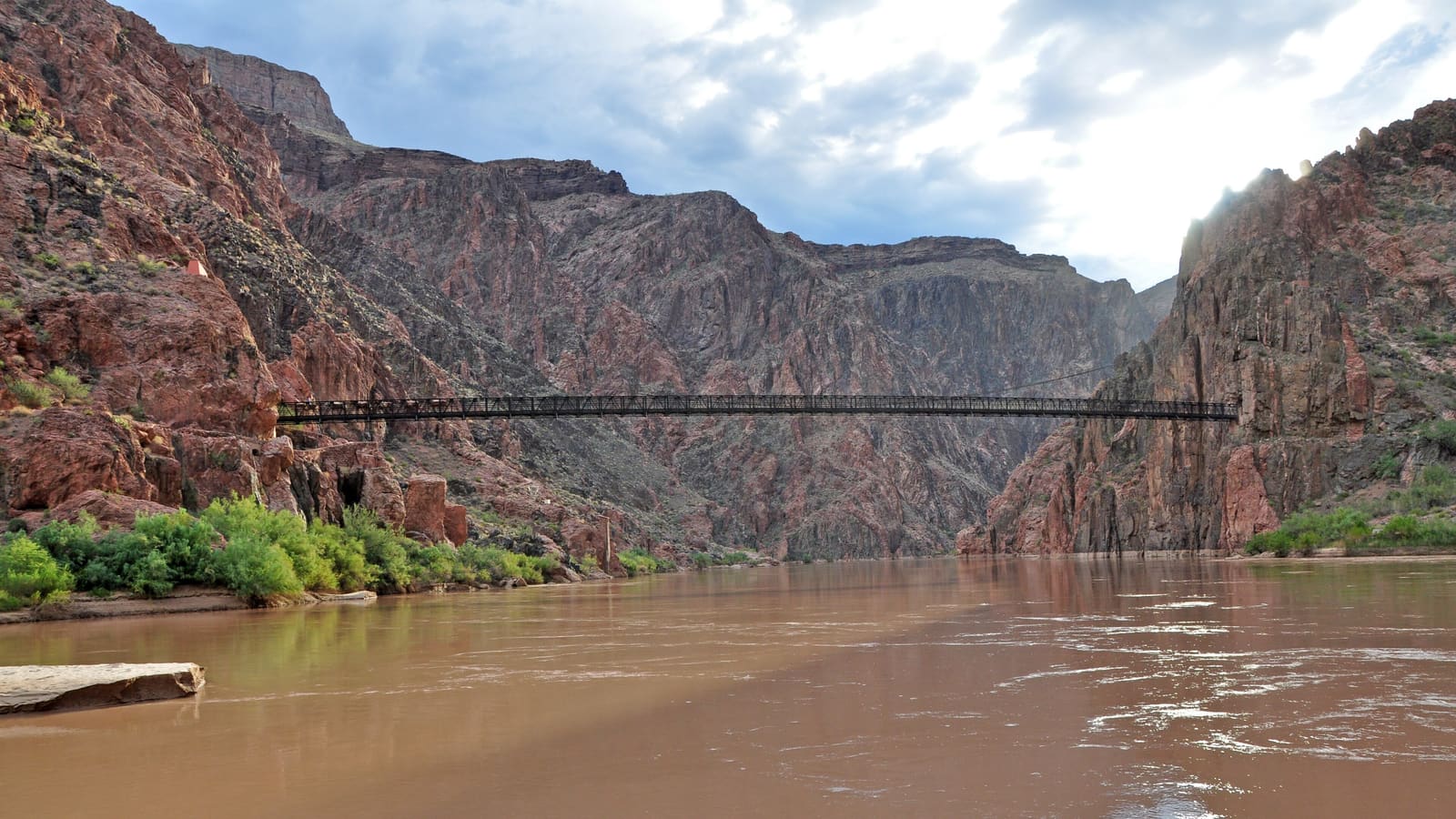
The standard rim-to-rim route follows South Kaibab Trail from the South Rim down to the Colorado River, crosses the Black Bridge (the Kaibab Suspension Bridge), and then climbs the North Kaibab Trail to the North Rim. The total distance is roughly 21 miles. Most hikers split this into two to three days, camping at Bright Angel Campground near the river and optionally at Cottonwood Campground partway up the North Kaibab side. A one-day rim-to-rim is possible for extremely fit and experienced canyon hikers, but the park service does not recommend it and most visitors should not attempt it.
The elevation profile is deceptive. South Kaibab descends roughly 4,800 feet over about 6.7 miles — steep but relatively direct. North Kaibab climbs roughly 5,800 feet over about 14 miles from the river to the North Rim, which is longer and, for tired legs, often harder than expected. The inner canyon between the two rims is the hottest section, with river temperatures in summer regularly exceeding 110 degrees Fahrenheit. The North Rim sits at roughly 8,200 feet elevation, about 1,200 feet higher than the South Rim, and temperatures there are cooler but unpredictable, especially in early and late season. Check our full hiking guide for trail conditions by season.
2. Permit requirements for the rim-to-rim hike
Any overnight stay below the rim requires a backcountry permit from the National Park Service Backcountry Information Center. Permits are not available at the trailhead on the day of your hike — they must be obtained in advance through the permit lottery system. The permit lottery opens on the first of the month four months before your intended trip. Applications can be submitted online, by fax, or in person. Demand is high for popular routes and campgrounds, and permits sell out quickly, particularly for spring and fall months.
Bright Angel Campground and Cottonwood Campground are the two main below-rim campgrounds on the rim-to-rim route, and both require a valid backcountry permit specifying your campsite and dates. There is also the option of staying at Phantom Ranch, which requires a separate reservation through the park's lodging concessionaire. Phantom Ranch reservations operate on their own lottery system that opens 15 months in advance for standard reservations. Our permit lottery walkthrough covers the full process with current timelines and application tips.
3. South to North vs North to South: which direction to choose
Most rim-to-rim hikers travel South to North for logistical reasons. The South Rim has better infrastructure, easier access from major cities and airports, and more trail options to start with. Going South to North means you descend South Kaibab — the steeper, drier trail with dramatic ridge-top views — and then climb North Kaibab over a longer distance with some shade and water access along the way. The ascent on North Kaibab, while longer, is generally considered less brutal than what a North-to-South crossing would put on your knees going down the North Kaibab.
North to South is a valid direction but has one practical challenge: the North Rim is closed roughly mid-October through mid-May due to snow accumulation at higher elevation. If you are hiking in the shoulder seasons, this timing matters significantly. North to South also means climbing Bright Angel or South Kaibab at the end of your trip — Bright Angel is longer but has water and shade, while South Kaibab is more direct but fully exposed. Most guides recommend Bright Angel as the ascent trail for tired legs at the end of a multi-day trip. See our comparison in the South Rim vs North Rim guide.
4. Shuttle logistics: getting back to your starting point
The biggest logistical challenge of a rim-to-rim hike is that you end on the opposite side of the canyon from where you started. The two rims are roughly 215 miles apart by road — about a 4.5-hour drive. Most rim-to-rim hikers arrange one of three solutions: a shuttle service, leaving a car on each rim, or joining a guided trip that handles transportation.
Several private shuttle companies operate between the South Rim and North Rim seasonally, typically May through October when the North Rim is open. Trans Canyon Shuttle is the best-known option, but check current availability and pricing directly with providers since schedules and prices change by season. Reservations should be made well in advance, especially for peak months. If you have two cars and two drivers, leaving one vehicle at each rim and splitting the drive is another approach, though it requires coordination. Guided multi-day rim-to-rim packages from outfitters bundle the transportation and camping logistics together, which simplifies planning considerably — see the travel planning guide for outfitter references.
5. Best season and conditions for the rim-to-rim
Spring (roughly mid-April through May) and fall (September through mid-October) are the best windows for the rim-to-rim hike. Inner-canyon temperatures are more manageable, the North Rim is open, and trail conditions are typically stable. Spring in the canyon can mean mud on North Kaibab near the top and snowmelt-swollen Bright Angel Creek crossings in some years, so check current conditions with the park before your trip.
Summer rim-to-rim hikes are possible but require strict early-morning starts, extended midday stops during peak heat, and significantly more water than in cooler months. The park service advises against hiking below the rim between roughly 10 AM and 4 PM during peak summer months. Inner-canyon temperatures exceeding 110 degrees Fahrenheit during this window make afternoon hiking genuinely dangerous for all but the most experienced canyon hikers. Winter is largely off-limits for the full rim-to-rim because the North Rim closes. The South Rim stays open year-round and can be hiked in winter with proper cold-weather gear and awareness of icy trail sections. Our month-by-month guide covers conditions in detail.
6. What to carry and how to pace the hike
A well-packed rim-to-rim kit includes everything from our packing list guide plus the multi-day additions: a shelter system, sleeping bag rated for inner-canyon temperatures, sleeping pad, and a pack that can carry all of this plus water, food, and permit documentation. Many experienced rim-to-rim hikers target a pack weight of 25 to 35 pounds fully loaded including water; heavier loads significantly increase knee strain on the extended North Kaibab ascent.
Pacing is as important as gear. On the first day, the South Kaibab descent is tempting to rush — it feels easy going down. Resist this. Conserve energy and stay well hydrated because you will need reserves for the canyon floor and the North Kaibab climb. Take rest breaks in shade, eat and drink on schedule rather than only when you feel thirsty, and start hiking before sunrise on summer days to bank miles in cool temperatures. Most successful rim-to-rim hikers describe the ascent from Cottonwood to the North Rim as the hardest several miles of the trip — plan for this mentally and have extra food and water available at that stage.
Book a Guided Grand Canyon Experience
Guided rim-to-rim packages handle permits, shuttle logistics, and camping gear coordination — useful if the planning complexity is the barrier to doing this hike.
Browse Grand Canyon Tours on Viator →Affiliate link — we earn a small commission at no cost to you.