Wahweap Campground
The Wahweap RV Park and Campground, near Glen Canyon Dam and the main marina, is operated by Aramark, Glen Canyon's concessioner, rather than directly by the National Park Service, and has developed camping and RV sites plus laundry, showers, and a campground store. Its proximity to Page and to marina services makes it the most convenient option for visitors who want a base close to town, the dam, and Lake Powell boat launches.
Because of that convenience, it tends to be in higher demand than more remote options, particularly during summer. Reserving ahead rather than expecting a walk-up site is the safer approach in peak season. Because it is a concessioner campground, you book it through Aramark, not through the National Park Service -- confirm current site types, hookup availability, and reservation windows with the concessioner before you go.
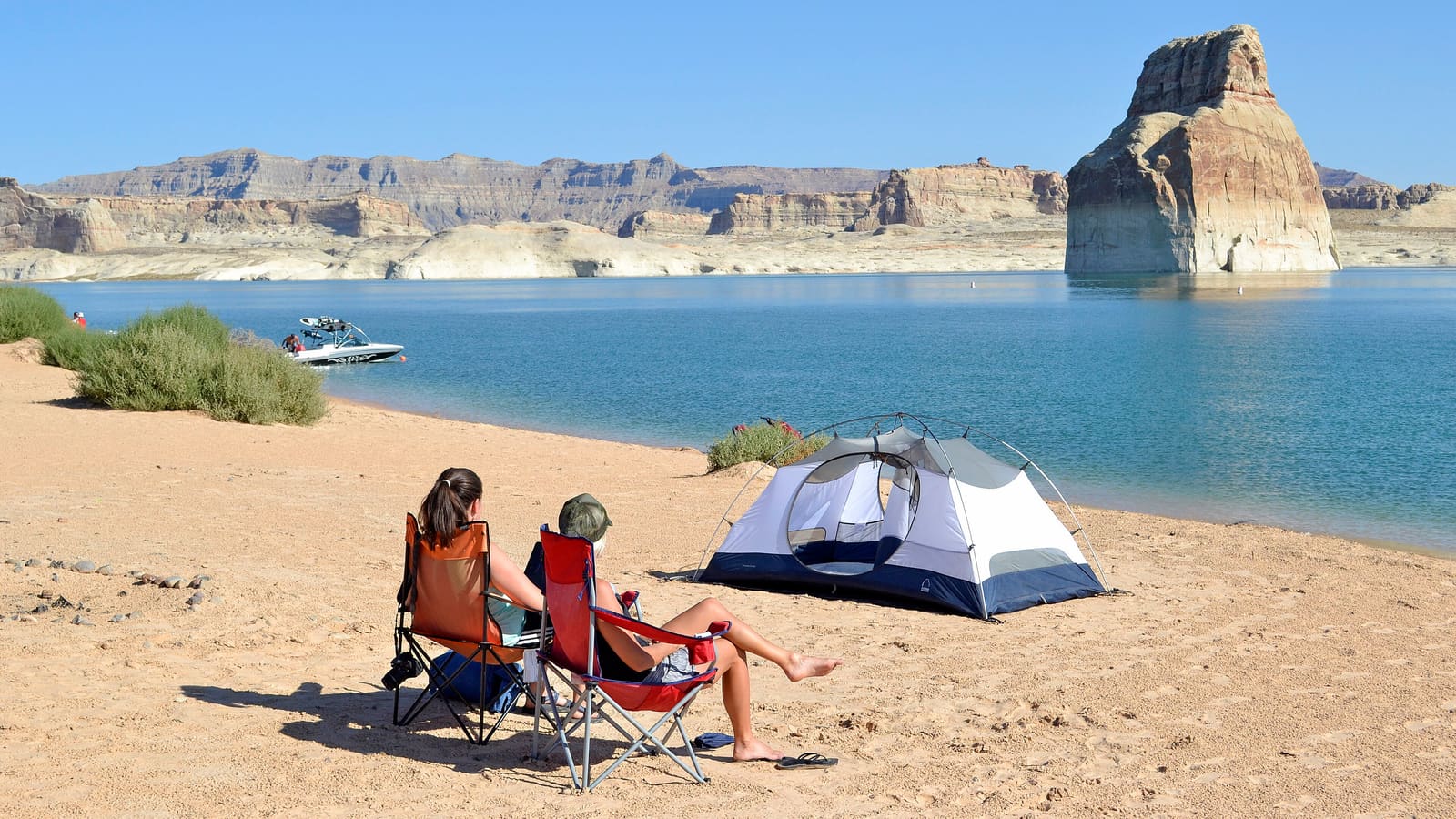
Lone Rock Beach Camping
Lone Rock Beach, on Lake Powell a short drive north of Page near the Arizona-Utah state line, is a fee area within Glen Canyon National Recreation Area that allows vehicle and RV camping directly on the sand along the shoreline. Entrance and camping fees apply year-round and are paid at a self-service machine at the entrance station. Unlike a traditional campground, it does not have individually numbered sites -- it operates more like an open beach where vehicles park and camp in a shared, undeveloped space.
This setup gives campers direct lake access, which is part of its appeal, but it also means minimal shade, no hookups, and variable surface conditions depending on how recently the sand has been driven on. Facilities are basic: vault toilets open year-round, a seasonal flush toilet and RV dump station, and no potable water -- bring all your drinking water in. Two things to plan for: Lone Rock is the only location in Glen Canyon National Recreation Area where non-street-legal off-road vehicles are allowed, so expect vehicle traffic on the sand around your site, and the National Park Service has designated a separate vehicle-free area reachable on foot if you would rather camp away from it. Confirm current fees, vehicle access rules, and any seasonal closures with the National Park Service before planning around it, since beach conditions shift with lake water levels.
Lees Ferry Campground
Lees Ferry, downstream from Glen Canyon Dam and a drive from Page, has a developed National Park Service campground and also serves as the primary put-in point for Colorado River trips running through Glen Canyon and into the Grand Canyon. Its dual role as a campground and a major river launch point means it sees a mix of casual campers and rafting groups preparing for multi-day trips.
Plan around one important detail: Lees Ferry Campground is first-come, first-served. The National Park Service does not take reservations for it, so there is no way to lock in a site in advance -- arriving early in the day is the only strategy, and that matters most during peak rafting season when river-trip traffic tightens availability. The campground has roughly 54 designated sites, potable water, restrooms, and an RV dump station but no hookups, and open fires are not allowed. The setting is different from Lone Rock or Wahweap -- Lees Ferry sits along the river itself in a narrower canyon corridor rather than on the open lake.
Dispersed and Primitive Options
Some public land surrounding Page, managed by agencies including the Bureau of Land Management, may allow dispersed primitive camping outside of developed campgrounds in designated or generally permitted areas. This kind of camping typically means no facilities -- no water, no restrooms, no established fire rings -- and requires campers to pack out everything they bring in.
Rules around where dispersed camping is and is not allowed vary by land manager and can change, and much of the land immediately around Page is Navajo Nation land where different permitting rules apply than on BLM or NPS land. Do not assume a spot is open for camping simply because it looks undeveloped -- confirm land ownership and current dispersed camping regulations with the managing agency before setting up camp anywhere off a designated site.
Seasonal and Heat Considerations
Page sits in high desert country, and summer daytime temperatures at most of these camping areas climb into a range that requires real heat management -- shade structures, extra water, and a plan for the hottest hours of the day, since natural shade is limited to nonexistent at Lone Rock Beach and much of the surrounding land. Overnight temperatures in summer stay warm, so a heavier sleeping bag is usually unnecessary but shade for daytime is essential.
Spring and fall generally bring more comfortable daytime temperatures for camping, though wind and variable weather are more common in these shoulder seasons. Winter can bring genuinely cold nights despite mild or even warm daytime temperatures, since desert environments cool quickly after sunset -- pack layers regardless of season.
Flash flood risk during monsoon season -- which the National Weather Service defines as June 15 through September 30, a wider window than many visitors assume -- is a real consideration for any camping near a wash or low-lying area, even at sites that look bone dry. Water can arrive from a storm miles upstream under a clear sky overhead. Never pitch a tent in a wash or drainage bottom, check the forecast and any flash flood watches or warnings before choosing a campsite during this period, and know where higher ground is before dark.