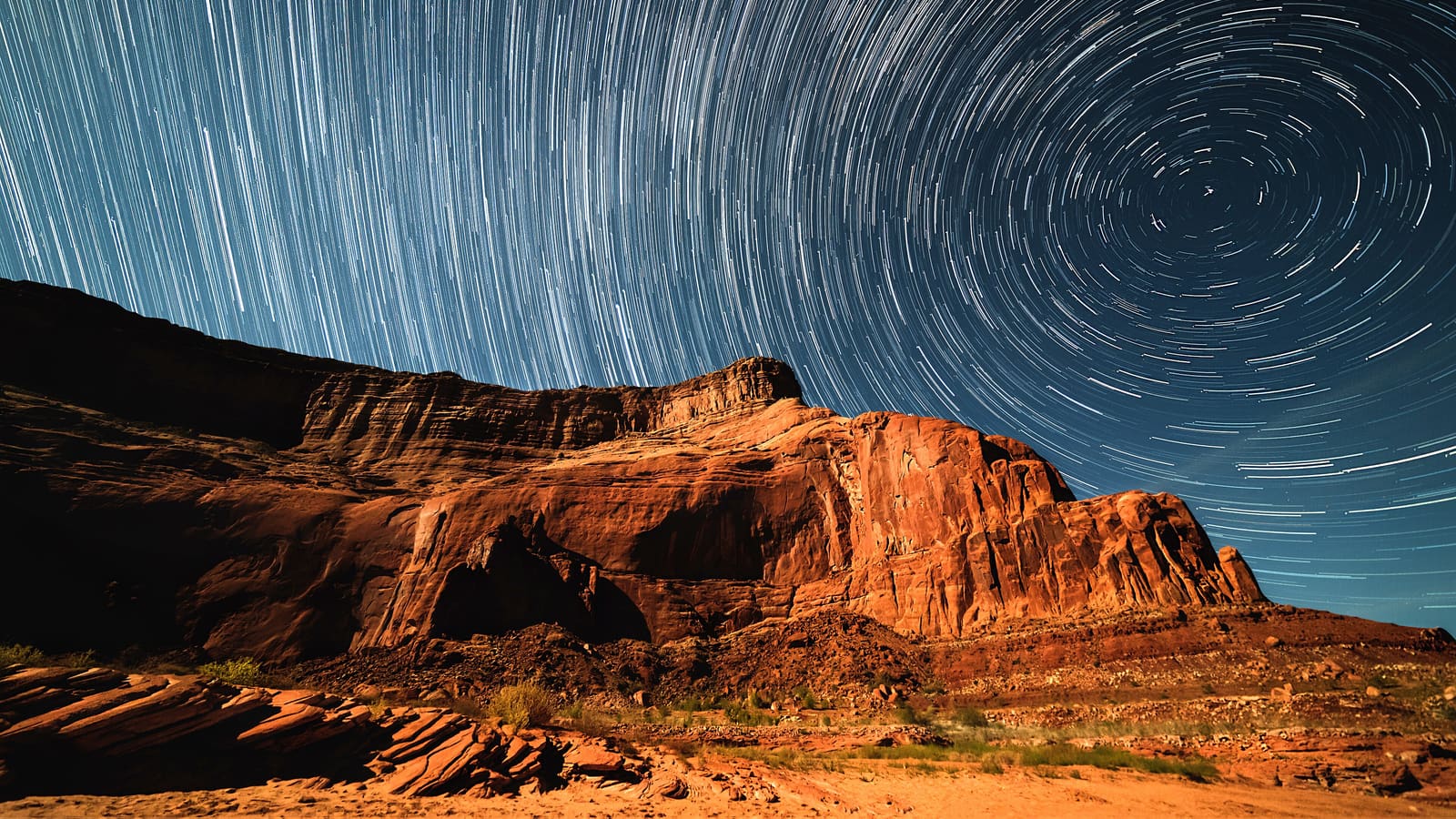
Why Page Has Dark Skies
Page is a small city surrounded by a large amount of sparsely populated public land -- Glen Canyon National Recreation Area, Navajo Nation land, and the broader Colorado Plateau -- which keeps overall light pollution in the surrounding region lower than it would be near a larger metro area. High elevation and generally dry desert air also contribute to clearer atmospheric conditions on many nights.
Worth being precise about designations, because they are often blurred in travel writing: neither the city of Page nor Glen Canyon National Recreation Area as a whole holds a formal DarkSky International certification. The National Park Service does describe Glen Canyon as having some of the darkest skies in the country, with as many as 15,000 stars visible over the course of a night, but that is a description of conditions, not a certification. The certified places are nearby, not here -- Rainbow Bridge National Monument, inside Glen Canyon and reached from Page by boat, was designated an International Dark Sky Sanctuary in 2018, the first in the National Park Service, and Grand Canyon National Park was certified an International Dark Sky Park in June 2019. Designations and program details change, so confirm current status with the National Park Service or DarkSky International rather than assuming a certification applies to a given site.
Lone Rock Beach at Night
Lone Rock Beach on Lake Powell is a popular camping spot, and its open, flat terrain away from Page's own street lighting makes it a reasonable option for stargazing as well, particularly if you are already camping there for the night. The wide horizon over the lake gives an unobstructed view in most directions.
Because it is a working beach with vehicle access, other campers' lights and campfires can interfere with dark adaptation, so positioning yourself away from busier sections of the beach improves the experience. Bring your own lighting needs covered by a red-light flashlight rather than a standard white light, which disrupts night vision for you and anyone camped nearby.
Lakeside Viewing From Wahweap and Antelope Point
The Wahweap and Antelope Point marina areas offer another set of lakeside vantage points, though they sit closer to Page's own lighting than more remote spots like Lone Rock. Some local operators have offered evening or night-focused boat outings on Lake Powell in the past, which can combine time on the water with a dark-sky view away from any shoreline light sources.
If a boat-based stargazing option interests you, check current operator listings and availability directly, since offerings like this can change seasonally or be discontinued. A standard evening boat tour booked for another purpose can also incidentally offer good late twilight sky views depending on timing.
Best Times of Year and Moon Phases
Winter generally brings the clearest, driest air of the year to this part of Arizona, which benefits stargazing, but nighttime temperatures can drop well below what a summer visitor would expect, so dress accordingly. Summer nights are warmer and more comfortable but carry a higher chance of monsoon-related cloud cover during the National Weather Service monsoon season, June 15 through September 30, which can obscure the sky with little advance warning. If you are heading to a remote spot in that window, note that the same storms bring flash flooding -- avoid parking or setting up in a wash, and check the forecast before you drive out.
Regardless of season, timing a stargazing outing around a new moon -- when the moon is least visible and produces the least ambient light -- generally improves your ability to see fainter stars and the Milky Way. A moon phase calendar or astronomy app can help you plan around this without needing specialized knowledge.
What to Bring and How to Prepare
Basic naked-eye stargazing does not require specialized equipment. Warm layers -- even in summer, desert nights cool off quickly after sunset -- along with a blanket or reclining chair and a red-light flashlight to protect your night vision cover most of what you need for a comfortable session outdoors.
A star chart, planisphere, or astronomy app can help you identify constellations and planets without prior knowledge. Binoculars are a reasonable low-cost step up from naked-eye viewing if you want more detail, and a telescope is worth considering only if you already have an ongoing interest in astronomy rather than a one-time trip need.
Nearby Dark Sky Destinations
The broader region around Page connects to other public lands with genuinely dark skies. The two with formal certification are Rainbow Bridge National Monument -- an International Dark Sky Sanctuary since 2018 and the first in the National Park Service -- and Grand Canyon National Park, an International Dark Sky Park since June 2019. Rainbow Bridge sits within Glen Canyon National Recreation Area and is normally reached by boat from the Page and Wahweap side of Lake Powell, but boat access there has been disrupted by low lake levels and storm debris in recent years, so check current access conditions with the National Park Service before building a trip around it.
Other stretches of the Colorado Plateau and the Navajo Nation have excellent dark skies without carrying a formal certification -- a lack of certification says nothing about how good the viewing is, and a nearby certified place does not make Page itself certified. Designations and program details change over time, so confirm current status and any visitor guidance directly with the managing agency -- the National Park Service, Navajo Nation Parks and Recreation, or the relevant state or federal land office -- before planning a trip specifically around a certification.