Heard Museum
The Heard Museum, at 2301 N. Central Ave. in central Phoenix, has been showing American Indian art since it opened in 1929 and today presents 12 galleries of historic and contemporary work. The museum describes its own mission as connecting Indigenous creativity to the world by presenting the voice and vision of American Indian artists, and its exhibits lean on context rather than objects alone.
The Heard also runs two signature annual events -- the Indian Fair & Market and the World Championship Hoop Dance Contest -- alongside other programming connected to Native artists, so it's worth checking the museum's current calendar before you go in case your visit lines up with something beyond the standing collection. Its central location makes it an easy add-on to a downtown Phoenix day.
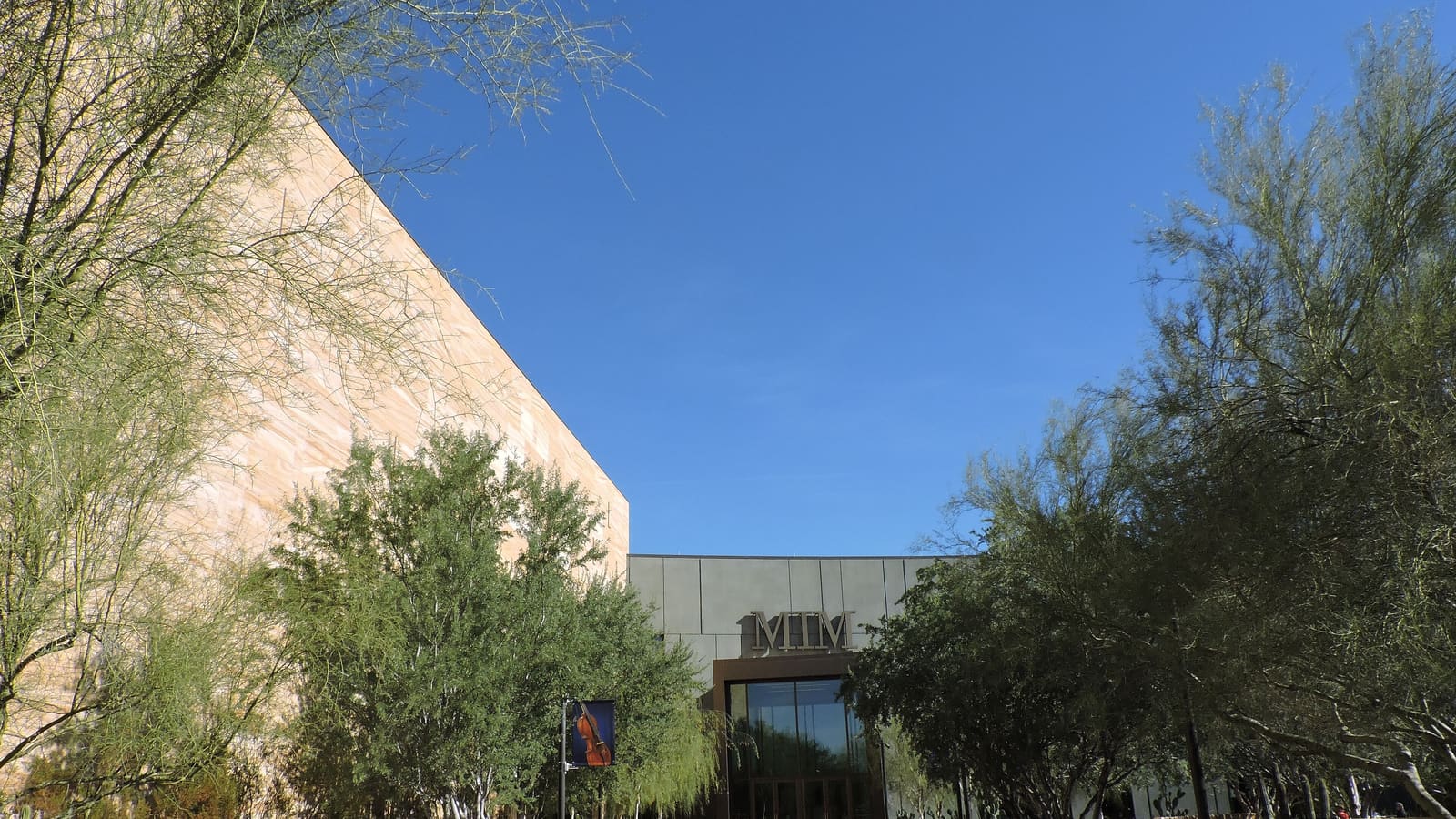
Musical Instrument Museum (MIM)
MIM, at 4725 E. Mayo Blvd. in north Phoenix, holds more than 7,500 instruments representing over 200 countries and territories, laid out in Geographic Galleries organized by world region. What sets it apart is the audio: admission includes a Sennheiser guidePORT unit and headphones that connect automatically to screens at more than 300 exhibits, so you hear the instruments you're looking at rather than reading about them in silence. An Experience Gallery lets you play instruments yourself.
Because the collection is large and spans the whole world, a thorough visit can easily run longer than expected -- budget more time here than you might for a typical museum if you want to see and hear a meaningful cross-section rather than rush through. MIM also hosts live concerts in its own MIM Music Theater, which is ticketed separately from the museum exhibits.
Phoenix Art Museum
The Phoenix Art Museum, at 1625 N. Central Ave. in the city's midtown arts corridor, describes itself as the largest art museum in the southwestern United States and holds a collection of more than 20,000 objects spanning the globe, including a dedicated fashion design collection. It's the museum to pick if you want a traditional, wide-ranging fine-art experience rather than a single-focus collection.
Rotating special exhibitions run alongside the permanent collection, so what's on view can vary significantly by the time of your visit -- check the museum's current exhibition calendar if there's a specific show you're hoping to catch. Its location near other arts venues also makes it easy to combine with a broader midtown Phoenix outing.
Other Museums Worth Knowing About
Beyond the three anchors above, the Valley has a range of smaller and more specialized museums, from science-focused venues to history museums covering Phoenix and Arizona specifically. These tend to be lower-key stops than the Heard, MIM, or the Art Museum, but they can be a good fit if a particular topic interests you more than a general art or culture visit.
Because hours, admission, and even which exhibits are currently open can change, it's worth checking each museum's own site directly rather than relying on secondhand listings, particularly for smaller institutions that may have more limited operating days.
Planning a Museum Day
Trying to fit more than one of the Heard, MIM, and the Phoenix Art Museum into a single day is possible, but it tends to feel rushed, since each rewards a couple of unhurried hours rather than a quick walkthrough. Most visitors do better picking one as the anchor for a half-day and treating a second museum as optional, or splitting them across two different days of a longer trip.
The Heard and the Phoenix Art Museum sit reasonably close to central Phoenix, while MIM is farther north, so factor drive time into how you sequence a museum day, especially if you're also trying to fit in a meal or another attraction.
Museums as a Summer-Heat Strategy
Roughly June through September, outdoor attractions in the Valley become genuinely risky by mid-morning, which makes indoor, air-conditioned museums one of the more sensible ways to structure a summer visit. The National Weather Service office in Phoenix advises confining strenuous outdoor activity to the coolest part of the day, usually 4 to 7 a.m., and drinking 1 to 2 liters of water per hour for any time spent outdoors in the heat. The same stretch overlaps the NWS monsoon window of June 15 through September 30, when afternoon storms add lightning and blowing dust to the picture. Locals lean on the indoor pattern too -- an early hike or outdoor errand, then museums, shopping, or other indoor activities once the heat sets in.
If you're building a summer itinerary, it's worth deliberately stacking a museum or two into the hottest part of the day rather than treating them as an afterthought -- it turns what would otherwise be dead time into one of the better parts of the trip.