Forest Camping at 6,770 Feet, Not Desert Camping
Williams sits at roughly 6,770 feet in ponderosa pine forest, surrounded on most sides by Kaibab National Forest -- and some of the forest campgrounds and lakes around it, like Kaibab Lake at about 6,800 feet, sit a touch higher still. That elevation is the single fact that shapes every other answer on this page. It means summer nights are cool even when Phoenix and the low desert are baking, it means afternoon monsoon thunderstorms are a real hazard from roughly July through August, and it means winter here is a genuine mountain winter, not an Arizona postcard exception. If you're used to camping in the low desert around Phoenix or Tucson, pack differently for Williams -- a warmer sleeping bag, rain protection, and a plan for what happens if a forest road turns to mud. For the general seasonal picture in town, see the Williams in winter guide.
Kaibab Lake Campground
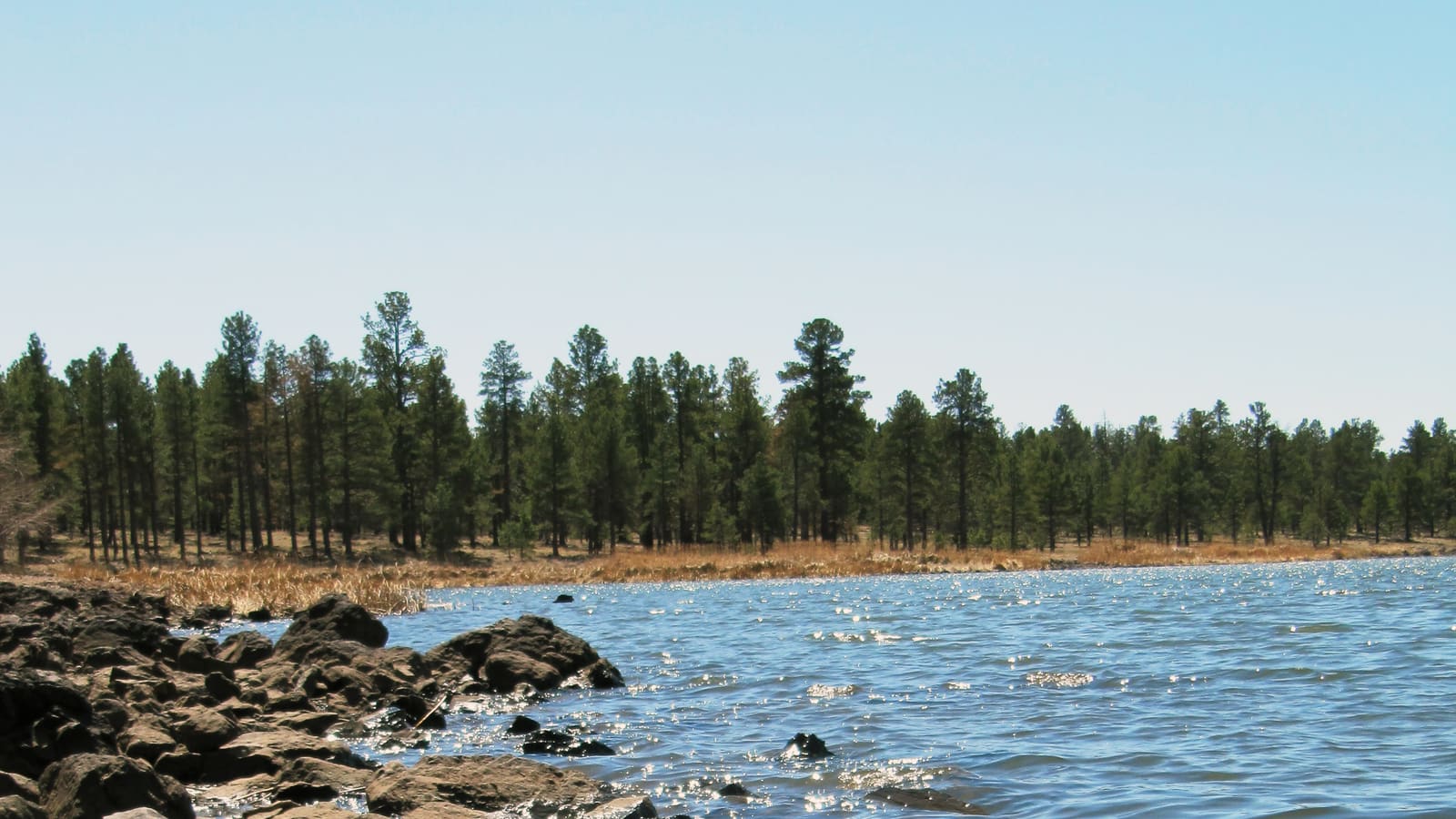
Kaibab Lake sits just a few miles north of Williams and is one of the closest developed campgrounds to town, set along the shore of a small reservoir that's popular for fishing as much as camping. Sites here are generally geared toward tents and moderate-sized RVs rather than big rigs with full hookups. As with the other Kaibab National Forest campgrounds around Williams, some sites can be reserved in advance through Recreation.gov while others operate first-come, first-served -- the exact split has changed in past seasons, so don't assume last year's arrangement still holds. Check current site status and any fee information directly with the Kaibab National Forest's Williams Ranger District before you go.
Cataract Lake Campground
Cataract Lake is closer still to town, within a short drive of downtown Williams, and it's a small reservoir popular for fishing. Unlike Kaibab Lake, Dogtown Lake, and White Horse Lake, Cataract Lake does not currently appear in the Kaibab National Forest's official campground listing, so don't assume it has the same maintained, fee-based camping setup as the other three -- confirm current camping status and facilities directly with the Kaibab National Forest's Williams Ranger District before building a trip around camping there specifically. Water levels at Cataract Lake can also vary with drought conditions in a given year, which affects both the fishing and the lakeside atmosphere.
Dogtown Lake and White Horse Lake Campgrounds
Dogtown Lake and White Horse Lake sit farther south of Williams, deeper into Kaibab National Forest, and tend to feel more removed from town than Kaibab Lake or Cataract Lake. Both are built around small fishing lakes with a similar developed-campground setup -- vault toilets, defined sites, no hookups -- and both see heavier use on summer weekends given the pull of forested lake camping in a state better known for desert terrain. As of this writing, the Kaibab National Forest's own White Horse Lake Campground page notes its potable water system is turned off, with only a limited temporary filling station on site -- plan to bring your own water rather than counting on a tap, and confirm current status before you go. Access roads to both campgrounds are unpaved or graded forest roads in places, so a check of current road conditions is worth doing after any significant rain, since monsoon storms can make unpaved forest roads temporarily rough or impassable.
Dispersed Camping in Kaibab National Forest
Outside the developed campgrounds and the immediate lake areas, dispersed camping -- pitching a tent or parking an RV on forest land without a designated site, fee, or facilities -- is generally allowed across much of Kaibab National Forest around Williams, subject to standard U.S. Forest Service rules: typically a stay limit of around 14 days in one spot, a requirement to camp on already-disturbed ground rather than cutting a new site, and pack-it-in-pack-it-out with no services of any kind. None of that is unique to Williams, but two things about it are worth stating plainly rather than assuming: which specific roads and areas are open to dispersed camping is defined by the forest's Motor Vehicle Use Map, which is updated periodically, and fire restrictions -- which can shut down campfires or all open flame entirely during dry stretches -- change through the season and are not something to guess at from a blog post. Check both directly with Kaibab National Forest before you head out to camp for free.
RV Parks With Full Hookups
If you need full hookups -- water, sewer, and electric at the site -- that's generally a private RV park category rather than something the Kaibab National Forest campgrounds offer. Williams has private RV parks in and around town that serve this need, typically geared toward Route 66 road-trippers and Grand Canyon-bound travelers pulling trailers or driving motorhomes. Amenities, pricing, and seasonal availability vary by operator and change over time, so rather than repeating numbers that go stale, the practical move is to search current Williams RV park listings and book directly with the park for accurate rates and hookup details. If a full-service RV park with hotel-level amenities is closer to what you actually want, see the where to stay in Williams guide for lodging options in town.
When Camping Near Williams Isn't an Option
Winter at this elevation brings real, sustained snow, not the occasional dusting some parts of Arizona get. Most of the developed campgrounds around Williams close for the season or become inaccessible once snow closes forest roads, and dispersed camping in the same conditions carries genuine risk from cold exposure and unplowed access roads. If you're planning a winter trip to Williams, don't build it around camping -- check current closures with Kaibab National Forest first, and default to indoor lodging in town instead. The reverse is also true in the other direction: summer afternoon monsoon storms can bring lightning, flash flooding on forest roads, and sudden temperature drops, so a clear morning is not a guarantee about the afternoon. For the fuller picture of what Williams looks like as the seasons change, see the Williams in winter guide, and for what else there is to do around town once you've set up camp, see the Williams things to do guide.