Before the Interstate: Williams and the Mother Road
Williams existed before Route 66 did. Williams grew up as a railroad camp in the early 1880s, and the settlement took off on September 1, 1882, when the Atlantic and Pacific Railroad -- later absorbed into the Atchison, Topeka & Santa Fe system -- pushed a line through and made it a stop. The town takes its name from Bill Williams Mountain, the peak rising south of downtown, itself named in 1851 for William Sherley "Old Bill" Williams, a trapper and mountain man. By the time Route 66 was built through town in 1926, Williams already had a working economy built around the railroad -- the highway added to it rather than starting it. For the fuller founding history, see the Williams guide.
Bill Williams Avenue: Walking the Alignment
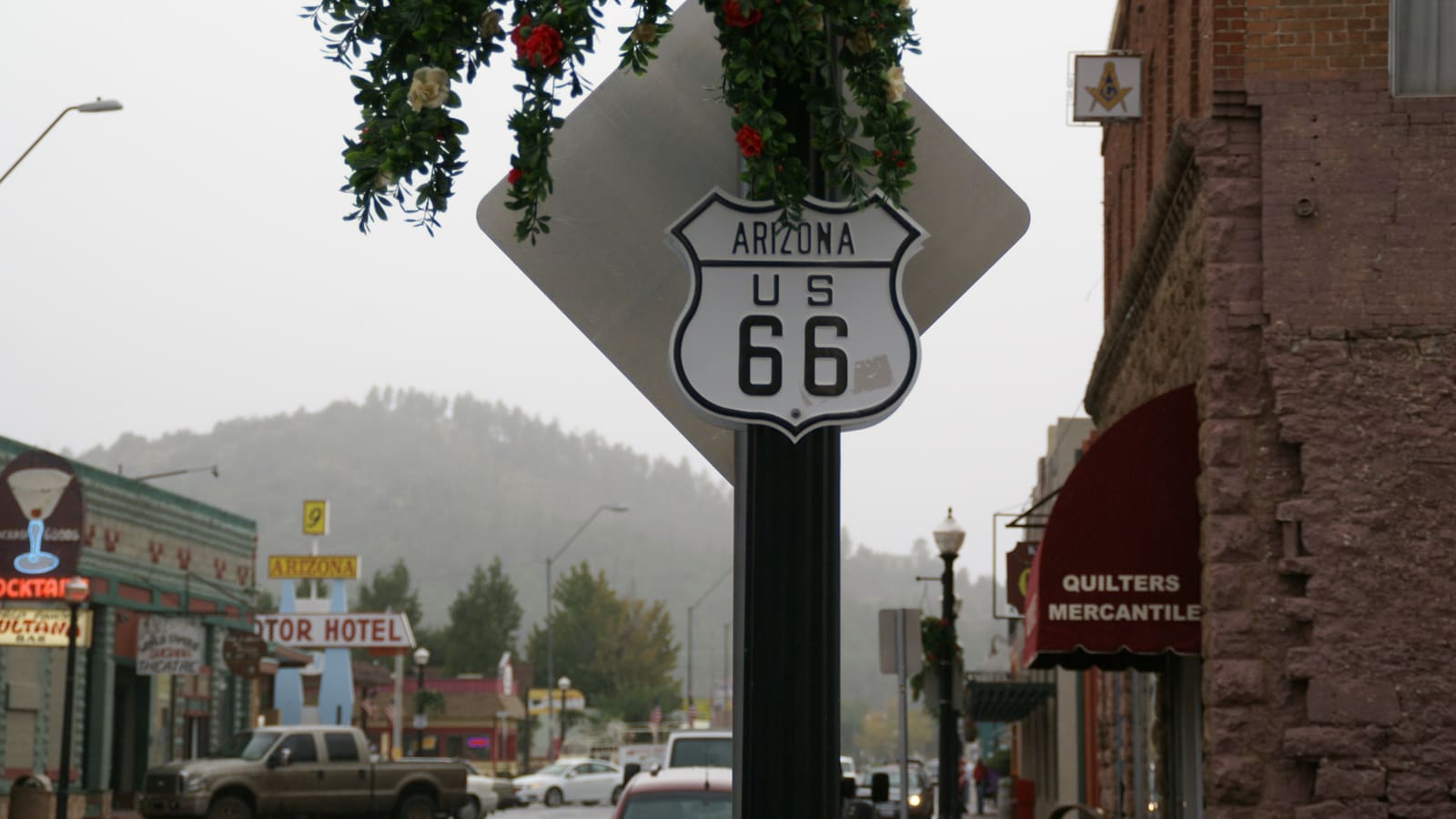
When Route 66 arrived, it became Williams' literal Main Street, and the alignment through downtown is still signed today as Bill Williams Avenue. For nearly six decades that highway was the town's economic lifeline. The commercial buildings lining it -- largely dating to the 1920s through 1940s -- are original storefronts, not a themed reconstruction, and the district was added to the National Register of Historic Places in 1984. Walking the street today, past vintage signage and original facades, is the most direct way to feel what Route 66 towns looked like before the interstate reshaped them.
The Town That Fought the Bypass
In the early 1980s, Interstate 40 came to bypass Williams, the way it had already bypassed nearly every other Route 66 town along this corridor. Williams didn't take it quietly. Business owners sued to delay the bypass, buying the town years most Route 66 communities never got. The lawsuits ultimately failed, but the delay meant something real: Williams held out longer than any other town on the highway.
The Last Town Bypassed: October 13, 1984
When I-40 finally opened around Williams on October 13, 1984, it wasn't just another town losing its highway -- Williams became the last section of the original Route 66, anywhere in the country, to be bypassed by the interstate system. The ceremony that day wasn't a quiet formality. Roughly 500 people gathered at the new interchange at Grand Canyon Boulevard, and Bobby Troup, who wrote "(Get Your Kicks on) Route 66," flew in to perform the song live on the old alignment one last time, reportedly adding "Williams" into the lyrics on the spot. It was staged as both a funeral and a send-off for the highway that built the town.
Route 66 Culture Today: Wild West Shows, Car Shows, and Classic Stops
Williams leaned into its Route 66 identity after the bypass rather than fighting it, which is part of why its downtown reads as genuinely preserved today rather than reconstructed for tourists. Bill Williams Avenue's longtime dining anchors -- Rod's Steak House, first opened in 1946 and recently reopened after a multi-year closure and renovation, and Cruiser's Cafe 66 among them -- are covered in the Williams dining guide. Williams doesn't run a single fixed "Route 66 Days" festival; instead the town hosts the Williams Historic Route 66 Car Show each June and the Route 66 JDM Classic Car Show each October, both bringing classic cars to Bill Williams Avenue, and the town also marks the anniversary of its 1984 bypass every October. Confirm current event dates directly with the city or the Williams-Grand Canyon Chamber of Commerce before planning a trip around them, since schedules shift year to year.
Where Route 66 Fits Into a Longer Trip
Williams sits at the western edge of a Route 66 corridor that continues through Ash Fork, Seligman, and on toward Kingman and the Colorado River. If you're driving the Mother Road rather than just passing through, Williams is a natural overnight stop -- it has a real downtown lodging corridor, unlike many smaller towns along this stretch. For what else there is to do in town beyond the Route 66 story itself, see the Williams things-to-do roundup.