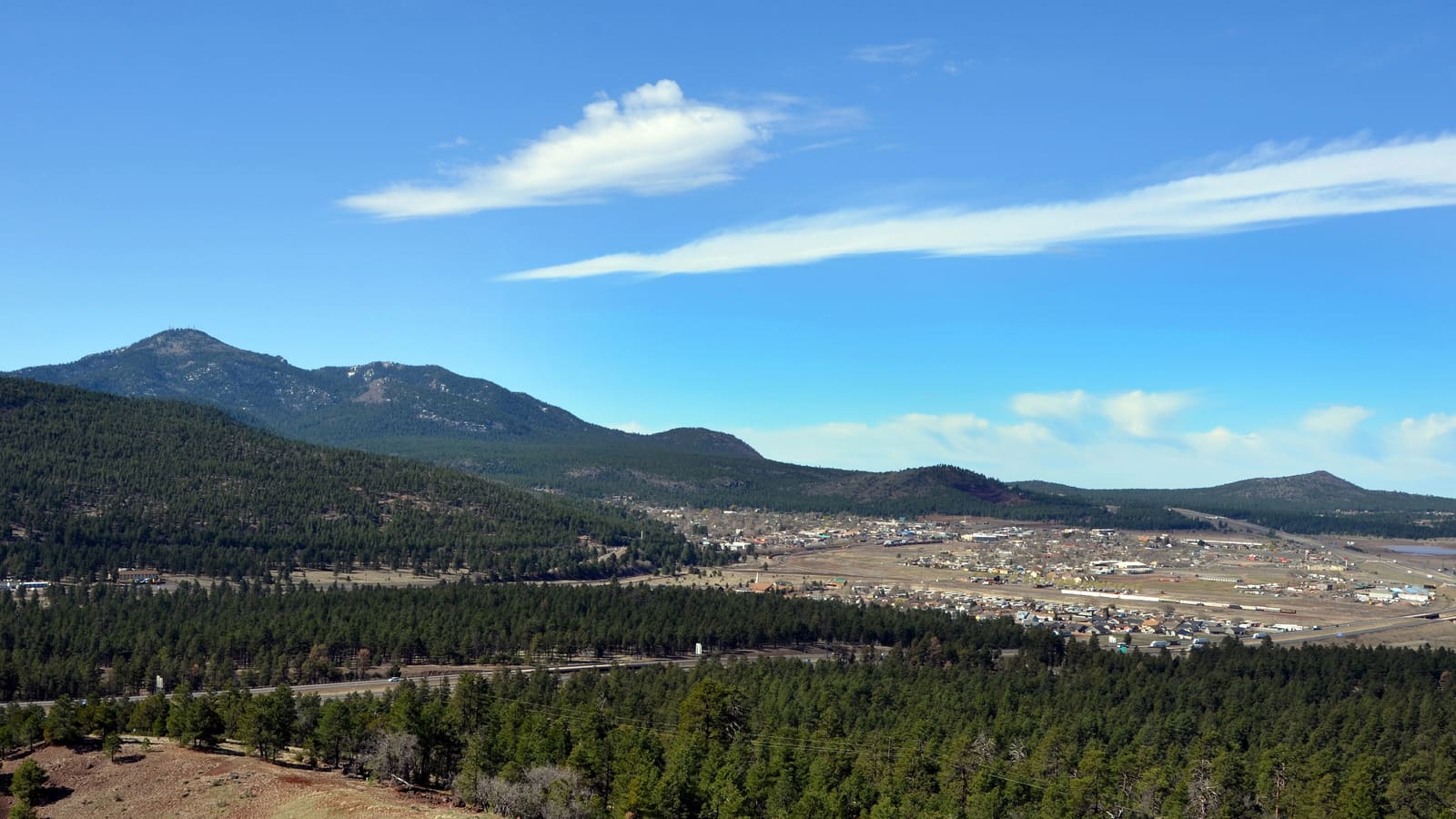
Why elevation matters more than the calendar
Williams sits at roughly 6,770 feet, well above Phoenix (about 1,100 feet), though a bit below nearby Flagstaff's own higher elevation. Either way, that height above the desert floor is the reason Williams reliably sees real snow in winter while central Arizona doesn't, and why summer afternoons here stay pleasant when the desert cities are baking. If you are used to Arizona weather from a Phoenix or Tucson trip, expect Williams to behave more like a Rocky Mountain town than a desert one for a good part of the year.
Winter (December through February)
Winter in Williams is genuinely cold, with regular snowfall and daytime highs that often stay near or below freezing. Snow-covered Route 66 downtown is a real look here, not a postcard exaggeration -- our Williams in Winter guide covers the season's specific attractions, including the Grand Canyon Railway's seasonal holiday train. If you are driving in from lower elevations, check road conditions before you go; snow and ice can affect both I-40 and AZ-64 toward the Grand Canyon, and a vehicle rated for winter conditions (or at minimum, good tires) matters more here than it would in Phoenix.
Spring (March through May)
Spring is a transition season and can be unpredictable -- warm, calm days can be followed by a late snow or a windy, dust-driven afternoon within the same week. Pack layers rather than committing to one type of weather. By late spring the snow has generally cleared from town (though higher elevations like Bill Williams Mountain can hold patches longer), and this is typically when hiking trails around town become reliably accessible again.
Summer (June through September)
Summer is where Williams' elevation pays off most obviously for visitors. Daytime highs are moderate compared to the desert cities, and evenings cool down noticeably -- a welcome contrast if you are also visiting Phoenix or the Grand Canyon's inner canyon, where summer heat can be genuinely dangerous. Our Williams in Summer guide has more detail on the season's specific activities. The one weather pattern to plan around is the North American monsoon, which typically brings afternoon and evening thunderstorms from around July into September. These storms can be sudden and intense, with lightning, brief heavy rain, and occasional hail, so it's worth checking the forecast each morning and having an indoor backup plan for early afternoon.
Fall (October and November)
Fall is generally considered one of the more comfortable times to visit -- daytime temperatures moderate from summer's peak, the monsoon pattern winds down, and the aspen and oak stands around Bill Williams Mountain and the Kaibab National Forest can show fall color, though the timing varies year to year with moisture and temperature. Nights cool quickly at this elevation, so an evening jacket is worth packing even if the day was mild.
What to pack, regardless of season
Because of the elevation and the swing between daytime and nighttime temperatures, layers are the single most useful packing strategy in Williams year-round. A jacket that seems unnecessary at 2pm is often welcome by 8pm, even in summer. If your trip includes the Grand Canyon or Sedona, keep in mind those destinations can run warmer (Sedona, lower elevation) or have their own separate weather pattern (the Canyon's inner gorge, dramatically hotter than the rim) -- see our best time to visit Williams guide for how the seasons compare across activities, not just temperature.