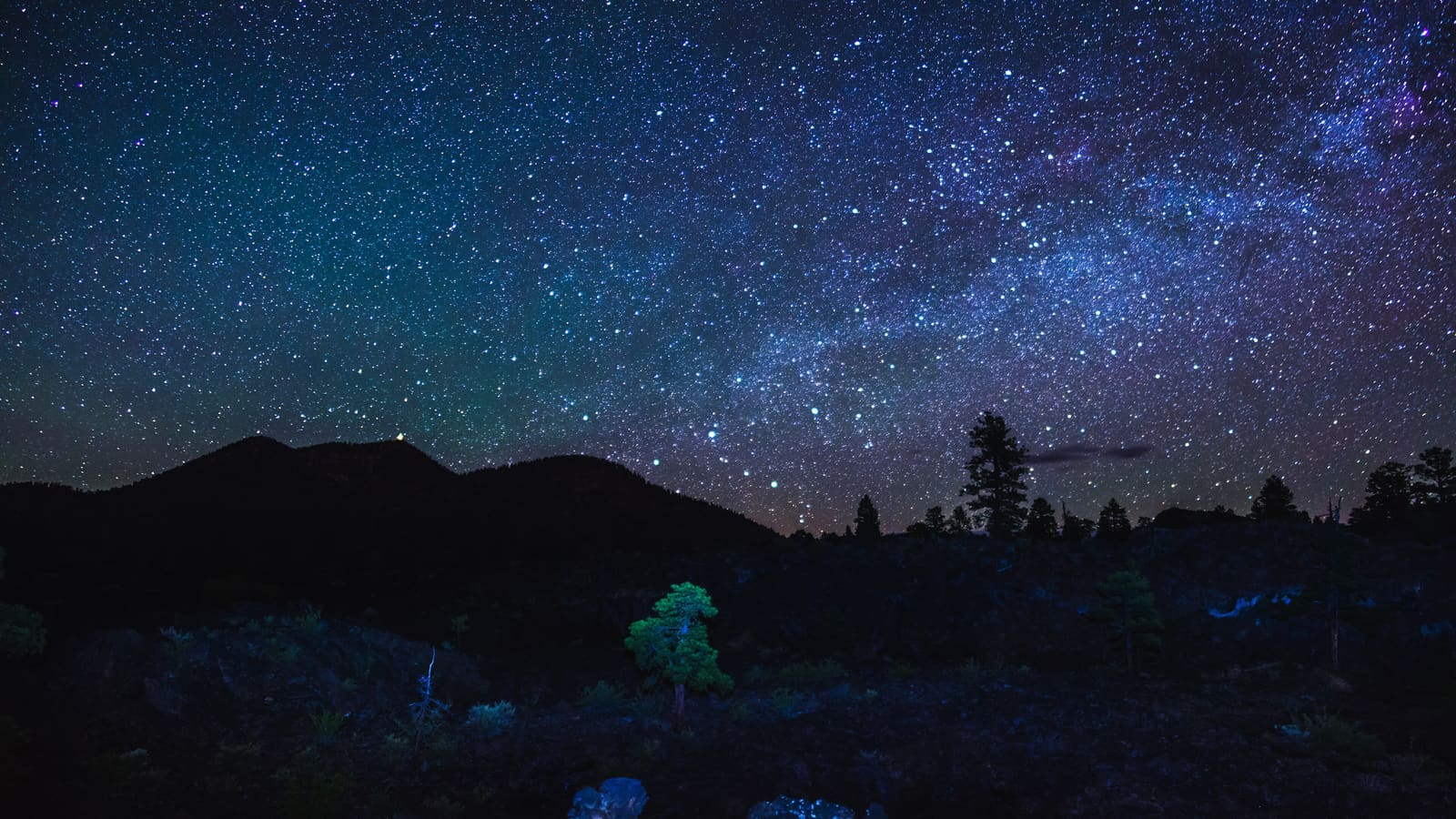
Flagstaff is a photographer's city in a way few places are — the combination of International Dark Sky status, dramatic volcanic landscape, ponderosa forest, historic Route 66 neon, and four genuine seasons gives you extraordinary variety within a few miles. Whether you're shooting astrophotography, landscape, street, or seasonal foliage, Flagstaff delivers subjects that photograph well and locations that aren't yet overrun.
This guide covers the best shooting locations organized by type, with timing notes and practical access information. For guided photo experiences, see our photo tours in Flagstaff.
Night Sky Photography
Flagstaff's International Dark Sky City designation means strict lighting ordinances that genuinely reduce light pollution to levels rare for a city of 75,000. The Milky Way is visible to the naked eye from within city limits on a clear, moonless night. For photography, the sky rivals many rural locations.
Buffalo Park — Best City-Accessible Dark Sky Location
Open meadow at 7,100 feet, no tree cover blocking the horizon, free access, and darker-than-expected skies thanks to the park's distance from downtown lights. The open grass offers clean foreground — try exposing the Peaks as a silhouette against the Milky Way core. Best from 11 PM onward on new moon nights. Coordinates: 35.2192° N, 111.6453° W.
Schultz Pass Road Pulloffs
Drive Schultz Pass Road (FR 420) 4 miles northeast of downtown and pull off anywhere away from the road. The volcanic cinder field and ponderosa surroundings give you natural foreground. No facilities, no crowds on weeknights. Much darker than Buffalo Park. Best months: October–March. Bring warm layers — temperatures drop dramatically after sunset at altitude.
Sunset Crater Volcanic Field
The black cinder field surrounding Sunset Crater creates dramatic foreground for night sky images — otherworldly dark rock under the Milky Way. About 15 miles north of downtown. The national monument closes at dark, but the road corridor outside the gate remains accessible. One of the most cinematic dark sky compositions in northern Arizona.
Landscape Photography
Inner Basin / Lockett Meadow — Aspen Season
The single best photography location near Flagstaff in late September is normally the Inner Basin Trail from Lockett Meadow. The trail climbs through dense aspen groves into a volcanic caldera ringed by the Peaks. Gold aspens against the volcanic crater rim, with the San Francisco Peaks above — it's the defining Flagstaff landscape image. Road closure note: Lockett Meadow Road (Forest Road 552) is closed to all traffic, including foot and bicycle, from July 14 through the end of November 2026 for maintenance, under Coconino National Forest Order #03-04-08-26-04 — this trailhead is not reachable on foot or by vehicle for the entire 2026 fall color season. Confirm current status with the Coconino National Forest Flagstaff Ranger District before planning around it. Peak color typically: September 25–October 10. Arrive before sunrise for the best light and to avoid weekend crowds. See our hiking guide for trail details.
Humphreys Peak Summit
At 12,633 feet, Arizona's highest point offers panoramic views from the summit: the Painted Desert to the northeast, Sedona's red rocks to the south, the Grand Canyon rim to the northwest. The roughly 9-to-10-mile round-trip hike requires a 6 AM start. Golden hour hits the summit around 6:30–7:00 AM. Clouds build from noon onward — summit before then. See our Humphreys Peak guide.
Walnut Canyon Rim Views
The Island Trail at Walnut Canyon National Monument descends into a 400-foot limestone canyon lined with cliff dwellings. The canyon walls photograph beautifully in the soft morning light when the shadows create natural separation. Avoid midday when the contrast is too harsh for the canyon's depth. Entrance fee: $25/vehicle. Coordinates: 35.1715° N, 111.5100° W.
Oak Creek Canyon — Highway 89A Overlook
The overlook at the top of the Sedona switchbacks (the first pullout heading south from Flagstaff on 89A) gives you a view down the entire canyon — red rock walls, ponderosa forest transitioning to desert scrub, creek glinting below. Best in morning light. A 45-minute drive from downtown. See the full Sedona day trip guide.
Route 66 and Urban Photography
Route 66 Neon — Downtown after Dark
The stretch of Route 66 through downtown Flagstaff retains original neon motel signage from the 1940s–60s. The Museum Club, the Little America sign, and the Monte Vista Hotel marquee all glow in a way that photographs beautifully at blue hour (20–30 minutes after sunset). Use a tripod for the longer exposures needed to capture the neon without blur. Rain-wet streets add reflections.
Historic Train Depot
The 1926 Tudor Revival depot is architectural photography with narrative — the Amtrak Southwest Chief passes through daily (check times: typically evening, around 7:55 PM, westbound; early morning, around 3:39 AM, eastbound). A passing freight train on the BNSF mainline makes an excellent shutter-speed shot. The depot building itself is best photographed in the late afternoon golden hour when warm light hits the red brick facade.
Weatherford Hotel Facade
The 1900 Weatherford Hotel on Leroux Street is one of the oldest buildings in northern Arizona. The ornate Victorian facade, preserved original windows, and Route 66 context make it a strong street photography subject. Photograph from across Leroux Street in the early morning before the sidewalk traffic builds.
Seasonal Photography Calendar
- Late May–June: Wildflowers on Mount Elden and in the meadows along Fort Valley Road. Best for landscape color in the non-aspen season.
- July–August: Dramatic monsoon cloudscapes over the Peaks. Afternoon storm light is extraordinary. Sunrise shots of mist in the ponderosa forest.
- Late September–October: Aspen gold at Inner Basin, Veit Springs, and Hart Prairie. The single best season for Flagstaff landscape photography. Note: Inner Basin's Lockett Meadow trailhead is closed to all traffic, including foot and bicycle, July 14 through the end of November 2026 (see the Landscape Photography section above) — Veit Springs and Hart Prairie are unaffected.
- December–February: Snow on the Peaks, snow-covered downtown Route 66, winter stargazing with the darkest nights of the year.
See our seasonal guides for month-specific photography timing and access notes.
More Flagstaff Exploration
Flagstaff Photo Tours
Guided photography tours with local experts — landscape, night sky, and architectural.
ToursBest Stargazing in Flagstaff
Dark sky locations, monthly calendar, and astrophotography tips.
Night SkyFlagstaff Fall Foliage
Aspen season timing, best locations, and what to expect each week of October.
FallHiking Near Flagstaff
Trail access for the best landscape photography vantage points.
OutdoorsPhotography FAQs
Where is the best place to photograph the Milky Way in Flagstaff?
Buffalo Park is the most accessible Milky Way location within city limits. For darker skies, drive 15 minutes to Schultz Pass Road pulloffs or the Sunset Crater area, where the volcanic landscape adds foreground interest.
When do the aspen trees turn gold in Flagstaff?
Flagstaff's aspen groves typically peak in late September to mid-October. The Inner Basin aspens usually peak around September 25–October 5. Hart Prairie and Veit Springs peak slightly later. Check NAU forestry or local ranger stations for real-time color reports in fall.