Disclosure: Some links in this article are affiliate links. If you book through them, we may earn a small commission at no extra cost to you. Full disclosure.
Make the Drive the Destination
Our Route 66 audio tour covers Flagstaff's stretch of America's most famous road — GPS-triggered narration at 8 stops from the classic drive-ins to the Wigwam Motel. First 3 stops free.
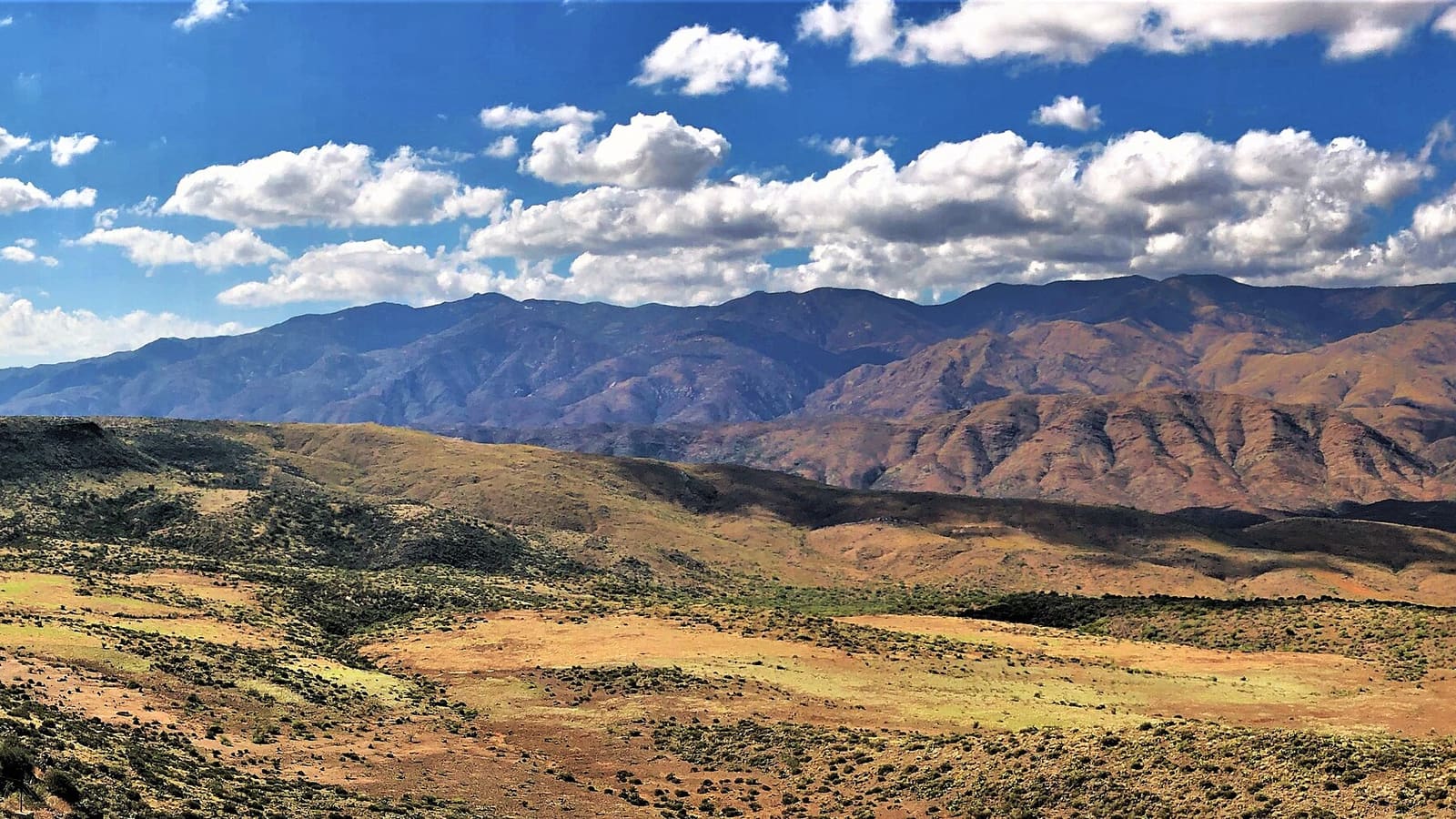
Most people drive I-17 like they're late. They fill up in Phoenix, merge onto the freeway, and surface in Flagstaff two hours later having missed everything in between. And there's a lot in between. The Phoenix-to-Flagstaff drive covers one of the most dramatic elevation changes in the continental United States: from 1,100 feet in the Valley to 7,000 feet in the ponderosa pines — 5,900 feet of gain in 150 miles. The landscape goes from Sonoran Desert to Verde Valley scrubland to Mogollon Rim cliffs to pine forest. If you stop at the right places, it's a genuinely great drive. If you don't, it's just 2 hours on I-17.
Before You Leave: Phoenix Departure Tips
- Leave by 7 AM on weekdays. The I-10/I-17 interchange clogs by 8 AM and doesn't fully clear until mid-morning. Every minute past 7 costs you two on the merge.
- Fill the tank in Phoenix. Gas thins out and gets expensive between Black Canyon City and Cordes Junction. You won't run out, but you'll pay for the convenience if you wait.
- Download offline maps. Cell service goes in and out between Phoenix and Cordes Junction. Google Maps and Apple Maps both support offline download — do it before you leave the driveway.
The Stops, South to North
Black Canyon City — Rock Springs Café (Mile Marker 242, Exit 242)
Rock Springs Café is a 1918 roadhouse sitting at the corner of Rock Springs Road and Old Black Canyon Highway — the original pre-freeway route north out of Phoenix. It predates I-17 by decades, and you can feel it: the dining room is low-ceilinged and no-frills, the service is straightforward, and the pies are the reason you're here.
The pie case is the first thing you see when you walk in. Sweet potato, pecan, and apple are the standards — they come out in deep, properly tall slices. The burger is solid if you want something savory. Open 7am daily. Get there before noon on weekends if you want your first choice of pie — they sell out.
While you're in Black Canyon City: it's a convenient fuel, coffee, and rest stop along the Agua Fria River — a good place to stretch your legs before the climb north. Confirm any specific side attractions locally before planning around them, as verified options right off this exit are limited.
Sunset Point Rest Area (Mile Marker 252, I-17 Northbound)
No exit required — it's a proper freeway rest area, signed from the highway. Pull in, park, walk 100 feet to the overlook. You're looking down into the Agua Fria River canyon from about 4,000 feet. On a clear morning, the views extend to Four Peaks and the Superstition Mountains to the southeast. It takes five minutes and costs nothing. It's also the kind of stop that makes everyone in the car say "okay, this is actually a great drive."
Cordes Junction → Arcosanti (Exit 262)
Take Exit 262 and follow Cordes Road 3 miles east. Paolo Soleri's experimental urban laboratory sits in the high desert — a city built from scratch using "arcology" principles, a term Soleri coined by combining architecture and ecology. The concept: high-density, low-footprint human settlement that minimizes car dependence and energy use. Construction started in 1970. About 70 people live and work here today.
Tours run daily at 10am, 1pm, and 3pm — $15 per person for a guided walk through the workshops, performance space, and partially-completed structures. Free to walk the grounds on your own. The visitor shop sells the bronze wind bells that Arcosanti handcasts; they're the primary revenue source for the project and genuinely well-made. Allow 30–45 minutes. More if you're into architecture or urban theory.
External: arcosanti.org
Camp Verde → Montezuma Castle National Monument (Exit 289)
This is the mandatory stop on the list. If you've never been, you need to stop. If you've been before, it's still worth the 30 minutes.
Montezuma Castle is a five-story, 20-room cliff dwelling built by the Sinagua people into a 90-foot limestone cliff above Beaver Creek between approximately 1100 and 1425 AD. It's one of the best-preserved prehistoric cliff dwellings in North America — largely because it's been inaccessible to the interior since the 1950s (the structure is too fragile for foot traffic). You view it from the paved path below, which is still close enough that the scale registers properly.
Entry is $25 per vehicle and covers a 7-day pass good for both Montezuma Castle and Montezuma Well. Montezuma Well (11 miles north) is a collapsed limestone sink that discharges 1.5 million gallons of warm spring water every day — less visited than the Castle, worth the extra 20 minutes if you have them.
America the Beautiful Pass covers both sites, along with Walnut Canyon, Sunset Crater, and Grand Canyon. Worth considering if this isn't your last Arizona trip.
External: nps.gov/moca
Book Guided Day Trips from Flagstaff
Skip the planning — guided tours to Sedona, Grand Canyon, and Northern Arizona monuments from Flagstaff.
Browse Flagstaff Tours on Viator →We earn a small commission if you book — at no extra cost to you.
The Sedona Detour
At Exit 298, take AZ-179 north through the Village of Oak Creek and Red Rock Country into Sedona. This is the move if you have time and you haven't done it before — the red rock formations along AZ-179 (the Red Rock Scenic Byway) are world-class and you see them from the car without stopping if you need to keep moving.
What you'll pass on AZ-179:
- Bell Rock and Courthouse Butte — both visible from the road, about 5 miles south of Sedona. If you're going to stop anywhere on AZ-179, it's here. The Bell Rock Pathway trailhead is right off the road and the formations are close enough to photograph properly from the parking lot.
- Chapel of the Holy Cross — a 1956 modernist chapel built into the red rock cliffs on Chapel Road, about 0.3 miles off AZ-179. Ten minutes. Architecturally striking and worth the brief stop.
- Uptown Sedona — the commercial strip at the north end of AZ-179. The Hudson and Elote Café are the two best lunch picks. Expect tourist pricing at both — plan $20–35 per person for lunch. The Hudson has better views; Elote has better food.
After Sedona, continue north on AZ-89A through Oak Creek Canyon to get back to Flagstaff. This is the better road — the canyon is narrow and forested, with the creek running alongside the road for several miles before it climbs up to the Coconino Plateau. It's a more scenic final 30 miles than I-17's equivalent section.
Total added time: 45 minutes on a fast drive with no stops. Two-plus hours if you stop for lunch and a short hike. See our Sedona Day Trip Guide for the full breakdown on what to do there.
Cornville / Page Springs — Arizona Wine Country
Ten miles west of I-17 via AZ-89A, between Camp Verde and Sedona, sits a cluster of working vineyards that most I-17 drivers have no idea exist. The Verde Valley wine trail is a real thing, not a marketing phrase — the combination of elevation (3,200–3,500 feet), limestone-rich soil, and warm days with cool nights produces Rhône-style reds that drink well above their price point.
Page Springs Cellars is the standout. Estate-grown Grenache and Mourvèdre, daily tastings, and a creekside property that makes you want to stay longer than you planned. Their reds are the best argument for paying attention to Arizona wine.
Oak Creek Vineyards and Winery and Javelina Leap Vineyard are both within 5 miles of Page Springs, on the same road. You can do two tastings in an afternoon without feeling rushed.
A wine country stop works best if you're leaving Phoenix by 9am — it gives you time for Montezuma Castle and still makes it to Page Springs by 1pm before you push north to Flagstaff.
The Elevation Change Experience
The final section north of the Sedona junction deserves its own attention. Between Exit 298 and the Flagstaff city limits, you gain roughly 4,000 feet in 30 miles — from desert scrubland at 3,500 feet to Coconino Plateau ponderosa forest at 6,800 feet.
The tree line transition happens in discrete steps you can actually see from the car. Scrub oak gives way to juniper. Juniper gives way to pinyon pine. Pinyon gives way to ponderosa — the big, orange-barked trees that define Flagstaff. The Munds Park exit (Exit 322) shows this transition clearly: you're still in the lower zone below it, in the ponderosa belt above it.
By the time you hit the Flagstaff city limits sign, the temperature has dropped 20–30°F from Phoenix and the air smells like pine resin and something you can't quite identify as desert anymore. Find a pullout anywhere north of Munds Park and step out of the car for 60 seconds. The contrast from the Phoenix you left two hours ago is real.
The Full Route: Two Versions
The drive works differently depending on how much time you have and what you want to get out of it. Here are the three honest versions:
Fast Version (2 hours): Phoenix → I-17 North → Flagstaff. Standard route, no stops. Fine if you've done the drive before and you're just trying to get there. Not a great use of the corridor.
Scenic Version (3.5–4 hours): Phoenix → Rock Springs Café (coffee and pie) → Sunset Point overlook → Arcosanti grounds walk → Montezuma Castle → Sedona detour via AZ-179 → Oak Creek Canyon drive → Flagstaff. This hits every major stop without a sit-down meal. Leave Phoenix by 7:30am and you're in Flagstaff by 1pm.
Wine Country Version (4–5 hours): Phoenix → Rock Springs Café → Montezuma Castle → Cornville / Page Springs wineries → Sedona lunch → Oak Creek Canyon → Flagstaff. Skips Arcosanti and Sunset Point to make room for a proper tasting afternoon. Leave Phoenix by 9am.
Planning Notes
- Summer departures: The desert section gets hot fast. Aim to be past Black Canyon City before 10am in June through August. After that, you're in the high desert where it cools off, but the early stretch is exposed and warm.
- Rock Springs pie timing: On weekends, the pie case starts selling out by early afternoon. If you're leaving Phoenix late or making multiple stops, get to Rock Springs by noon. Don't count on sweet potato at 2pm on a Saturday.
- America the Beautiful Pass: At $80/year, it covers Montezuma Castle, Walnut Canyon, Sunset Crater, Grand Canyon, and hundreds of other federal sites. If you're making more than two NPS visits this year, it pays for itself immediately.
- Sedona traffic: AZ-179 is notorious for weekend congestion, especially mid-morning through early afternoon. Thursday and Friday are manageable. Saturday midday in summer can mean 20–30 minute backups near the Chapel of the Holy Cross intersection. Plan accordingly or go early.
- For more on getting into Flagstaff — including airport options, driving from Tucson, and parking downtown — see our Getting to Flagstaff guide.
Frequently Asked Questions
How long does the drive from Phoenix to Flagstaff take?
2 hours direct via I-17 with no stops. 3.5–5 hours if you stop at Rock Springs Café, Montezuma Castle, and do the Sedona detour via AZ-179 and Oak Creek Canyon.
What are the best stops between Phoenix and Flagstaff?
Rock Springs Café (mile marker 242) for pie, Sunset Point Rest Area for the canyon overlook, Arcosanti (Exit 262) for the experimental architecture, and Montezuma Castle National Monument (Exit 289) for the 600-year-old cliff dwelling. The Sedona detour via AZ-179 adds significant scenic value with 45+ extra minutes.
Is the Sedona detour worth it on the way to Flagstaff?
Yes if you have time and haven't been. The AZ-179 and Oak Creek Canyon route is dramatically more scenic than I-17's last 30 miles, and you see world-class red rock formations without stopping. Add 45–90 minutes depending on whether you stop for lunch.
What is Arcosanti and is it worth stopping?
Arcosanti is Paolo Soleri's experimental city and architecture project started in 1970, 3 miles east of the Cordes Junction exit (Exit 262). Free to walk the grounds, $15 for a guided tour. Worth a 30-minute stop if you're curious about experimental architecture and urban design.
Where should I get gas between Phoenix and Flagstaff?
Fill up in Phoenix. Gas exists at Black Canyon City (Exit 242) and Cordes Junction (Exit 262) but at higher prices. The next reliable fuel after Cordes Junction is Camp Verde (Exit 287) or Flagstaff itself.