This guide names the 4 viewpoints worth the 80-mile drive from Flagstaff and the 4 that aren't — most articles list all 8 as "must-see" and waste your day on Mather Point parking when South Kaibab Trail at 7am is empty and delivers better views than three named overlooks combined.
Methodology
How we built this guide:
- What was sampled: South Rim viewpoints from Mather Point to Desert View Drive's 25-mile loop, sampled across 4 drives from Flagstaff in spring/summer/fall 2024–2025.
- Visit cadence: Four drives between 2024-04 and 2025-09, covering both routes (US-180 and I-40/Williams), sunrise and mid-morning arrivals.
- How we rank viewpoints: Crowd density at 8am vs 11am vs 2pm, actual photo composition value, and time-to-access from the Visitor Center parking lot — not viewpoint description prose from the NPS brochure.
- What we excluded: North Rim access (different drive, closed Nov–May, separate guide); helicopter tours (priced out of day-trip budget for most visitors); Bright Angel below-rim descent beyond the 1.5-mile rest house (different risk profile — not a day-trip recommendation).
- What we do NOT verify: Current shuttle schedule changes — these shift seasonally; check nps.gov/grca day-of. Winter road closures on the Desert View Drive are NPS-call, not ours.
- Refresh cycle: Quarterly, or after the next on-the-ground visit, whichever is sooner.
The Grand Canyon is the single greatest reason to visit Flagstaff, and Flagstaff is the best base for visiting the Grand Canyon. That relationship works beautifully for day-trippers: you sleep in a real town with excellent restaurants and affordable hotels, drive 80 miles through ponderosa forest, and arrive at one of the most staggering landscapes on Earth before the parking lots fill up.
This guide covers everything you need to turn that 80-mile drive into a genuinely great day — two route options, the viewpoints worth your time, entrance fees and passes, seasonal considerations, and a sample itinerary that maximizes your time at the rim. Whether you drive yourself or join a guided tour, you'll leave the canyon understanding why 6 million people visit each year.
Two Driving Routes: US-180 vs. I-40/AZ-64
You have two choices for getting from Flagstaff to the Grand Canyon South Rim, and each has genuine advantages. Neither is significantly shorter than the other — you're looking at roughly 80 miles and 1.5 hours either way — so the decision comes down to what kind of drive you prefer.
Route 1: US-180 Through Kaibab National Forest (The Scenic Route)
Drive north on US-180 from Flagstaff through the San Francisco Peaks and into the Kaibab National Forest. The road winds through dense ponderosa pine and aspen groves, with views of Humphreys Peak (Arizona's highest point at 12,637 feet) in your rearview mirror. The forest transitions from pine to pinyon-juniper as you approach the canyon, and you'll enter the park at the south entrance station near Tusayan.
Best for: First-time visitors who want the scenic build-up. The gradual landscape change — from alpine forest to high desert to suddenly, impossibly, the canyon itself — makes the arrival more dramatic. This is also the better route if you're planning to start at the Grand Canyon Village and work your way east.
Route 2: I-40 West to Williams, Then AZ-64 North (The Faster Route)
Take I-40 west for 30 miles to Williams, then head north on AZ-64 for 55 miles to the South Rim. The interstate portion is fast and flat, and AZ-64 is a well-maintained two-lane highway with minimal traffic outside of summer weekends. You'll enter the park at the main south entrance.
Best for: Visitors who want to maximize time at the canyon. This route is typically 10-15 minutes faster, especially in summer when US-180 sees more recreational traffic. It's also the better choice if you plan to catch the Grand Canyon Railway at Williams (departs 9:30 AM most of the year, 8:30 AM in November–December — confirm at thetrain.com) for the experience of arriving by train.
Pro tip: Drive one route out and the other back. Take US-180 to the canyon in the morning when the light is on the San Francisco Peaks, and return via I-40 in the evening when you're tired and want the faster highway.
South Rim Must-See Viewpoints
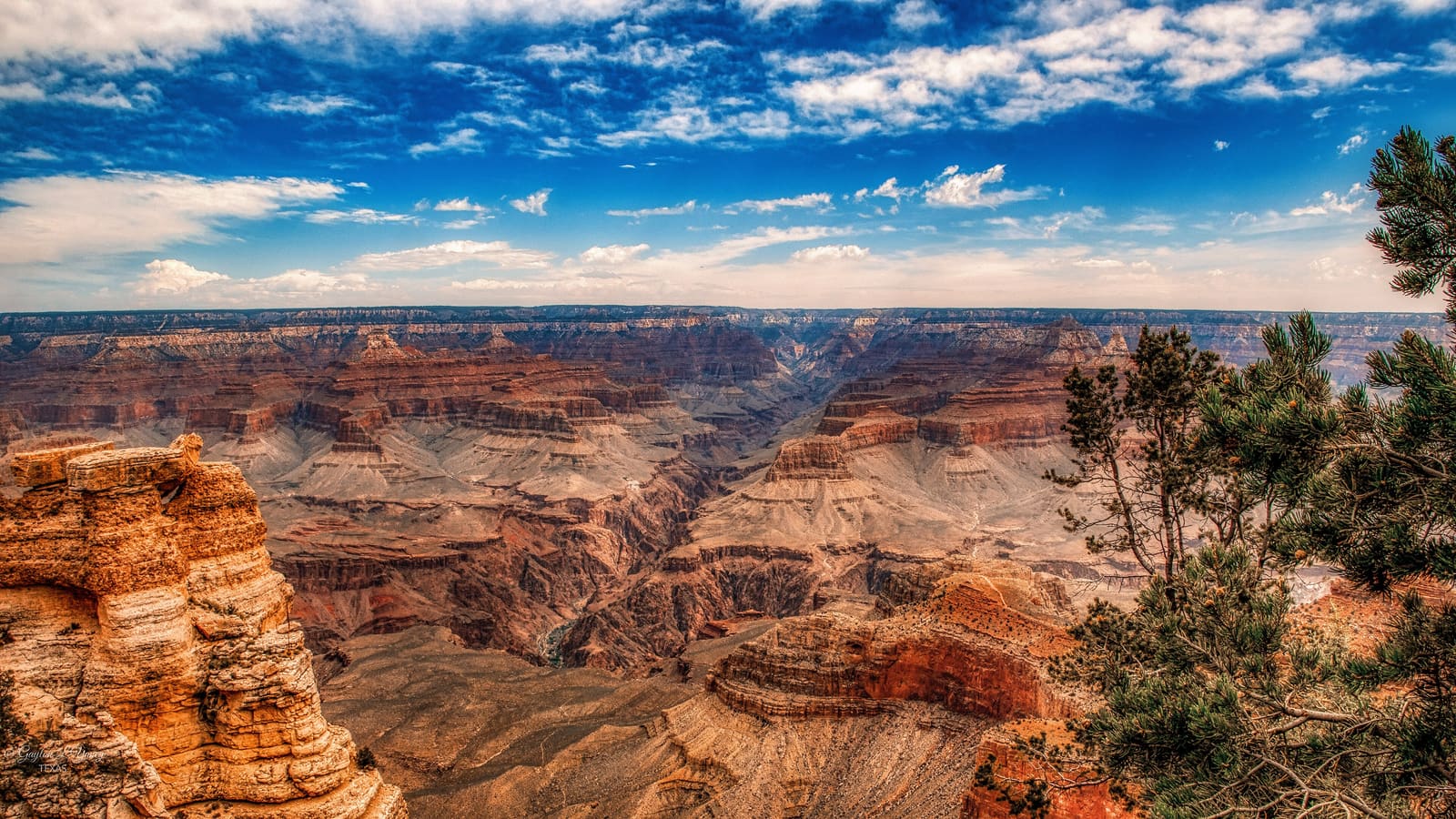
The South Rim stretches for 13 miles along the canyon edge, with dozens of named viewpoints. On a day trip, you won't see them all — and you shouldn't try. These are the ones that justify the drive.
Mather Point
Your first stop should be Mather Point, a short walk from the main visitor center parking area. This is likely where you'll get your first look at the canyon, and no amount of photos can prepare you for the scale. The viewpoint has two jutting promontories with railing, offering nearly 180-degree views. Arrive before 9 AM to avoid crowds. There are accessible paved paths from the parking lot.
Yavapai Point and Geology Museum
A 0.7-mile walk east from Mather Point along the paved Rim Trail. The small geology museum here has panoramic windows overlooking the canyon and excellent exhibits explaining how the Colorado River carved this mile-deep chasm over 5-6 million years. Free entry. This is the best place to understand what you're looking at.
Hopi Point
Accessible via the free Hermit Road shuttle (March through November) or by private vehicle in winter. Hopi Point juts farther into the canyon than almost any other South Rim viewpoint, giving you one of the widest panoramas available. This is the most popular sunset spot on the South Rim, but it's equally impressive at midday. You can see the Colorado River from here on clear days.
Grandview Point
Drive east on Desert View Road for 12 miles to reach Grandview Point. It's less visited than the village-area viewpoints, which means more space and quieter photography conditions. The views look east down the canyon with the Colorado River curving dramatically below. The historic Grandview Trail starts here — a steep unmaintained path once used by copper miners. Worth a look at the trailhead even if you don't hike.
Lipan Point
Continue east on Desert View Road for another 13 miles past Grandview. Lipan Point offers some of the best views of the Colorado River and the Unkar Delta — a broad flat area where ancestral Puebloan people once farmed. The river appears as a thin green-blue ribbon nearly a mile below you. If you have time for only one viewpoint beyond the village, make it this one.
Skip the Planning — Book a Guided Grand Canyon Tour
Full-day tours from Flagstaff with hotel pickup, expert guides, and all the best viewpoints. Free cancellation on most tours.
Browse Grand Canyon ToursWe earn a small commission if you book — at no extra cost to you.
Entrance Fees and Passes
Grand Canyon National Park charges an entrance fee at the gate. Here's what you'll pay in 2026:
- Private vehicle: $35 (covers everyone in the car, valid for 7 days; non-U.S. residents 16 and older also owe a $100-per-person nonresident surcharge as of January 1, 2026)
- Motorcycle: $30
- Walk-in or cyclist: $20 per person
- Children 15 and under: Free
If you plan to visit two or more national parks in a year, the America the Beautiful Annual Pass ($80, U.S. residents) pays for itself quickly. It covers entrance fees at all 400+ national parks and federal recreation sites. You can buy it at the gate or online at recreation.gov. Non-U.S. residents should get the $250 Non-Resident Annual Pass instead — it also covers the nonresident surcharge. The Grand Canyon also participates in free entrance days — check the NPS website for this year's dates.
Keep your receipt or pass visible on your dashboard. Rangers check at the entrance station, and there are occasional spot checks at trailheads and parking areas.
Best Time to Go
The Grand Canyon is open year-round, and every season has trade-offs.
Spring (March–May)
The sweet spot for most visitors. Temperatures on the rim are mild (40s to 60s°F), wildflowers bloom on the rim and inner trails, and crowds are manageable outside of Spring Break weeks and Easter weekend. Snow is still possible through mid-April, but the roads stay open.
Summer (June–August)
Peak season with the heaviest crowds. Parking lots fill by 10 AM, and the free shuttle buses run at capacity. Rim temperatures reach the low 80s, but the inner canyon hits 110°F+ — below-rim hiking is dangerous in midday heat. Afternoon monsoon thunderstorms roll through almost daily from mid-July through September, bringing dramatic cloud formations but also lightning. Leave Flagstaff early to beat the rush.
Fall (September–November)
Arguably the best season. Summer crowds thin dramatically after Labor Day, temperatures are comfortable, and the monsoon storms taper off by late September. October brings golden aspen color to the rim and clear, crisp air with visibility stretching past 100 miles. This is when locals visit.
Winter (December–February)
The canyon is magical in winter — occasional snowfall on the rim creates striking contrast with the red rock below. Crowds are minimal, and you'll have viewpoints to yourself. Some facilities close or reduce hours, and road conditions can be icy. Check ADOT (az511.gov) for road closures before driving. Bring serious layers: rim temperatures can dip into the teens.
Guided Tour Options
If you'd rather not drive or want expert commentary, several tour operators run daily trips from Flagstaff to the South Rim. Here's what to expect:
- Full-day bus tours — Most depart Flagstaff between 7 and 8 AM, include hotel pickup, spend 4-5 hours at the rim, and return by late afternoon. Expect to pay $150-250 per person. The guide provides geology and history narration throughout the drive and at viewpoints.
- Small-group SUV tours — More expensive ($200-350 per person) but with groups of 6-12 instead of 40+. These often include off-the-beaten-path stops and more flexibility at the rim.
- Helicopter tours — Depart from Tusayan (near the South Rim) rather than Flagstaff. A 25-minute flight over the canyon costs $250-400 per person. Book well in advance — these sell out weeks ahead in summer.
- Self-guided GPS audio tour — Drive yourself but get narrated guidance at every viewpoint, plus geology and history context you'd get from a guide. See our Grand Canyon audio tour for details.
Stay Near the Grand Canyon
Hotels in Tusayan and at the South Rim Village fill up fast. Book early for the best rates and availability.
Compare Grand Canyon HotelsWe earn a small commission if you book — at no extra cost to you.
What to Pack
The South Rim sits at 7,000 feet — similar to Flagstaff — and conditions can change quickly. Here's what to bring:
- Water: At least 1 liter per person, more if you plan to hike below the rim. Refill stations are available at the visitor center and along the Rim Trail.
- Layers: Even in summer, mornings are cool and afternoon storms bring temperature drops. A light jacket is essential year-round.
- Sun protection: Hat, sunglasses, and sunscreen. The high altitude means stronger UV exposure than you're used to.
- Comfortable shoes: The Rim Trail is paved in most sections, but Grandview Point and other outlying viewpoints have rocky, uneven terrain.
- Snacks and lunch: Food options inside the park are limited and overpriced. Pack a cooler with sandwiches, fruit, and snacks. There's no picnic table shortage along the rim.
- Camera with charged battery: You will take more photos than you expect. The canyon drains phone batteries.
- Cash: The entrance fee can be paid by card, but some vending machines and tip jars at the historic buildings are cash-only.
Sample Day Trip Itinerary
This itinerary maximizes your time at the canyon while keeping the day manageable. Adjust based on your interests and the season.
- 6:30 AM — Leave Flagstaff. Grab coffee and a breakfast burrito from a local spot on your way out of town. Take US-180 for the scenic route.
- 8:00 AM — Arrive at the South Rim. Park near the main visitor center. Hit the restrooms and grab a park map.
- 8:15 AM — Mather Point. Your first look at the canyon. Spend 20-30 minutes absorbing the view and taking photos in the soft morning light.
- 8:45 AM — Walk the Rim Trail to Yavapai Point. The 0.7-mile walk is flat and paved. Stop at the Geology Museum to understand the layers of rock below you.
- 9:30 AM — Hermit Road shuttle. Ride the free shuttle west to Hopi Point and Mohave Point. Hop on and off at viewpoints that catch your eye. Allow 1.5–2 hours for this stretch.
- 11:30 AM — Lunch. Eat your packed lunch at a picnic area near Hermit's Rest or back at the village. The stone Hermit's Rest building, designed by Mary Colter in 1914, is worth a look.
- 12:30 PM — Desert View Road (optional). If you have the energy, drive east to Grandview Point and Lipan Point. This adds 1.5-2 hours but rewards you with less-crowded viewpoints and the best river views.
- 2:30 PM — Head back to Flagstaff. Take I-40 via Williams for the faster return. You'll be back in Flagstaff by 4 PM with time to rest before dinner.
Exploring more of the Flagstaff area? Our Day Trips from Flagstaff guide covers six other destinations within easy driving distance, and Things to Do in Flagstaff has you covered for the rest of your trip.
Skip the post-drive dinner-rush and instead walk the 1.5-mile loop with our Historic Downtown audio tour — covers the rail-and-lumber history that built Flagstaff as the gateway to the Canyon, including the Hotel Monte Vista and the Babbitt Brothers Building that canyon operators used as their supply hub.
Planning your Grand Canyon visit?
The Complete Grand Canyon Guide
Viewpoints, hiking trails, hotels, restaurants, permits, and audio tours — everything you need for an unforgettable South Rim experience.
Full Grand Canyon Guide →Grand Canyon Tours from Flagstaff
Let someone else handle the driving. Guided tours include hotel pickup, expert narration, and all the best viewpoints.
See Tour Options & PricesWe earn a small commission if you book — at no extra cost to you.
Related Guides
- Day Trips from Flagstaff — Overview of all day trip destinations
- Sedona Day Trip from Flagstaff — Red rocks, vortex sites, and Oak Creek Canyon
- Meteor Crater from Flagstaff — Earth's best-preserved impact crater
- Hotels Near Grand Canyon — Where to stay if you want more than one day
- Things to Do in Flagstaff — Fill the rest of your trip
Frequently Asked Questions
How long does it take to drive from Flagstaff to the Grand Canyon?
The drive from Flagstaff to the Grand Canyon South Rim takes approximately 1.5 hours (80 miles). You have two route options: US-180 north through the Kaibab National Forest, which is more scenic, or I-40 west to Williams then AZ-64 north, which is slightly faster. Both routes are well-maintained year-round, though winter storms can occasionally require chains or cause short delays.
How much does it cost to enter the Grand Canyon?
Grand Canyon National Park charges $35 per private vehicle (valid for 7 days), $30 per motorcycle, or $20 per person for walk-ins and cyclists. Non-U.S. residents aged 16 and older also owe a $100-per-person nonresident surcharge, in effect since January 1, 2026. The America the Beautiful annual pass ($80, U.S. residents) covers entrance to all national parks and is worth it if you plan to visit two or more parks; non-U.S. residents should get the $250 Non-Resident Annual Pass instead. Children 15 and under enter free.
Is one day enough to see the Grand Canyon from Flagstaff?
Yes, one full day is enough for a rewarding Grand Canyon visit from Flagstaff. Leave by 7 AM, spend 5-6 hours at the South Rim exploring viewpoints and walking portions of the Rim Trail, and drive back in the afternoon. You won't see everything, but you'll experience the canyon's most iconic views. For a deeper experience — especially if you want to hike below the rim — consider spending a night at the park or in Tusayan.
Which Grand Canyon viewpoints are the best?
The must-see viewpoints on a day trip are Mather Point (first stop, easy access from the visitor center), Yavapai Point (geology museum with panoramic windows), Hopi Point (one of the widest panoramas on the South Rim), and Grandview Point (less crowded, dramatic east-facing views). If you have time, Lipan Point offers stunning views of the Colorado River and is worth the 25-mile drive on Desert View Road.
Should I take a guided tour or drive myself to the Grand Canyon?
Both options work well. Driving yourself costs less and gives you full flexibility — you can leave early, stay late, and explore at your own pace. Guided tours eliminate the stress of driving and parking, include expert commentary on geology and history, and often stop at viewpoints you might miss on your own. If you prefer independence, consider our GPS audio tour — you drive yourself but get narrated guidance at every stop.