By The Lowdown Guide Editorial Team · Last verified on the ground: 2026-05-28
The Grand Canyon’s South Rim is a hub of spectacular viewpoints, bold geology, and seasonal crowds. For visitors relying on a wheelchair or with limited mobility, the scenery remains profoundly accessible—but not everything is equally easy to reach in a single day. This guide aims to give an honest, veterans-level read: what you can realistically do in 12 to 14 hours, what requires advance permits or careful timing, and where to rest, refuel, and sleep without sacrificing view quality. The core truth is straightforward: with smart routing, a free Accessibility Permit, and a plan that prioritizes paved routes and accessible shuttles, you can experience the iconic rim, several key overlooks, and comfortable breaks. But you should also expect limits—long drives, hiking challenges, and some upper-floor viewpoints that aren’t accessible in wheelchairs. Read on for a practical verdict and a route you can adapt to your pace and energy. For permit details, visit the official permit guide: Accessibility Permit.
Permit basics: how to get the Accessibility Permit and what it covers
The South Rim offers a free Accessibility Permit that allows a private vehicle to access parts of the Hermit Road and Yaki Point road that are normally shuttle-only. This permit is designed to reduce the travel friction for mobility users and to enable access to near-parking overlooks along a compact segment of the rim. You can obtain the permit at any entrance station or at a Grand Canyon visitor center desk; hours are typically 7:00 a.m. to 5:00 p.m. for desk issuance, though you should confirm current hours on arrival or via the park’s notices before you depart. The permit itself is free, and you’ll display it in your windshield so rangers can verify access. Practical note: parking capacity and road-use management mean you still may encounter full lots at peak times, so plan an early start and have a backup plan. For the official process, see the permit guide: Accessibility Permit.
Beyond the basic permit, the park emphasizes staying on paved, accessible routes whenever possible. If you anticipate busier days, consider pairing the permit with a day when Desert View Drive is less crowded and you can plan for a longer, more relaxed drive along the east rim. For planning details and potential timing shifts, check the park’s travel-planning resources: One-day itinerary and Parking strategy.
Accessible routes and near-parking access: the Greenway/Rim Trail segment and near viewpoints
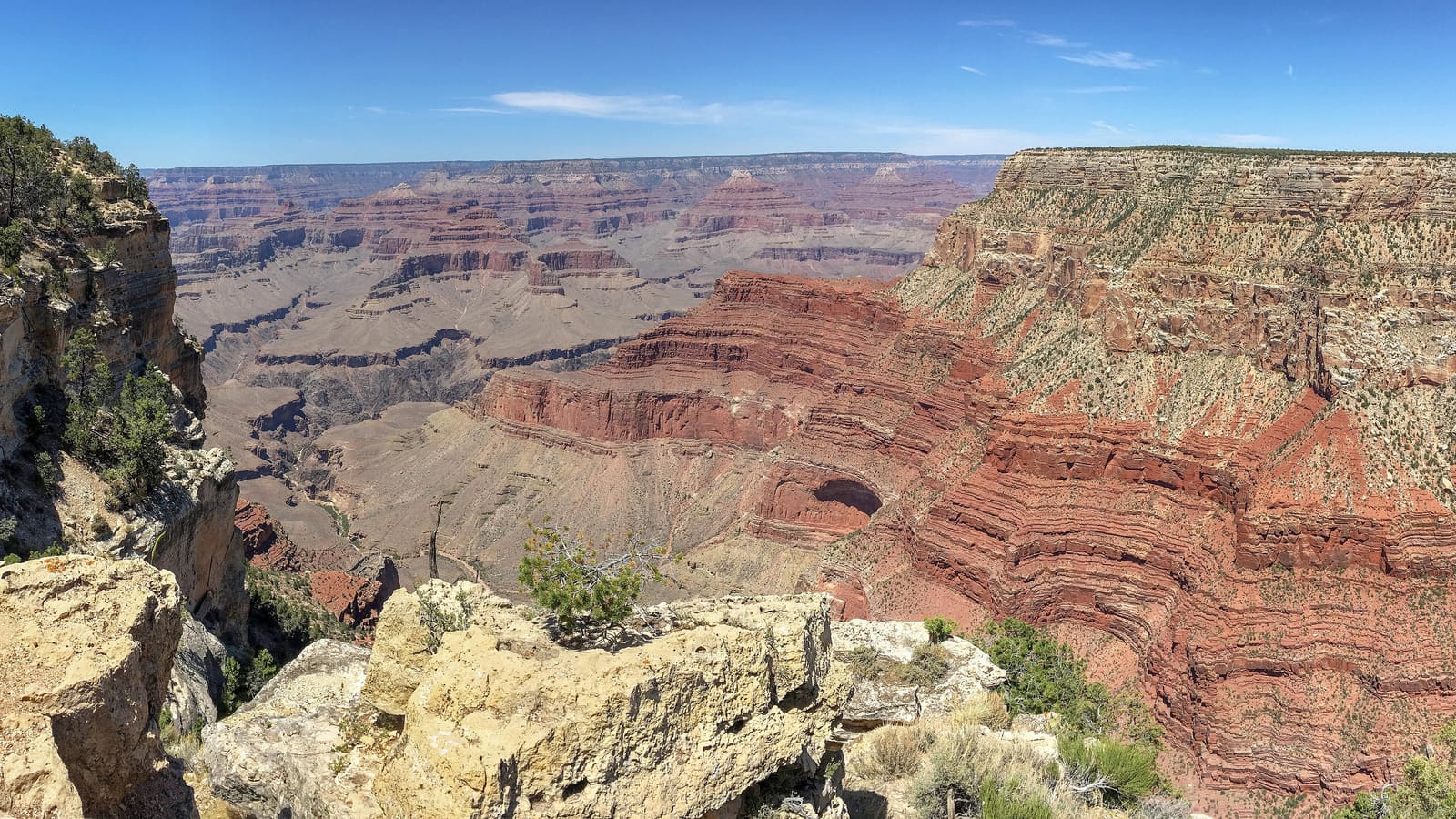
One of the South Rim’s greatest accessibility wins is the Greenway/Rim Trail segment between Mather Point and Yavapai Point. The trail in this stretch is paved and largely flat, with a gentle ramp profile and railings at most overlooks. That means you can roll with confidence along an uninterrupted corridor while taking in sweeping vistas. The segment is designed to be navigable by wheelchair users, and several viewpoints along this route provide paved approaches with viewing platforms that minimize detours. For a visual anchor, see Mather Point, a quintessential first-stop near the Village that often offers accessible parking and plaza-style pullouts. If you want to ground your plan in a broader viewpoints sequence, you can also explore the main viewpoints hub at Desert View Watchtower for the eastern circuit and check the Desert View area for accessible overlooks. Note that while the core rim segment is accessible, some side overlooks require brief detours; always follow posted signage and staff guidance.
From a practical standpoint, the Mather Point area is typically the highest-yield first stop for a mobility visit because it combines a short approach, a spacious plaza, and easy access to shuttle connections. You’ll want to map your timing around this hub so you can maximize views with minimal walking. If you’re curious about expanding your rim exposure, consult the official planning notes and sample routes: One-day itinerary and Mather Point.
Wheelchair-accessible transport: shuttles and their accessibility features
The park’s shuttle fleet is designed to be wheelchair-accessible, featuring kneeling buses with ramps that enable easier boarding and disembarking. This is a game-changer for mobility visitors who want to cover more viewpoints without incurring hours of walking. The shuttle system remains a central spine of a one-day plan because it couples near-term energy with far-seeing views, letting you focus energy on a handful of overlooks instead of chasing every corner. Always verify the latest accessibility notes and routes before you go: Shuttle-bus guide.
In practical terms, plan to anchor your day around several key shuttle legs between Mather Point, Yavapai Point, and other near-parking hubs along the Rim. The actual service frequency can vary by season and day, but in peak season you can expect buses to run from early morning until late afternoon with a cadence that typically keeps a bus accessible at major stops every 10–20 minutes. If you’re coordinating a tight schedule, the shuttle guide becomes your best friend for reducing wait time and fatigue.
Lodging, accessibility facilities, and on-site services
When you’re planning a one-day South Rim visit with mobility needs, where you stay matters as much as where you go. Maswik Lodge and Yavapai Lodge both offer accessible rooms with ramped routes from parking to lobby areas and dining spaces. The Maswik complex is noted for convenient proximity to the Village and to several shuttle stops, while Yavapai Lodge provides straightforward access to the nearby viewpoints and a restful base for afternoon breaks. For a broader look at lodging options and accessibility features, see the Hotels page: Hotels.
There are some older structures with guaranteed historic charm but limited vertical access. The 1905 El Tovar, for example, is a storied hotel that has no elevator, so if you require a first-floor room or an accessible route to dining terraces, you’ll want to arrange accommodations accordingly. Always request accessibility-specific room layouts well in advance and confirm elevator and ramp access with the front desk at booking. For context on the range of lodging options and accessibility considerations, consult the lodging overview and current details: Hotels.
Beyond lodging, the park’s accessibility ecosystem includes free wheelchair loans at the visitor center. These loans are typically available during regular visitor-center hours (commonly 8:00 a.m. to 5:00 p.m., daily). The loan program is first-come, first-served, and loan durations are usually aligned with daily use; if you expect to need a loan for more than one day, call ahead to confirm extension policies. For official information and hours, contact the park’s general information line at 928-638-7888 and reference the Grand Canyon visitor services pages: Grand Canyon National Park.
Accessibility doesn’t end with equipment. Service animals are permitted in all park facilities where pets are restricted, but conventional pets aren’t allowed in many core visitor zones. If you rely on service animals, you should carry appropriate documentation and be prepared to present it if requested by staff. The park’s general accessibility guidance emphasizes keeping paths clear, using railings, and respecting posted closure notices along crowded days. For broad planning guidance including accessibility etiquette and planning tips, see the planning resources: Best time to visit and Travel Planning.
What you can realistically do in one day: verdict, caveats, and a sample plan
The honest verdict is that a mobility-minded visitor can achieve a satisfying South Rim experience in one day if the plan focuses on a few high-value, accessible hubs. You can comfortably achieve: a Mather Point arrival, a segment of the Greenway/Rim Trail that’s fully paved and accessible, one or two shuttle legs between major overlooks, a stop at Desert View to enjoy eastern views from accessible platforms, and a final return to the Village for meals and rest. You will not be able to include long Rim Trail segments with significant elevation or stairs (those runs are better saved for a separate hike or a two-day plan), and some viewpoints along Desert View Drive may require short walks beyond paved routes. The Desert View Watchtower itself cannot be fully accessed from the top floors if stairs-only access is a constraint, so plan to cap views at the lower levels and rely on the wider panorama around the complex for dramatic shots. For a practical, time-based plan, consult the One-Day itinerary: One-day itinerary.
To ground your planning in concrete realities, consider the following daily rhythm: arrive early at Mather Point to secure a parking space and begin with the most panoramic viewpoints along the Greenway. Roll to the accessible segments, use the shuttle to connect between hubs, and slot a Desert View leg only if you’re within your energy budget and confident that parking is available near the Desert View area (the Desert View parking lot can fill by late morning on peak days). If you’re driving with the free Accessibility Permit, you’ll want to allocate a window for the Hermit Road/Yaki Point corridors and plan a return route through Village facilities and the Maswik/Yavapai zones. For parking-focused planning, see Parking strategy.
Energy and safety considerations are essential. The South Rim sits at roughly 7,000 to 8,000 feet above sea level, so plan for altitude-related fatigue and shorter operating times if you’re not acclimated. Hydration and sun protection are non-negotiable; bring a compact chair or stool if you need resting spots along flatter segments, and arrange for a portable, park-approved mobility aid if you’re between loan periods or waiting for the next shuttle. Accessibility-friendly meals are available at Maswik and Yavapai Lodge dining outlets, but you may want to pack a compact cooler or snack bag for returns to the Village. The bottom line is this: a thoughtfully designed one-day plan can deliver a sequence of truly memorable overlooks without leaving you exhausted, provided you respect the pace and permit constraints. For a quick starter route with official stops, see the One-Day Itinerary link above and build from that framework.
Seasonal realities, road status, and practical planning tips
Seasonality matters for accessibility and driving. Desert View Drive's openness to private vehicles is year-round, but road maintenance, weather, and seasonal closures can influence access to certain overlooks or parking areas. In spring and fall, days are often mild, but mornings can be chilly at altitude, so layer and plan accordingly. The Hermit Road corridor, accessible via the permit, is subject to seasonal traffic patterns; you’ll want a backup plan for parking if the Hermit Road parking is full, as the lines can stretch on weekends or holidays. The park’s official notices provide the best up-to-the-minute guidance, so make a quick check before you depart and again at midday if your plan relies on specific overlooks or shuttle connections. For a broader planning framework that factors in seasonality, view the Best Time to Visit page: Best time to visit.
Safety, etiquette, and accessibility best practices
Even with a wheelchair-friendly setup, safety remains paramount. Always stay on paved paths where signage indicates, respect closed areas, and avoid steep, ungraded slopes. Use designated viewing platforms with rails, and keep a comfortable distance from cliff edges—wind and ground shifts can surprise. If you’re traveling with a caregiver or family, coordinate meeting points at major hubs and schedule rest breaks in the Village or at Maswik/Yavapai for meals and shade. Service staff are typically helpful with route guidance; don’t hesitate to ask for the most accessible routes to your preferred overlooks. For a broader discussion of planning resources and etiquette, see the Travel Planning hub and hotel accessibility resources above.
Final verdict: what a wheelchair user can and cannot do in one day
Verdict in one sentence: you can enjoy a meaningful, widely accessible South Rim experience in a single day if you accept a focused itinerary centered on near-parking viewpoints, the paved Greenway/Rim Trail segment, and a couple of shuttle hops, while avoiding long hikes that demand stairs or significant elevation changes. The day will feature a harmonious balance between arranged mobility-friendly access and carefully chosen viewpoints; you’ll still be limited by the lack of elevator access in some historic structures, upper-level stairs at a few overlooks, and the fact that Desert View Drive viewpoints require extra walking to reach fully accessible platforms. The practical takeaway is that you can achieve the “wow” moments by prioritizing Mather Point, a stretch along the Greenway/Rim Trail, and a Desert View stop within a single day, while saving Desert View Watchtower upper areas and the longer rim segments for a future visit or a two-day itinerary. For a starting plan and a deeper dive into the permitted routes, consult the One-Day itinerary and Parking strategy pages listed above.
In short, a wheelchair-friendly Grand Canyon South Rim visit is absolutely doable in one day with careful permit use, a focus on paved, near-parking paths, reliable shuttle access, and wisely chosen viewpoints. It’s not a “check every box” kind of day, but it is a highly rewarding, logistically sound day that respects the terrain and the park’s accessibility commitments. For the most precise, up-to-the-minute details on routes, hours, and accessibility services, keep a running eye on the permit guidelines, the shuttle-bus guide, and the parking strategy resources linked throughout this article.
Key practical links you’ll want on hand:
- Accessibility Permit
- Shuttle-bus guide
- Parking strategy
- Mather Point
- Desert View Watchtower
- Hotels
- One-day itinerary
Notes: The plan above reflects current accessibility provisions—private-vehicle access under the Accessibility Permit, the paved Greenway/Rim Trail segment, and the availability of wheelchair loans at the Visitor Center. Elevation at the South Rim is around 7,000–8,000 feet, so pace and hydration are essential. For exact hours, parking-lot counts, and any seasonal closures, consult the park’s official pages and the links in this article.
Book a Guided Grand Canyon Experience
Viator runs helicopter flights, guided rim hikes, and Grand Canyon Railway day packages that bundle transport, entry, and a guide — useful when you would rather skip the driving and parking logistics.
Browse Grand Canyon Tours on Viator →Affiliate link — we earn a small commission at no cost to you.