By The Lowdown Guide Editorial Team · Last verified on the ground: 2026-05-28
If you’re weighing a trip to the Grand Canyon vs Sedona, you’re not choosing between a postcard and a painting—you’re weighing two very different kinds of awe. The Grand Canyon delivers one monumental, bucket-list moment with scale you can’t fake, while Sedona serves up red-rock variety, a tavern-and-art scene, dog-friendly trails, spas, and a community vibe that feels almost tailor-made for a longer, slower-paced visit. The two towns sit roughly 110 miles apart, and the best way to maximize both is to think in two halves of a single trip rather than a straight one-or-the-other choice. This guide tallies the hard details (distances, times, fees) and offers two realistic itineraries that fit 1–2 days in the canyon and 2–3+ days in Sedona.
Distance, drive times, and routes
The most efficient straight-line transfer between the Grand Canyon and Sedona is about 110 miles, usually taking around 2.5 hours by vehicle under normal traffic. If you take the slower, scenically rewarding route through Oak Creek Canyon on AZ-89A, you’ll pass Slide Rock State Park and other pull-offs; it’s spectacular in the early morning light but it tends to bottleneck on busy summer weekends, often filling by 9 AM as weekend visitors flood the canyon corridor. If you’re planning a single, transition-day drive, your best bet for reliability is the faster route, but if you’ve got a little flexibility and you love scenery, the Oak Creek Canyon leg is the memory-maker. For planning context, see our best time to visit guide and our parking strategy tips before you go.
What each destination delivers
Grand Canyon: one overwhelming bucket-list view and immense scale
Think of the Grand Canyon as the ultimate natural spectacle: immense, loud in its silence, and emotionally exhausting in the best possible way. The South Rim vantage points—Mather Point, Yavapai Point, and Desert View—offer a sequence of horizons so dramatic that even casual observers linger with jaw dropped. For most travelers, a single sunrise-to-mid-afternoon visit is enough to feel it in your bones, but a proper study in the canyon’s moods often rewards repeat visits across seasons. If you’re into viewpoints, plan a stop at Mather Point for classic panoramas, or venture to Desert View Watchtower for a more panoramic, less crowdsourced experience. If you’re packing days around this, check our general viewpoints hub for a broader map. For planning a longer stay or a two-day plan, you’ll want to skim through one-day itinerary and two-day itinerary pages so you don’t miss the logistics like shuttle-bus options and parking.
Sedona: red-rock hiking variety, vortex sites, arts, and dog-friendly trails
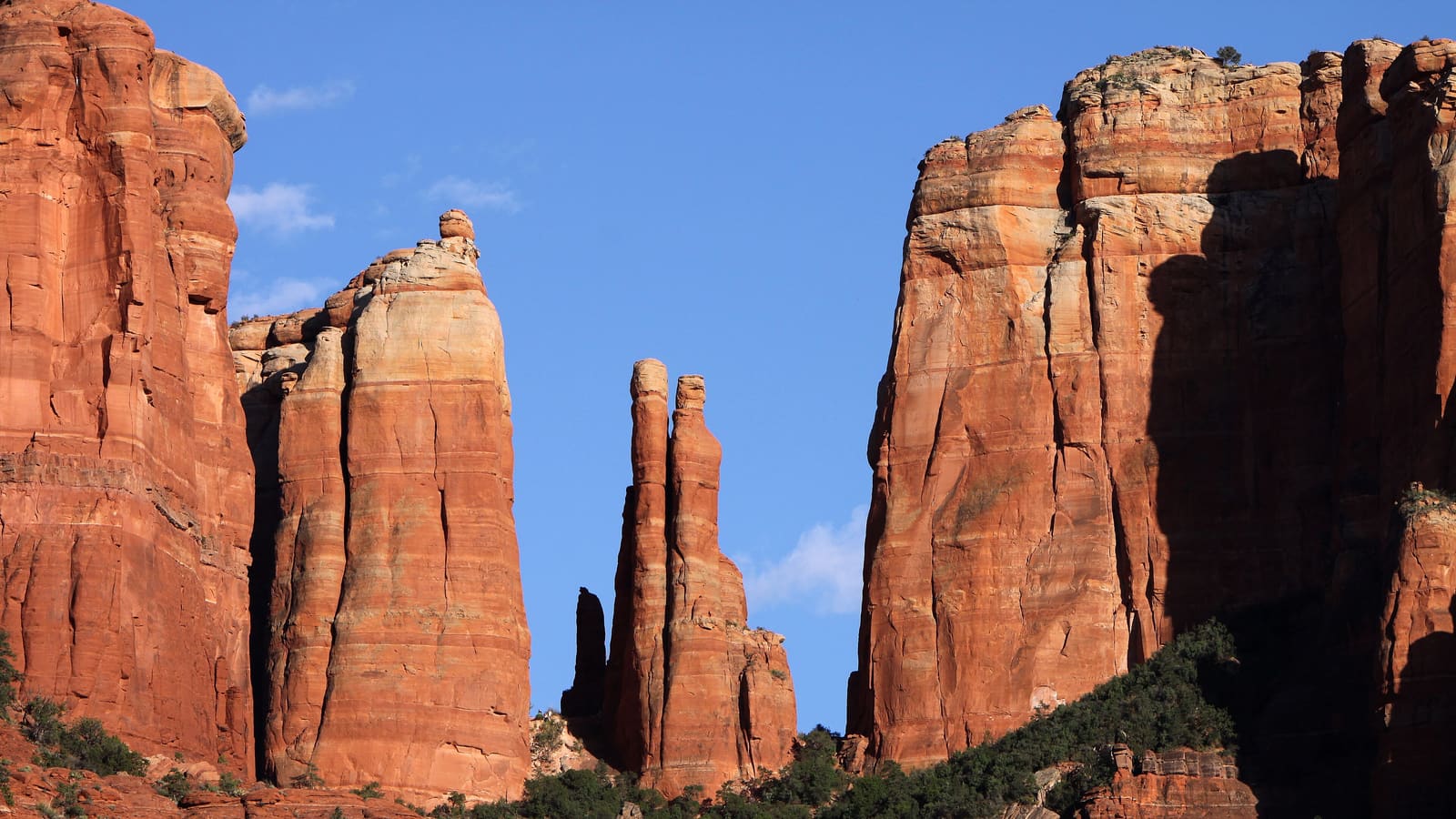
Sedona isn’t a single scene—it’s a landscape of red-rock formations, forested uplifts, and a culture of wellness, outdoor bookstore vibes, and boutique dining. Hiking here is less about a single monumental vista and more about a gallery of trails that range from easy strolling to strenuous climbs. If you’re traveling with a dog, Sedona’s trails are notably dog-friendly, and the town’s spas and casual restaurants give you a true off-the-plate experience after a day on the trail. Elevation in Sedona sits around 4,350 feet, which means warmer days in the shoulder seasons and brisk mornings in winter. The base temperature shifts you into a different wardrobe than the canyon, so pack layers. For a deeper planning map, explore Sedona’s hub and our Tusayan basecamp guides if you’re staging the trip as a loop.
Costs and timing: what to budget for and how long to stay
The financial contrast between these destinations is real. The Grand Canyon charges a straightforward entrance fee of $35 per vehicle, valid for seven days, which is a solid buy if you’re doing multiple visits or multiple viewpoints in a short window. Non-U.S. residents aged 16 and older also owe a $100-per-person nonresident surcharge on top of that fee, in effect since January 1, 2026. Sedona, by contrast, relies on the Red Rock Pass for trailhead parking, priced at $5 per day per vehicle. That $5 pass quickly becomes a recurring cost if you’re planning a longer stay in the Sedona area with several hikes, but it’s a reasonable price to keep access flexible. Beyond entrance fees, Sedona’s accommodations, dining, and spa options are typically more varied in price than a single Grand Canyon shuttle pass or a basic lodge stay near the canyon rim. For a robust checklist on timing, see our best time to visit and shuttle-bus guide.
Time-wise, the canyon is a two-day worthy feature for most travelers who want to explore multiple rim viewpoints and possibly Rim Trail segments without rushing. Sedona, conversely, earns a longer stay: you can easily fill 2–3+ days with hikes, art galleries, and day trips to nearby towns like Flagstaff or Jerome. If you’re planning a tight schedule, you’ll want to anchor your movements with reliable driving windows and a plan to lock in parking near the GC or in Sedona depending on your itinerary. For a quick-dial plan, combine one-day itinerary or two-day itinerary guidance with an early start and a late finish.
Two practical itineraries you can run this coming trip
Option A — Sedona base with a Grand Canyon day trip (2–3 days)
This is the most popular split for travelers who want the arts-and-spas vibe of Sedona but don’t want to skip a quintessential canyon moment. Base yourself in Sedona (read: a two- to three-night stay gives you mornings in the red rocks, afternoons by a spa pool, and evenings in art-forward shops). On day trip to the Grand Canyon, depart Sedona early and follow the direct route to the South Rim. Expect about 2.5 hours of driving under normal traffic, though the AZ-89A route through Oak Creek Canyon adds about 45 minutes—worth it if you’re chasing dramatic canyon light. If you want the fastest approach, use the more direct route and plan a lunch near the rim. Once you’re back in Sedona, you’ll have time to recover with a casual dinner, a gallery stroll, or a starlit hike. For the canyon day, you should review our Sedona to Grand Canyon travel planning, and you can further refine your day with the one-day itinerary framework. Don’t neglect parking strategies—GC parking often fills on weekends; our parking strategy tips will save you time.
Option B — Grand Canyon first, then an overnight in Sedona (2–4 days)
If the canyon is your highlight, begin with the South Rim, then reward yourself with a slow Sedona finish. Drive the 110 miles to the canyon for a full day of rim viewpoints, perhaps a Canyon shuttle ride to reach trailheads more efficiently, and a closing sunset at a reliable vantage like Lipán Point or Desert View. After a canyon day, make the roughly two-hour drive to Sedona for a restful overnight and a second day of red-rock hikes or a spa afternoon. For route planning, see our Las Vegas to Grand Canyon routing and then the Sedona hub for a long-form feel of the town. If you want a more formally structured plan, our two-day itinerary is a good start, and you can adapt it to a one-night Sedona finish if you’re short on time.
Elevation, weather, and packing tips
Elevation matters. Sedona sits around 4,350 feet, which tends to mean warmer days and cooler mornings, especially in shoulder seasons. The Grand Canyon’s South Rim sits closer to 7,000 feet, where mornings are notably cooler and storms are more frequent in late summer. That difference affects what you wear and what you pack: breathable layers for Sedona’s warm afternoons, a windbreaker for canyon gusts, and proper footwear for rocky segments. If you’re traveling in peak summer, you’ll want sun protection and plenty of water; if you’re visiting in winter, you’ll want insulated layers and a plan for possible snow and ice on rim trails. Our planning resources on best time to visit and shuttle-bus guide can help you align transportation with weather.
Verdict by traveler type
If you crave a single, jaw-dropping moment and you’re on a tight schedule, the Grand Canyon is the star. If you prefer a multi-day, art-and-hiking journey with a softer pace and a dog-friendly landscape, Sedona earns the MVP badge. For families or groups with mixed tastes, the two-destination approach—Sedona as a base with a day trip to the canyon, or a canyon-first loop ending in Sedona—delivers the widest, most satisfying spectrum of experiences. The key is to structure your itinerary around drive times, seasonal traffic, and parking realities. For a full, referenceable plan, pair this with our itinerary templates in one-day itinerary and two-day itinerary, and tailor to your pace.
Practical tips to maximize your split-visit
1) Leave early or target late afternoons for the scenic drive to reduce the risk of Oak Creek Canyon congestion on summer weekends. 2) If your heart is set on a crowded canyon sunrise, map your parking strategy ahead of time and consider shuttles if you’re visiting during peak season. 3) For a Sedona day, plan a comfortable pace with a mid-day break for spa or café culture, then a sunset hike to cap the day. 4) For lodging, book early in Sedona or Tusayan; the canyon rim has limited, high-demand accommodations that fill fast in peak season. 5) Always confirm current entry fees in advance and keep a printed or digital copy of your parking passes and permit information. For rooted planning, consult our linked itineraries and travel-planning resources as you map your exact dates and accommodations.
Book a Guided Grand Canyon Experience
Viator runs helicopter flights, guided rim hikes, and Grand Canyon Railway day packages that bundle transport, entry, and a guide — useful when you would rather skip the driving and parking logistics.
Browse Grand Canyon Tours on Viator →Affiliate link — we earn a small commission at no cost to you.