By The Lowdown Guide Editorial Team · Last updated: 2026-07-23
1. Why the shuttle system exists
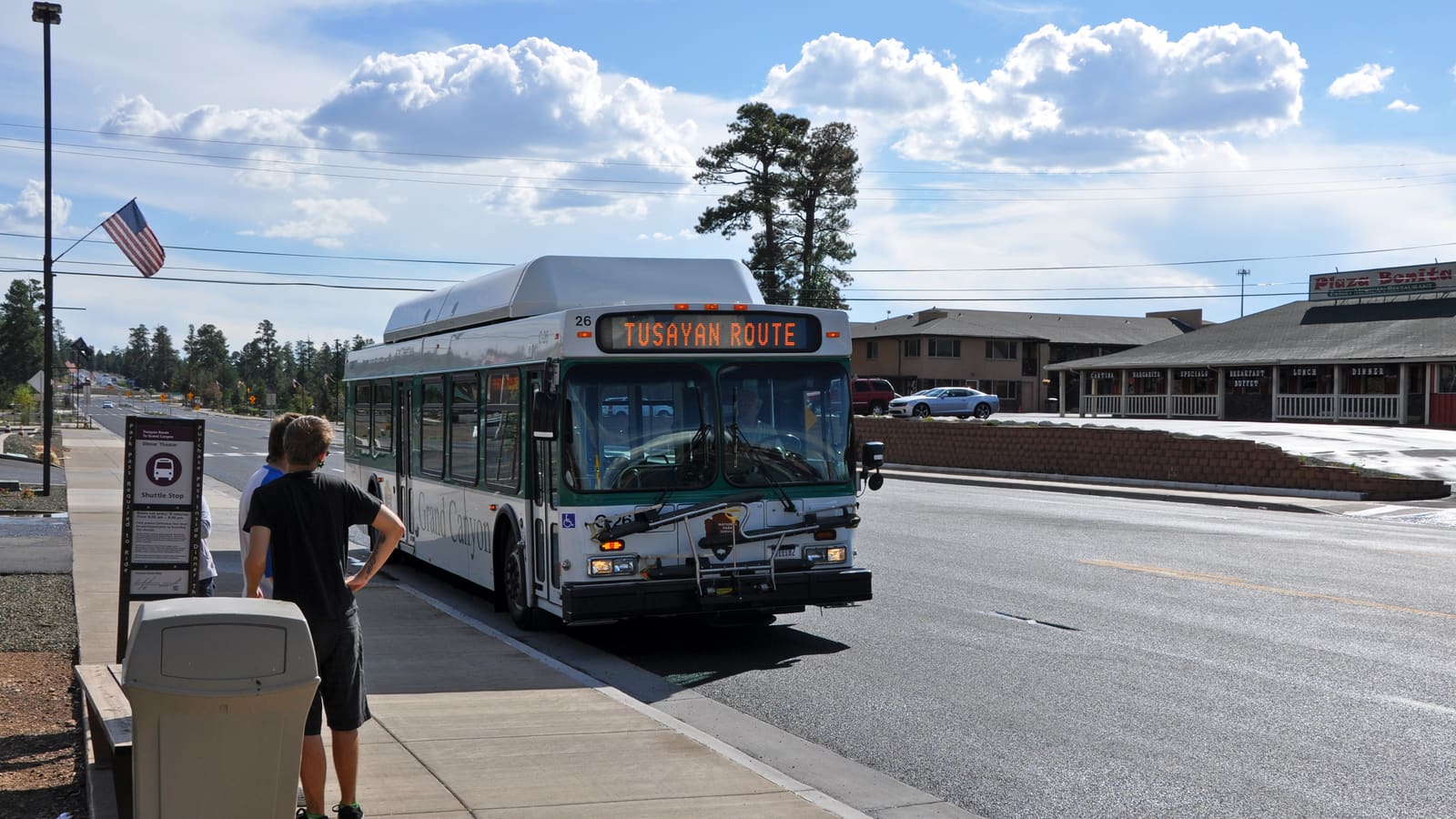
Parking at the South Rim is limited relative to the number of visitors on a busy day, and several of the most photographed viewpoints along Hermit Road are not accessible by private vehicle for most of the year. The shuttle system solves both problems at once: it reduces congestion in the Village core and opens up viewpoints that would otherwise require a long roadside walk with no shoulder.
The system is organized into a small number of color-coded routes, each covering a distinct part of the South Rim. Learning the basic shape of these routes before you arrive saves real time compared to figuring it out at the first shuttle stop you encounter. See our one-day itinerary guide for how the shuttle fits into a tightly timed visit.
2. The Village Route
The Village route, commonly shown in blue on park shuttle maps, is the connector route linking the visitor center, major lodges, campgrounds, and the transfer point for other routes within Grand Canyon Village. It typically operates year-round since it serves core lodging and services rather than seasonal viewpoints.
If you are staying inside the park at one of the Village lodges, this route is often the most useful one to learn first, since it is how you reach the transfer points for the other shuttle routes without needing your car at all.
3. The Kaibab Rim Route
The Kaibab Rim route, commonly shown in orange, runs east from the Village area toward the South Kaibab trailhead and Yaki Point. This is the route most day hikers use to reach the South Kaibab trailhead, since parking at the trailhead itself is not available to the general public.
Because it serves an active trailhead, this route tends to run early, often starting before sunrise to accommodate hikers aiming to beat the heat on a below-rim trip. Check the current schedule for exact early and late trip times, since these shift by season. Our day hikes guide covers South Kaibab and other trail options in more depth.
4. The Hermit Road Route
The Hermit Road route, commonly shown in red, is the one most associated with classic South Rim sunset photography, since it reaches Hopi Point, Mohave Point, and several other west-facing viewpoints along with the end-of-road stop at Hermits Rest. For most of the year, private vehicles are not permitted on Hermit Road, making this route the only way to reach those viewpoints.
Sunset is the route's busiest window, and buses can fill up at the more popular stops, so plan to arrive at your target viewpoint with a comfortable buffer before the light you are hoping to catch. In some winter periods, the private-vehicle restriction is lifted while shuttle service is reduced. Confirm the current seasonal arrangement with the NPS before you plan around either option.
5. Timing, frequency, and wait times
Frequency varies by route, time of day, and season — on the busiest South Rim routes, buses have run as often as every 8 to 15 minutes during peak summer service, though the interval can be longer at other times of year. Early morning and sunset windows tend to see the heaviest ridership, which can mean a longer wait or a full bus passing by before you can board.
Operating hours shift seasonally, generally running longer in summer to cover early sunrise and late sunset, and shorter in winter. Rather than memorizing exact times from any single source, check the posted schedule at a shuttle stop or the current NPS shuttle page on the day of your visit, since schedules are updated more frequently than most guides can track.
6. Tips for using the shuttle system effectively
Pick up a printed shuttle map at the visitor center or a park entrance when you arrive, and note the transfer points between routes so you are not guessing mid-trip. If your plan includes a sunrise or sunset viewpoint, arrive at the shuttle stop earlier than you think you need to, since the first bus of the morning and the last few before sunset are consistently the most crowded.
Traveling with kids or a group makes the shuttle a bit more logistically involved. See our family guide for shuttle-specific tips. And if you are combining shuttle stops with the East Rim, note that Desert View Drive is generally a separate, self-drive corridor rather than a shuttle route. See our Desert View Drive guide for that route.
Book a Guided Grand Canyon Experience
Guided South Rim tours handle transportation and timing for you, which is useful if shuttle logistics feel like too much to plan on your own.
Browse Grand Canyon Tours on Viator →Affiliate link — we earn a small commission at no cost to you.