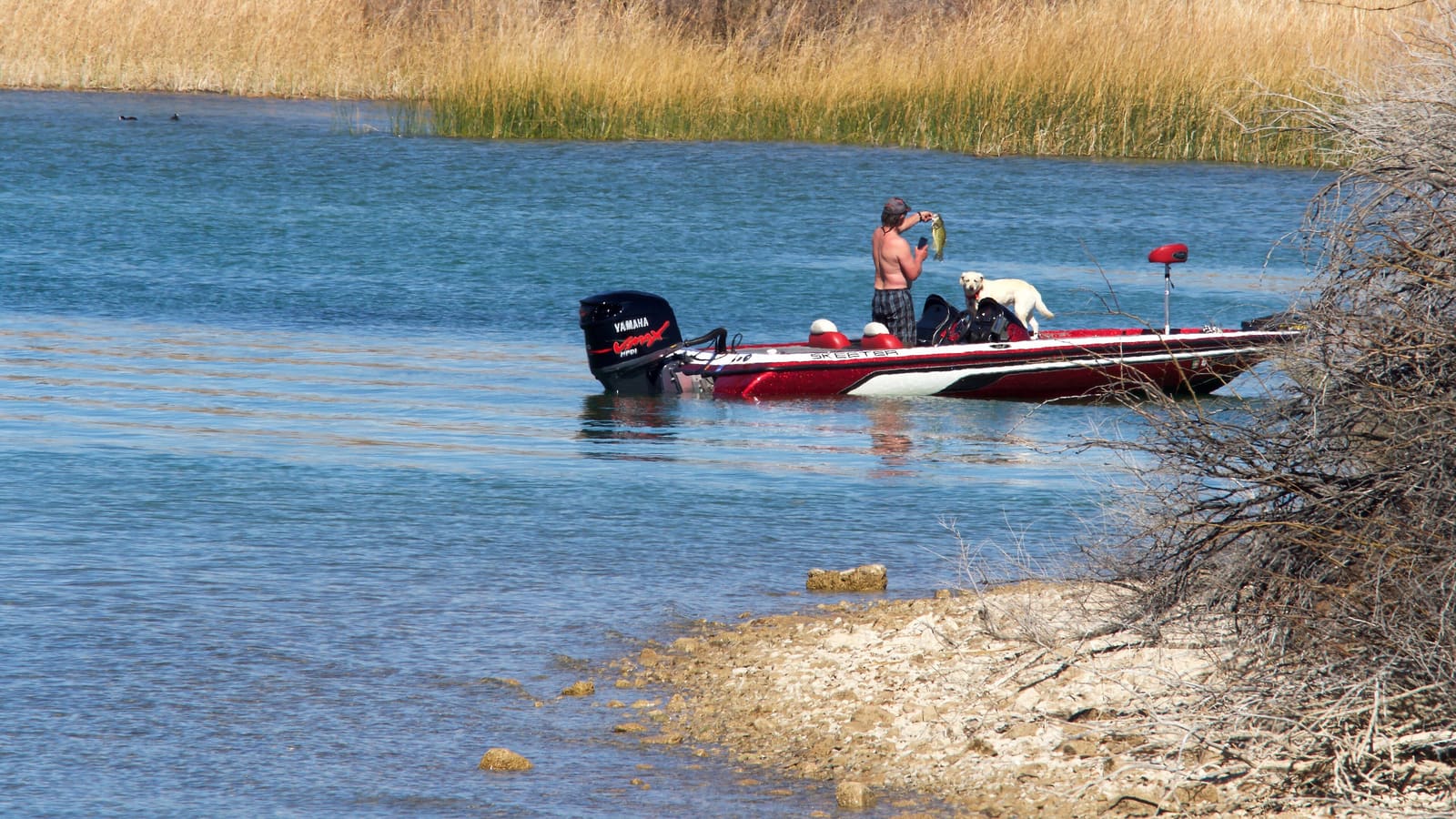
A Reservoir Built for Bass
Because Lake Havasu is a Colorado River reservoir rather than a natural lake, it has extensive underwater structure -- flooded coves, rocky points, and varied depth -- that supports a strong bass population and has made it a recognized stop on the regional bass tournament circuit. Local guide services and tournament organizers point to this structure as the main reason the lake fishes well relative to its size.
Bass are not the whole story, though, and a visitor who plans only for bass is leaving out the lake's single biggest claim to fame. Arizona Game and Fish reports that Lake Havasu hosts both the state and the world record redear sunfish -- a fish of 5 pounds 12.8 ounces caught in 2014 -- and its annual fall survey work has repeatedly turned up more redear than largemouth. In one such survey, of 3,013 fish sampled, 820 were redear sunfish and 572 bluegill, against 347 largemouth bass and 52 smallmouth. AZGFD's own conclusion was that Lake Havasu should continue to be a destination fishery for largemouth bass, smallmouth bass and redear sunfish.
One more species note matters for anyone keeping fish. AZGFD lists the razorback sucker -- a federally protected native species -- as currently stocked in this reach of the Colorado River. Know what you have before you put it on a stringer, and check the current Arizona fishing regulations for species you must release.
Striped Bass
Striped bass were introduced to the Colorado River reservoir system and have established a following of anglers who specifically target them at Lake Havasu, often using different techniques and timing than bass anglers use for largemouth or smallmouth. Striper fishing here tends to reward anglers willing to fish deeper water or follow baitfish schools rather than fishing the shoreline structure that largemouth favor.
Because striped bass behavior and productive techniques can shift with water temperature and baitfish movement through the season, a local guide or bait shop is generally a better source of current striper information than general fishing advice, especially for a first-time visitor unfamiliar with the lake.
Largemouth and Smallmouth Bass
Largemouth bass are found throughout Lake Havasu's coves and shoreline structure, while smallmouth bass tend to favor the lake's rockier areas, giving visiting anglers two distinct bass fisheries to work depending on the water and structure they prefer. Both species support the guide and tournament activity that gives the lake its regional reputation.
As with any bass fishery, productive spots and techniques shift with season and water conditions, so a rental boat or drive-up shoreline spot that produced well for a previous visitor is not a guarantee for your trip. Local bait shops and guide services are generally the best source for current conditions rather than relying on older trip reports.
Launch Ramps and Shore Fishing
Lake Havasu State Park is the launch point most visiting anglers use. Arizona State Parks lists three boat ramps there -- the North and South Windsor ramps in Lot 2 just east of the contact station, and Windsor Ramp 3 toward the south end of the park past the campground in Lot 3 -- plus a separate ramp in Lot 1 at the north end restricted to personal watercraft and jets, which does not allow craft with propellers. Non-motorized boats may launch at any ramp. Additional ramps and marinas exist around the lake, and boat rentals are available in town for visitors who want to fish without trailering their own equipment.
Shore fishing is possible at several public access points and beaches around the lake, though boat access generally reaches more of the structure that holds fish, particularly for bass. Arizona State Parks warns that water levels fluctuate and advises checking ramp conditions with a ranger, and fees and access rules can change with season, so confirm current status with the park or a local marina before you plan a trip. If you are camping the shoreline from a boat, note that the Bureau of Land Management's Lake Havasu Field Office manages 73 boat-access campsites over roughly 20 miles of the Arizona shore and charges a fee -- currently listed as $10 a day plus $10 a night for up to six people, with no fee for children under 16.
Licenses: Arizona, California, or Both
You need a license, and Arizona Game and Fish sets the threshold at age 10: a valid fishing or combination license is required for resident and nonresident anglers 10 years of age or older fishing any publicly accessible water in Arizona. Anglers under 10 do not need to buy a state fishing license.
Which state's license, though, is the part visitors get wrong. Lake Havasu straddles the Arizona-California line, and the two states manage it jointly -- AZGFD and the California Department of Fish and Wildlife run the lake's annual fall electrofishing survey together. Arizona and California have long maintained reciprocal arrangements covering the stretch of the Colorado River that forms the boundary between them, which is why many anglers fish the whole lake on a single state's license. We are not going to state the current terms as fact here, because reciprocity provisions, stamps, and second-rod endorsements are periodically revised and the exact water they cover matters. Before you fish, confirm what your license covers with both the Arizona Game and Fish Department and the California Department of Fish and Wildlife, especially if you plan to fish the California shoreline or launch from the California side.
License types, fees, and any special stamp requirements for particular species are periodically updated, so treat any specific figure found elsewhere as a starting point rather than a confirmed current price, and purchase or verify your license through the agencies' own official channels. Bag limits, size limits, and any species you must release are set in the current regulations rather than by local custom -- read them for the year you are fishing.
Best Seasons to Fish
Spring and fall generally offer the most comfortable fishing conditions and are considered strong seasons for bass activity on Lake Havasu, as water temperatures sit in a range that keeps fish more active without the extreme heat of summer. Winter fishing is also popular with visiting anglers, particularly for those escaping colder climates elsewhere.
Summer fishing is still productive for anglers willing to manage the heat, often by fishing early morning or evening hours rather than the middle of the day, but the desert heat is a real factor to plan around rather than an afterthought. Whatever season you visit, checking current conditions and recent local reports will serve you better than relying on a general seasonal rule alone.
Safety: Heat, Storms, and the Rules That Are Law
Fishing puts you on the water for long, quiet stretches at the hottest and the stormiest times of day, so a few of these are worth planning around rather than reading past.
Life jackets are a legal requirement, not a suggestion. Under A.R.S. 5-331, a watercraft must carry one Coast Guard-approved wearable flotation device in good and serviceable condition for every person on board, stowed so it is readily accessible for immediate use -- and a child twelve years of age or under must wear a properly fitting Coast Guard-approved life jacket the whole time the watercraft is underway. If you are bringing kids along in a bass boat or a rental, pack jackets sized for them.
Operating under the influence is enforced here. A.R.S. 5-395 makes operating or being in actual physical control of a motorized watercraft while impaired unlawful, with a presumptive 0.08 blood alcohol limit and zero tolerance for minors. Arizona Game and Fish runs multi-agency OUI patrols and checkpoints on the Colorado River alongside the Mohave County Sheriff's Office and the U.S. Fish and Wildlife Service, and those stops include safety-equipment inspections. A cooler of beer and a long day on a boat is the classic way a fishing trip ends badly.
Heat is the biggest hazard on this lake. The hottest temperature ever recorded at an official National Weather Service observing site in Arizona was 128°F, set at Lake Havasu City on June 29, 1994, hotter than Phoenix has ever been, and summer days above 110°F are routine. That is why summer anglers fish dawn and dusk -- not just because the fish cooperate, but because midday on an open boat is genuinely dangerous. Carry far more water than you think you need, use shade, watch your partner for confusion, nausea, or sweating that stops, and get anyone showing those signs into shade and cool water. Never leave a child or a pet in a parked vehicle at the ramp.
Monsoon storms and a graphite rod are a bad combination. The National Weather Service fixes Arizona's monsoon season at June 15 through September 30, when thunderstorm hazards are most likely, and notes that lightning can strike as far as 60 miles from the nearest rainfall. Holding a long conductive rod in an open boat on open water makes you the target. Check the forecast before you launch, watch the sky upwind, and head in and get into a substantial building or an enclosed vehicle at the first thunder rather than fishing out the last hour.
There are no lifeguards, and the water is colder than it looks. Arizona State Parks states of the Lake Havasu State Park beaches: "There are no lifeguards on duty. Please swim and use beaches at your own risk." The National Weather Service warns that involuntary gasping on sudden immersion can be triggered by water as warm as 77°F -- which is a drowning emergency if you go in unexpectedly and inhale water. That is the real argument for wearing a jacket while the boat is moving, not just carrying one.
The level and current are set by a dam. The Bureau of Reclamation describes Parker Dam's role as re-regulating water releases from the Hoover and Davis powerplants upstream, so depth over a rock pile or a shallow flat can differ from your last trip and can change during the day. Run unfamiliar water carefully. And when you are anchored up with the engine or a generator running, keep people away from the stern -- the CDC warns that carbon monoxide collecting under and around the swim platform can kill in seconds, and advises anchoring at least 20 feet from any boat running an engine or generator.