The Drive South Along the Colorado River
The drive from Lake Havasu City to Parker Dam runs south along the Colorado River corridor on Arizona State Route 95. The Bureau of Land Management puts Parker Dam about 35 miles south of Lake Havasu City, so plan on roughly 45 minutes to an hour each way depending on your route and how many stops you make. It is a straightforward drive without the technical mountain-pass driving of the Route 66 trips out to Oatman.
Because the road hugs the river for stretches, there are pull-offs and river views along the way that make the drive itself part of the outing rather than just transit time.
Parker Dam: What It Is and Why It's Worth the Stop
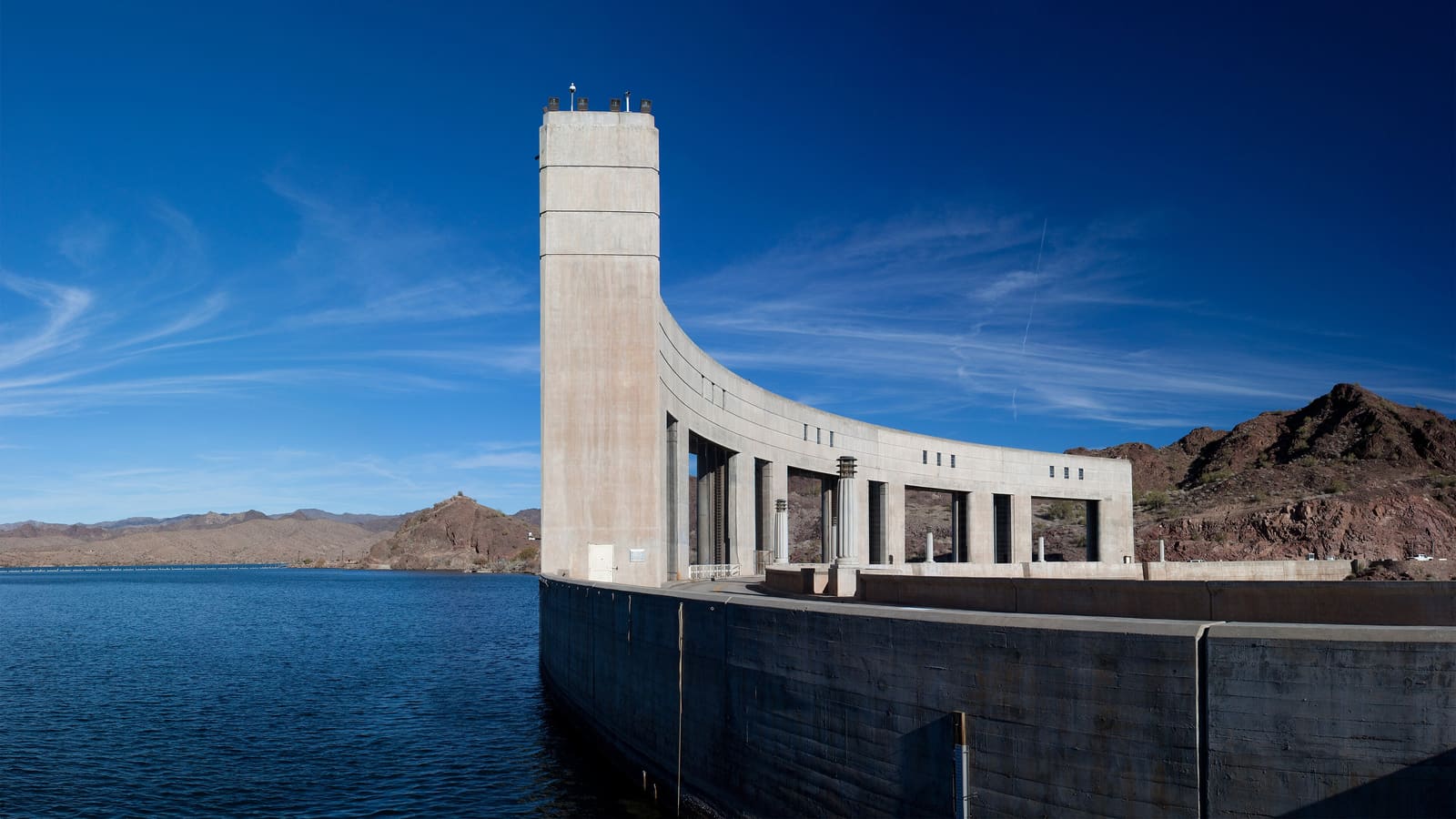
Parker Dam, built and operated by the U.S. Bureau of Reclamation on the Colorado River, is the structure that forms Lake Havasu. Reclamation calls it the deepest dam in the world: 73 percent of its 320-foot structural height sits below the original riverbed, leaving only about 85 feet visible. The reservoir it impounds stretches roughly 45 miles upstream and covers more than 20,000 acres. Water stored here feeds the Metropolitan Water District of Southern California's Colorado River Aqueduct and the Central Arizona Project, and the powerplant generates hydroelectric power alongside those deliveries.
There are viewing areas near the dam where visitors can take in the scale of the structure and the river below it, making it an easy, short stop rather than a lengthy visit.
Before you drive across: the roadway over Parker Dam is open to ordinary passenger traffic, but the Bureau of Land Management states that oversized vehicles and vehicles towing trailers are not allowed to cross the dam, and that video and drone restrictions apply near it. If you are pulling a boat or driving an RV, plan a route that does not cross the dam, and leave the drone at home.
Bill Williams River National Wildlife Refuge
The Bill Williams River National Wildlife Refuge, managed by the U.S. Fish and Wildlife Service, protects a stretch of cottonwood-willow riparian habitat where the Bill Williams River meets the Colorado River near Lake Havasu's southern end. The Service describes it as holding one of the last stands of naturally regenerated cottonwood-willow forest along the lower Colorado River, and that dense native forest supports a noticeably wider range of bird species than the surrounding desert.
The refuge sits on the way to the dam rather than beyond it: the Fish and Wildlife Service directs visitors south from Lake Havasu City on Arizona Highway 95 for about 17 miles, with the entry road to the visitor center on the right at mile marker 161. There is no charge to visit.
It is a worthwhile stop for birdwatchers or anyone who wants a change of scenery from the open lake, and it pairs naturally with the dam visit since both sit along the same short stretch of river.
The Town of Parker
Continuing further south from the dam brings you to Parker, Arizona, a small Colorado River town that serves as the La Paz County seat and as the site of the Colorado River Indian Tribes' tribal headquarters, with its own river-front parks and access points. It is a natural extension for visitors who want to turn a short dam visit into a longer day trip.
Parker is not required if your main interest is the dam and the wildlife refuge, but it adds another stop for visitors with a full day to spend along the river.
What to Bring and When to Go
Bring water, sun protection, and binoculars if birdwatching at the refuge is part of the plan, since much of this trip involves time outdoors along the exposed river corridor. Spring and fall generally offer the most comfortable conditions for the drive and any walking near the refuge, avoiding the most intense summer desert heat.
A summer trip is doable, but plan around the hottest midday hours, especially if you want to spend meaningful time outside the car at the refuge or near the dam viewing areas.
Safety on the River Road
Desert heat. This is a long, exposed drive with limited services between towns. Carry more water than you think you need for everyone in the vehicle, and top off your fuel before you leave Lake Havasu City so a breakdown does not leave you stranded in the heat. The National Weather Service is unambiguous that it is never safe to leave a child, a disabled person, or a pet in a parked vehicle -- interior surfaces can reach 180 to over 200 degrees, cracking the windows does not meaningfully help, and animals can die of heatstroke within 15 minutes. That applies at a shaded refuge parking lot as much as anywhere else.
Monsoon and flash flooding. Arizona's monsoon season runs June 15 through September 30, and storms well out of sight can turn a dry wash or a dipped section of road into moving water within minutes. The National Weather Service notes that six inches of fast-moving water can knock down an adult and twelve inches can carry away most cars: turn around, don't drown. Arizona also has real teeth behind that advice -- under A.R.S. section 28-910, a driver who goes around a barricade onto a flooded roadway can be billed for the cost of the emergency response that pulls them out.
The dam and the river below it. Parker Dam is an active federal facility, not a park. Oversized vehicles and vehicles towing trailers may not cross it, and video and drone restrictions apply nearby. Flows below the dam are regulated rather than natural -- Reclamation publishes projected release schedules for Parker and Davis dams, and river levels downstream rise and fall with those releases. If you plan to be in or on the water below the dam, check current conditions first rather than assuming the level you see on arrival is the level you will have an hour later.
Making It a Longer Day Trip
Because the drive itself is short, Parker Dam works well combined with other stops rather than as a standalone outing -- the wildlife refuge, the town of Parker, or even a return route that loops back through different river-view stretches. It is a lighter-effort alternative to the longer Route 66 day trips out to Oatman or Kingman.
For a broader look at how this trip compares to the other day-trip options from Lake Havasu City, see our full day trips guide.