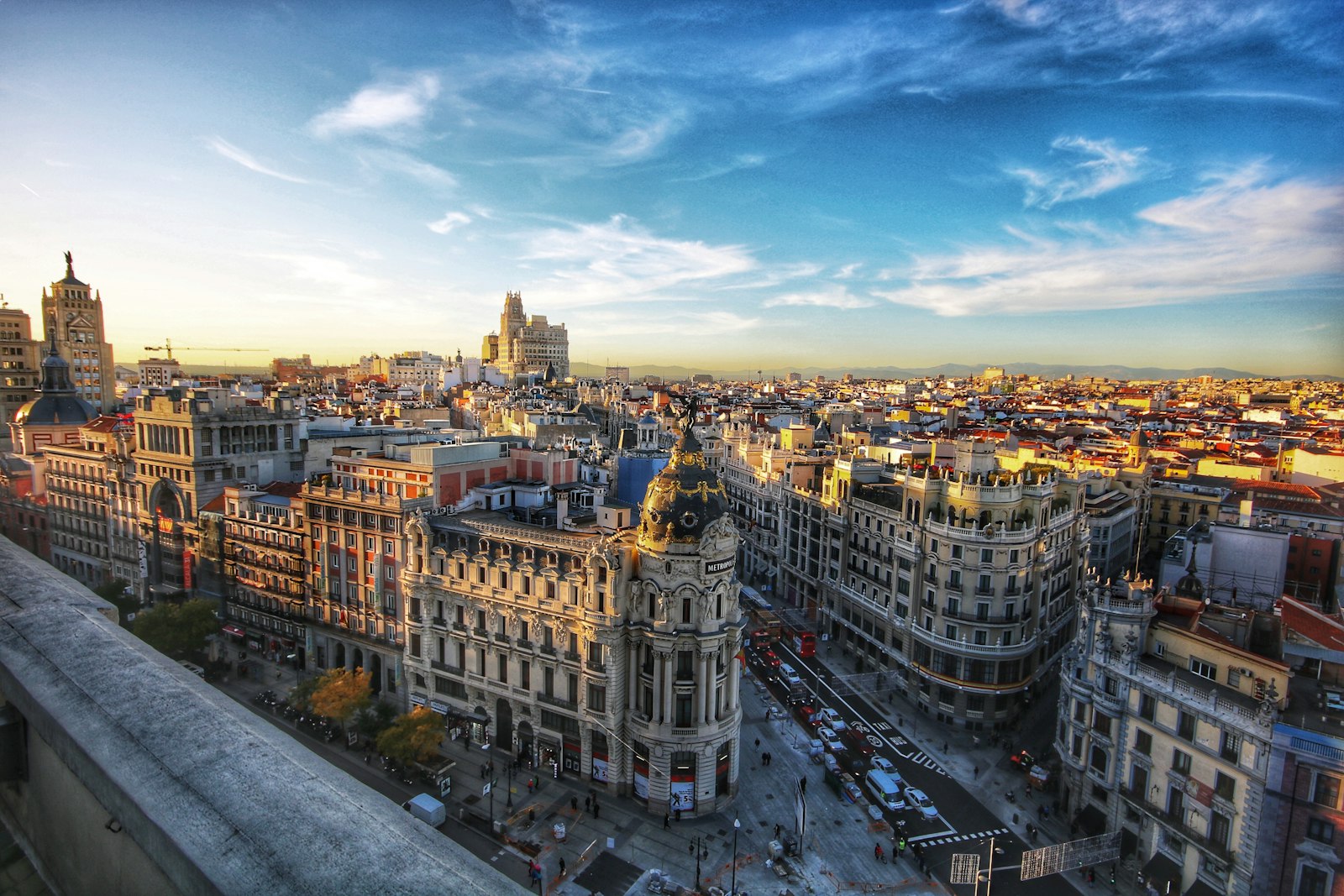
Madrid operates on its own clock. Lunch at 2 PM, dinner at 10 PM, and the streets still buzzing well past midnight — not because of tourism, but because that's how madrileños live. Spain's capital doesn't have the coastline of Barcelona or the medieval alleys of Seville, but it has something harder to replicate: three of the finest art museums on Earth within walking distance of each other, a royal palace that dwarfs Buckingham, and a tapas culture so deeply embedded in daily life that a bar crawl through La Latina feels less like a tourist activity and more like a civic ritual.
This guide covers every category of things to do in Madrid: museums and art, the royal and historic center, parks and outdoor spaces, tapas and food culture, nightlife and flamenco, family activities, and free things to do. Each recommendation includes practical details — hours, ticket prices, insider tips — so you can plan your days without guesswork.
Need to sort out logistics first? Here's our complete Madrid travel guide, plus where to find the best hotels and best restaurants. Check our travel planning guide for getting from the airport, neighborhood breakdowns, and the best time to visit. Activities shift with the seasons — see our seasonal guides for what to expect month by month.
Museums and Art
Madrid's art museums are reason enough to visit the city. The three major collections — known as the Golden Triangle of Art — sit within a 15-minute walk of each other along the Paseo del Prado, itself a UNESCO World Heritage site. You could spend an entire trip in these galleries and still not see everything.
Museo Nacional del Prado
The Prado is one of the two or three greatest art museums in the world, and the single strongest reason to visit Madrid. The collection holds over 8,000 paintings, though only about 1,300 are on display at any time. The core strength is Spanish masters — Velázquez's Las Meninas (arguably the most important painting in Spanish art), an entire room of Goya's Black Paintings, and El Greco's haunting religious works. Beyond the Spanish canon, the Prado holds major works by Hieronymus Bosch (The Garden of Earthly Delights), Titian, Rubens, and Raphael. Practical tips: go early (opening at 10 AM) or during the free evening window (6–8 PM Monday–Saturday, 5–7 PM Sunday) — but expect crowds during free hours. General admission: €15. Audio guide: €6 and genuinely worth it. Allow 3–4 hours minimum. The museum is enormous — if you only have 2 hours, focus on Rooms 9A–12 (Velázquez), 64–67 (Goya), and 56A (Bosch).
Museo Reina Sofía
Spain's national museum of 20th-century and contemporary art, and home to Pablo Picasso's Guernica — the towering anti-war painting that remains one of the most powerful artworks ever created. The painting occupies its own room (Room 205.06), and seeing it in person — 3.5 meters tall, 7.8 meters wide, rendered entirely in black, white, and gray — is a genuinely moving experience. Beyond Guernica, the Reina Sofía holds significant collections of Salvador Dalí, Joan Miró, and Juan Gris, plus rotating contemporary exhibitions in the Jean Nouvel expansion building. Admission: €12. Free hours: Monday and Wednesday–Saturday 7–9 PM, Sunday 12:30–2:30 PM. The museum is closed Tuesdays. Located at the south end of the Paseo del Prado, next to Atocha train station.
Museo Thyssen-Bornemisza
The third point of the Golden Triangle, and the most eclectic. Where the Prado excels in Old Masters and the Reina Sofía in modern Spanish art, the Thyssen fills every gap — Impressionism, German Expressionism, American pop art, Dutch landscapes, and Italian primitives. The collection traces Western painting from the 13th century to the present in chronological order across three floors. It's the single best museum for getting a broad art history education in one visit. Highlights include works by Caravaggio, Van Eyck, Monet, Hopper, and Kirchner. Admission: €13. Free on Mondays from 12–4 PM. Allow 2–3 hours.
CaixaForum Madrid
A striking contemporary arts center housed in a former power station — the building itself, designed by Herzog & de Meuron, features a vertical garden covering the entire exterior wall facing the plaza. The exhibitions rotate throughout the year and tend toward ambitious, well-curated shows covering photography, architecture, design, and contemporary art. Admission: €6. Located on Paseo del Prado, directly across from the Royal Botanic Garden.
For museum passes, skip-the-line tickets, and a complete list of galleries, see our attractions guide.
Top-Rated Museum Tours in Madrid
Skip-the-line tickets, guided museum walks, and art history experiences with expert local guides. Free cancellation on most tours.
Browse Museum ToursWe earn a small commission if you book — at no extra cost to you.
Royal Madrid and the Historic Center
Madrid's historic core is compact and walkable — you can cover the major royal and historic sights in a single day. The area between the Palacio Real and Puerta del Sol is where centuries of Spanish power, religion, and daily life overlap on nearly every block.
Palacio Real (Royal Palace)
The official residence of the Spanish monarchy — though the royal family actually lives at the smaller Zarzuela Palace outside the city, making this one available for tours. With 3,418 rooms, it's the largest royal palace in Western Europe by floor area, surpassing both Versailles and Buckingham Palace. The state rooms are staggering: the Throne Room, the Hall of Halberdiers, the Gasparini Room (an explosion of rococo decoration), and the Royal Pharmacy downstairs. The armory collection is one of the finest in Europe. Admission: €12. Free for EU citizens Monday–Thursday 4–6 PM (October–March) and 5–7 PM (April–September). Allow 1.5–2 hours. The Sabatini Gardens behind the palace are free and offer a quiet escape from the crowds.
Plaza Mayor
Madrid's grand central square, built in the early 17th century under Philip III — whose equestrian statue still stands in the center. The plaza is a massive enclosed rectangle surrounded by 237 balconies on four floors of uniform ochre-red buildings. It has hosted bullfights, executions, markets, and coronations over four centuries. Today it's a tourist magnet — the terrace restaurants here are expensive and mediocre, so admire the architecture and move on. The real eating happens one block away in any direction. The Sunday stamp and coin market under the arcades is worth a browse. Free.
Puerta del Sol
The geographic center of Spain — literally. Kilómetro Cero, the point from which all radial roads in Spain are measured, is marked by a small plaque on the pavement in front of the old post office (now the seat of the Madrid regional government). The square is also home to the Oso y el Madroño statue (a bear reaching for strawberry tree fruit — Madrid's coat of arms). Sol is always crowded, always loud, and always functioning as the city's main crossroads. It's not a destination so much as a place you'll pass through repeatedly. Free. Metro: Sol (Lines 1, 2, 3).
Catedral de la Almudena
Madrid's main cathedral sits directly opposite the Royal Palace. Compared to the cathedrals of Seville, Toledo, or Barcelona, the Almudena is relatively modest — construction didn't finish until 1993, and the interior blends neo-Gothic, neo-Romanesque, and neo-Classical styles in a way that divides opinion. The rooftop terrace, however, is worth the €6 admission: it offers panoramic views across the palace, Casa de Campo, and the western Madrid skyline. The cathedral itself is free to enter. The crypt (entrance on Calle Mayor) is a separate space with thick Romanesque columns and a quiet atmosphere — also free.
Parks and Outdoor Spaces
Madrid is one of the greenest capital cities in Europe — a fact that surprises visitors who expect nothing but concrete and traffic. The parks here are enormous, beautifully maintained, and central to daily life. Madrileños use them constantly, especially on weekends.
Parque del Buen Retiro (Retiro Park)
The crown jewel of Madrid's green spaces — 125 hectares of formal gardens, tree-lined promenades, fountains, and hidden corners in the heart of the city. The two must-see spots are the Palacio de Cristal (Crystal Palace), a stunning 19th-century glass pavilion that hosts rotating contemporary art exhibitions (free), and the Estanque Grande (Grand Pond), where you can rent rowboats for €6 per 45 minutes. The Rosaleda (rose garden) blooms spectacularly in May and June. The park is ideal for a morning jog, an afternoon picnic, or a lazy Sunday with a book. Free. Open daily from 6 AM to midnight (summer) or 10 PM (winter). Closest Metro: Retiro or Ibiza.
Casa de Campo
If Retiro is Madrid's Central Park, Casa de Campo is its wilderness. At 1,722 hectares, it's five times the size of Hyde Park — a former royal hunting ground now open to the public. It holds a lake with rowboat rental, cycling paths, a public swimming pool complex (open summers), the Madrid Zoo, and the Teleférico cable car that connects to the Paseo del Pintor Rosales near Plaza de España. The park's sheer size means it never feels crowded. Best explored by bike. Free (individual attractions have separate fees). Metro: Lago or Batán.
Madrid Río
A 10-kilometer linear park along the Manzanares River, created after a massive infrastructure project buried the M-30 highway underground. The result is a beautifully landscaped riverside corridor with cycling paths, playgrounds, urban beaches (summer), cafes, and pedestrian bridges. The stretch between Puente de Segovia and Matadero Madrid is the most developed. It's where madrileños go to run, cycle, and escape the density of the city center. Free. The Matadero Madrid cultural center at the south end hosts free exhibitions and events.
Templo de Debod
An authentic 2nd-century-BC Egyptian temple, donated to Spain by Egypt in 1968 as thanks for helping salvage Nubian monuments during the construction of the Aswan Dam. The temple was dismantled, shipped to Madrid, and rebuilt stone by stone in Parque de la Montaña, on a hilltop overlooking the Royal Palace and Casa de Campo. The real draw is sunset — this is widely considered the best sunset viewpoint in Madrid, with the western sky framing the temple and the distant Sierra de Guadarrama mountains. Free. Open Tuesday–Sunday; hours vary by season. Arrive 30 minutes before sunset to secure a spot on the surrounding lawn.
Tapas and Food Culture
Eating in Madrid is a social activity, not a transaction. The culture revolves around moving between bars — one stop for croquetas, another for tortilla, a third for jamón ibérico — and the best neighborhoods for this have developed over decades. The city runs on a rhythm of midmorning vermouth, long lunches, afternoon merienda (snack), and late dinners that start at 10 PM or later.
La Latina Tapas Crawl
La Latina is the undisputed center of Madrid's tapas scene. The neighborhood's narrow streets — particularly Cava Baja and Cava Alta — are lined with dozens of tapas bars ranging from standing-room-only classics to modern gastropubs. Start at Calle de la Cava Baja and work your way south. Essential stops include Casa Lucas (modern creative tapas), Juana La Loca (famous for their pintxo de tortilla), and Txirimiri (Basque pintxos). Sunday afternoons after the Rastro flea market, La Latina's bars and plazas are packed with locals — it's the most quintessentially Madrid experience you can have. Budget: €3–6 per tapa, €2.50–4 per caña (small beer).
Mercado de San Miguel
A beautifully restored cast-iron market hall next to Plaza Mayor, now operating as a gourmet food hall. The stalls sell oysters, jamón ibérico, artisan cheeses, vermouth on tap, croquetas, and pastries. It's undeniably touristy and prices reflect the location — a tapa here costs 50–100% more than in La Latina — but the quality of the products is real and the building is gorgeous. Best visited midweek when it's less crowded. Open Sunday–Wednesday 10 AM–midnight, Thursday–Saturday until 1 AM.
Mercado de San Antón
In the Chueca neighborhood, San Antón is what San Miguel would be without the tourist markup. Three floors: ground-level fresh market (produce, fish, meat), first-floor gourmet food stalls and tapas bars, and a rooftop terrace restaurant with views over the city's rooftops. The first floor is where locals eat — try the grilled octopus, the Iberian ham, or whatever seasonal tapa is chalked on the boards. Much more neighborhood-oriented than San Miguel. Open Monday–Saturday 10 AM–midnight.
Vermouth Culture
La hora del vermut — vermouth hour — is a sacred Madrid tradition, typically observed on weekend late mornings (around noon). You order a glass of vermouth on tap (vermut de grifo), and it comes with a small tapa — olives, chips, a slice of tortilla. It's less about the drink and more about the ritual: standing at a bar counter with friends before a long Sunday lunch. Historic vermouth bars include Bodega de la Ardosa (Malasaña), Casa Camacho (Malasaña), and La Barraca (La Latina). A vermut costs €2–3.
Madrid Food & Tapas Tours
Guided tapas crawls, market tours, and cooking classes with local food experts. Free cancellation on most tours.
Browse Food ToursWe earn a small commission if you book — at no extra cost to you.
Nightlife and Entertainment
Madrid's nightlife reputation is earned. This is a city where dinner starts at 10 PM, bars fill up at midnight, and clubs don't peak until 3 AM. The Spanish concept of madrugada — the hours between midnight and dawn — is a real part of the social calendar here, particularly on Thursday, Friday, and Saturday nights.
Flamenco Shows
Flamenco originated in Andalusia, but Madrid has been the art form's commercial and creative capital for over a century. The two most respected tablaos (flamenco venues) are Corral de la Morería (operating since 1956, widely considered the best flamenco tablao in the world) and Cardamomo (a more intimate space on Calle de Echegaray). Shows typically run 60–90 minutes and feature guitar, vocals, and dance. Expect to pay €35–50 for a show-only ticket, or €70–100 with dinner. Book in advance — top venues sell out, especially on weekends. For a less formal experience, some bars in Lavapiés host impromptu flamenco sessions on weekend evenings.
Rooftop Bars
Madrid's flat geography and reliably clear skies have produced a rooftop bar culture that rivals any city in Europe. The Círculo de Bellas Artes (Calle de Alcalá) offers 360-degree views from one of the highest accessible rooftops in the center — €5 admission, drinks separate. The rooftop at the Hotel RIU Plaza de España provides a panoramic sweep from the Royal Palace to the Guadarrama mountains. For a more low-key drink, the Mercado de San Antón rooftop in Chueca and the Terraza del Hotel de las Letras on Gran Vía are both excellent. Best visited at sunset.
Late-Night Madrid
The city's club and bar scene clusters in a few key zones. Malasaña (centered on Plaza del Dos de Mayo) is the indie and alternative hub — small bars, craft cocktails, vinyl shops. Chueca is LGBTQ+-friendly with a vibrant bar scene along Calle de Hortaleza and Calle de Pelayo. Huertas (the Barrio de las Letras) is the classic going-out district, dense with cocktail bars along Calle de Echegaray and Calle de las Huertas. For proper nightclubs, the area around Sol and Gran Vía holds larger venues that stay open until 6 AM. Cover charges are uncommon at bars; clubs typically charge €10–20 including a drink.
Neighborhoods to Explore
Madrid's character changes dramatically from one barrio to the next. The best way to experience the city is to pick a neighborhood each day and simply walk — ducking into shops, stopping for coffee, and letting the streets set the agenda.
Malasaña
Madrid's creative and alternative heart. Malasaña was the epicenter of La Movida Madrileña — the cultural explosion that followed the end of Franco's dictatorship in the late 1970s — and it still carries that rebellious, creative energy. Today it's the neighborhood for vintage shops, independent bookstores, specialty coffee (Toma Café and HanSo Café are local favorites), street art, and small live-music venues. The streets around Plaza del Dos de Mayo are the liveliest, particularly on weekend evenings. It's walkable from Gran Vía in 5 minutes.
Chueca
Madrid's LGBTQ+ neighborhood and one of the most vibrant barrios in the city. Chueca is colorful, welcoming, and packed with restaurants, boutiques, and bars. The Mercado de San Antón is here, along with excellent brunch spots and cocktail bars. During Madrid Pride (late June), Chueca becomes the center of one of the largest Pride celebrations in Europe. Even outside Pride, the neighborhood has an openness and energy that makes it one of the most enjoyable places to walk around. Metro: Chueca (Line 5).
Lavapiés
Madrid's most multicultural neighborhood — a dense, hilly grid of streets where Indian restaurants sit next to Senegalese shops next to traditional Spanish bars. Lavapiés has gentrified in recent years but retains a gritty authenticity that other central neighborhoods have lost. It's the best area for affordable international food, and it's home to a growing contemporary art scene anchored by La Tabacalera (a free community art space in a former tobacco factory). The streets around Plaza de Lavapiés are the focal point. Metro: Lavapiés (Line 3).
La Latina (Sunday Rastro)
La Latina is the oldest neighborhood in Madrid — medieval street plans, low-rise buildings, and a density of tapas bars that rivals anywhere in Spain. On Sunday mornings, the neighborhood hosts El Rastro, Madrid's famous open-air flea market. The market stretches along Calle de la Ribera de Curtidores and surrounding streets, with hundreds of stalls selling antiques, vintage clothing, leather goods, art, and general curiosities. It runs from roughly 9 AM to 3 PM. After browsing, the tradition is to pile into La Latina's bars for vermut and tapas. The Sunday Rastro-plus-tapas combination is one of Madrid's essential experiences. Free to browse.
Book Madrid Tours & Experiences
Walking tours, flamenco shows, tapas crawls, and day trips. Free cancellation on most bookings.
Browse All ToursWe earn a small commission if you book — at no extra cost to you.
Day Trips from Madrid
Madrid's central location and Spain's excellent high-speed rail network make it one of the best-connected cities in Europe for day trips. Three UNESCO World Heritage cities are within 30–60 minutes by train.
Our complete day trips from Madrid guide covers all the top destinations with train schedules, walking itineraries, and recommended stops.
More Madrid Activity Guides
Free Things to Do
Free museum hours, parks, plazas, markets, and sunset at the Temple of Debod — all the best free activities in Madrid.
FreeThings to Do with Kids
Family-friendly museums, Retiro Park boat rides, Madrid Zoo, and indoor rainy-day options for all ages.
FamilyNightlife Guide
Flamenco tablaos, rooftop bars, cocktail spots, and clubs by neighborhood — from Malasaña to Huertas.
NightlifeParks & Outdoor Activities
Retiro Park, Casa de Campo, Madrid Río, and Sierra de Guadarrama day hikes — green spaces and outdoor escapes.
OutdoorsAttractions
The Prado, Royal Palace, Retiro Park, Reina Sofía — the must-see sights in Madrid with tickets and tips.
AttractionsSeasonal Guides
Spring festivals, scorching summers, autumn culture season, and Christmas markets — know what to expect in every season.
SeasonalTravel Planning
Airport transfers, Metro guide, neighborhood picks for accommodation, and budget tips for Madrid.
PlanningMaps & FAQ
Interactive neighborhood map, Metro overlay, and answers to 25+ common Madrid travel questions.
ResourcesFrequently Asked Questions
Is Madrid worth visiting?
Without question. Madrid is one of Europe's great capital cities — home to three world-class art museums (the Prado, Reina Sofía, and Thyssen-Bornemisza), a royal palace larger than Versailles, enormous urban parks, and a food culture built around tapas, markets, and late-night dining. The city is walkable, affordable compared to Paris or London, and has an energy that runs from morning churros to 2 AM bars. Most visitors who come for a weekend wish they had booked a full week.
How many days do you need in Madrid?
Plan for 4–5 days to experience Madrid properly. Day one: the Prado Museum and Retiro Park. Day two: Royal Palace, Plaza Mayor, and La Latina for tapas. Day three: Reina Sofía, Lavapiés, and a flamenco show. Day four: day trip to Toledo or Segovia. Day five: Malasaña, Chueca, and the Rastro flea market (if Sunday). You could easily spend a week adding Thyssen-Bornemisza, Casa de Campo, and deeper neighborhood exploration.
What is Madrid known for?
Madrid is known for its extraordinary art museums (the Prado alone holds over 8,000 paintings including masterworks by Velázquez, Goya, and El Greco), the grand Palacio Real, tapas culture, late-night dining (dinner at 10 PM is normal), flamenco performances, the Sunday Rastro flea market, and its role as the geographic and cultural center of Spain. It's also a major football city — home to Real Madrid and Atlético de Madrid.
What can you do in Madrid for free?
A great deal. The Prado Museum is free daily from 6–8 PM (Monday–Saturday) and 5–7 PM (Sunday). Reina Sofía is free Monday and Wednesday–Saturday from 7–9 PM, and all day Sunday from 12:30–2:30 PM. Retiro Park, Madrid Río, and Casa de Campo are always free. Walking the historic center — Plaza Mayor, Puerta del Sol, the Royal Palace exterior, and the narrow streets of La Latina — costs nothing. The Temple of Debod is free and offers the best sunset viewpoint in the city. The Sunday Rastro flea market is free to browse.
Is Madrid walkable?
Extremely walkable. The historic center is compact — you can walk from the Prado Museum to the Royal Palace in about 20 minutes. Major attractions, restaurants, and neighborhoods are all within walking distance of each other. The city is largely flat with a few gentle hills. For longer distances, the Metro is fast, clean, and inexpensive (a 10-trip ticket costs around €12.20). Most visitors find they walk 15,000–20,000 steps per day without trying.
