Upper vs Lower Antelope Canyon: Which Should You Choose?
Upper Antelope Canyon -- rendered by Navajo Nation Parks & Recreation as Tse'bighanilini, "the place where water runs through rocks" -- is the more photographed of the two. Navajo Nation Parks describes it as an A-frame canyon, wider at the bottom, sitting at roughly 4,000 feet of elevation with walls rising about 660 feet above the streambed. Its passages are wide enough for comfortable group movement, and the slot opens to the sky in ways that allow columns of light to drop straight down onto the sand floor. The light beams that appear in late morning during late spring and summer have become the defining image of Page tourism. That reputation drives the heaviest demand.
Lower Antelope Canyon, rendered by Navajo Nation Parks as Hasdez' twazi', "the spiral rock arches," is a V-shaped slot canyon and involves ladders at several points. Navajo Nation Parks puts it at about 3,704 feet of elevation with walls roughly 120 feet above the streambed -- so the walls overhead are lower and the slot tighter than Upper, not deeper. Visitors who find Upper Antelope Canyon too crowded often prefer Lower for the extra room to stop and look without the group behind them pressing forward. The light behaves differently in Lower -- more diffuse, equally beautiful, just different.
The practical choice comes down to what you want: if the iconic light beams are your primary goal and you can visit during the right window, Upper is the obvious pick. If you want a longer walk, more physical engagement with the canyon, and are traveling in shoulder season when light beams are not in play, Lower offers a rewarding alternative. Neither is wrong.
How to Book a Navajo-Guided Tour
Both canyons sit on Navajo Nation land, and access is only permitted through Navajo Nation-authorized tour operators. There is no self-guided access -- attempting to enter either canyon without a guide is trespassing. The authorized operator roster changes over time, so verify the current list at navajonationparks.org rather than relying on any third-party source. On the Navajo Nation Parks & Recreation roster, Upper Antelope Canyon operators include Antelope Canyon Tours, Inc., Tse Bighanilini Tours, Adventurous Antelope Canyon Tours, Antelope Slot Canyon Tours, Antelope Canyon Navajo Tours, and Antelope Hogann Tours. Lower Antelope Canyon is served by Ken's Tours Lower Antelope Canyon Tours and Dixie's Lower Antelope Canyon Tours -- both run Lower only, neither runs Upper. Antelope Canyon X is a separate canyon again, listed under Taadidiin Tours, LLC. Check the roster directly before booking.
Tickets sell through operator websites or, in some cases, through their own booking desks in Page. Major online travel platforms also carry listings for Antelope Canyon tours -- the Lowdown Guide earns a commission on Viator bookings at no extra cost to you. Whichever channel you use, confirm that the operator is current and Navajo Nation-authorized at the time of your visit. Pricing and availability structure vary by operator; check directly for current rates. Navajo Nation Parks & Recreation also charges its own entry fee -- listed at $15 per person, per entry -- separate from the operator's tour price, and lists summer hours for the tribal park as 8:00 a.m. to 5:00 p.m. Confirm both at navajonationparks.org, since published fees have changed over the years.
Timed-entry groups leave on a fixed schedule, and Navajo Nation Parks sets a two-hour maximum stay in the canyon. When a tour is sold out, it is sold out -- there is no standby line at the canyon entrance. During peak summer months, popular morning slots can fill weeks or even months ahead. If your travel dates are fixed, book as early as you can. If you have flexibility, shoulder seasons (May, September, October) provide more booking availability and less competition at the canyon entrance.
When the Light Beams Hit Upper Antelope Canyon
The famous shaft-of-light photographs happen when direct sun enters Upper Antelope Canyon through the narrow slot above and strikes the sand and dust particles suspended in the air, making the beam visible. This happens only when the sun angle is high enough to penetrate straight down -- roughly from late morning into early afternoon during late spring and summer. The exact window shifts with the season and the sun's arc. The most reliable beams fall in the height of summer, but the window shifts week to week, so ask your operator for the beam times on your specific date rather than trusting a fixed rule.
Tour operators schedule "photography tours" timed around the beam window and charged at a premium over standard tours. Verify with your specific operator whether a photography upgrade is available, what equipment restrictions apply (some tours restrict tripods or require advance arrangements), and what the current timing window is for the date of your visit. The sun angle shifts meaningfully between May and August, so advice from a prior year may not reflect current conditions.
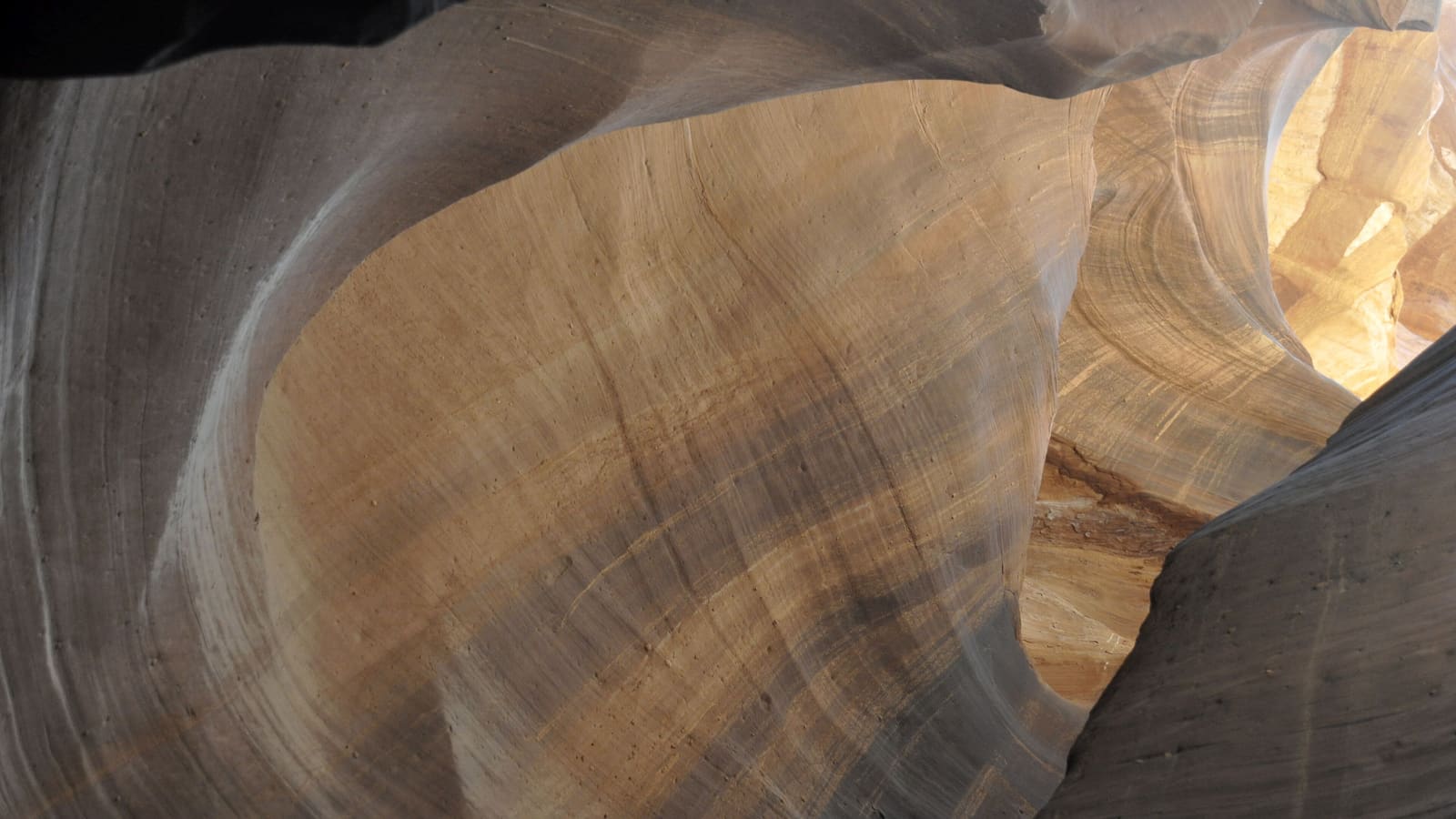
If you miss the light beam window -- or if you visit in spring, fall, or winter when the angle does not produce visible beams -- Upper Antelope Canyon remains a compelling landscape. The carved sandstone walls, the filtered light, and the color gradations in the rock are the core of the experience. The beams are a bonus, not the whole story.
What to Wear and What Not to Bring
Both canyons are sandy. Fine red sand coats everything -- shoes, clothing, camera bags, and any food you carry in. Wear clothing you do not mind getting dusty. Closed-toe shoes are strongly recommended and some operators require them; sandals and flip-flops are unsafe on the sand-covered rock, especially in Lower Antelope Canyon where the ladders require grip. For Lower in particular, avoid skirts or restrictive clothing -- the ladder sections and narrow passages require freedom of movement.
Large backpacks are often prohibited or create problems in the narrow sections of both canyons. Check with your specific operator for bag size restrictions before you arrive. A small camera bag or day pack that can be held close to your body is usually manageable. Do not plan on flying a drone -- confirm with your operator and with Navajo Parks & Recreation before bringing one anywhere on Navajo Nation land. Navajo Nation Parks also prohibits photographs or video taken for commercial use unless you hold a valid permit issued by Navajo Parks & Recreation, so anything beyond personal photos needs to be cleared in advance. In Upper Antelope Canyon, tripods may require a specific photography tour arrangement -- check in advance.
Water is worth carrying in any form the operator will allow. The canyons are enclosed and the air is dry. Temperatures inside can feel cooler than the desert above, but you are still in an arid environment. Tours in summer run in high ambient heat outside the canyon; the walk from the parking area to the canyon entrance is exposed. Sunscreen and sun protection for the approach walk matter even if the canyon itself provides shade.
Flash flooding is the real hazard in these canyons, and it is why a tour can be canceled on a clear day in Page. Navajo Nation Parks & Recreation warns that the danger is greatest during the summer monsoon season, July through September, but that flash floods can occur at any time of the year. The National Park Service is blunt about slot canyons: floods are often caused by storms miles away, slot canyons are particularly dangerous during inclement weather, and you cannot outrun a flash flood. Rain you cannot see, falling somewhere upstream, is enough. If your guide cancels, delays, or turns the group around for weather, that is the system working -- do not push for an exception, and never enter a slot canyon on your own to get around a closure.
Photography Inside the Slot Canyons
The sandstone color and the quality of light in Antelope Canyon are genuinely difficult to photograph in a way that captures what you see. Camera phones have improved considerably and will produce good results in the right light conditions. Dedicated cameras benefit from the ability to adjust exposure compensation -- the canyon interiors fool automatic metering into underexposing the walls and overexposing any bright sky visible above.
RAW format capture, if your camera supports it, gives the most flexibility in post-processing. The sand-colored walls photograph best in the warmer color temperatures around sunrise and sunset outside, but inside the canyon the light is filtered and unpredictable in a good way. Bracket exposures if you can. The light changes from minute to minute.
Tripods may be restricted on standard tours and are often only permitted on dedicated photography tours with advance arrangement. Confirm the current policy with your operator before arriving with gear that cannot be used. Monopods are sometimes an option but also operator-dependent. Even without a tripod, the light levels inside are usually sufficient for hand-held shots at moderate ISO settings during the mid-morning beam window.
What First-Timers Get Wrong
The most common mistake is treating both canyons as interchangeable and booking whichever one has availability without understanding the difference. Upper and Lower are separate sites, operated by different companies, and not located in the same place. Confirm which canyon you are booking and where the meeting point is before you set your arrival time in Page.
Arriving at the canyon without a pre-booked tour is the second common problem. Walk-up availability is rare in summer and not guaranteed in shoulder seasons. Do not plan your trip around the assumption that you can book on the day. The canyon tours operate on fixed schedules with capacity limits, and a sold-out tour means waiting for the next available slot or leaving without seeing the canyon.
Underestimating the total time commitment is the third issue. Between driving from your hotel in Page, finding parking, waiting for your tour group to assemble, the tour itself, and the return, plan on at least three hours from door to door for Upper Antelope Canyon and somewhat longer for Lower. The canyon itself is not a quick stop.