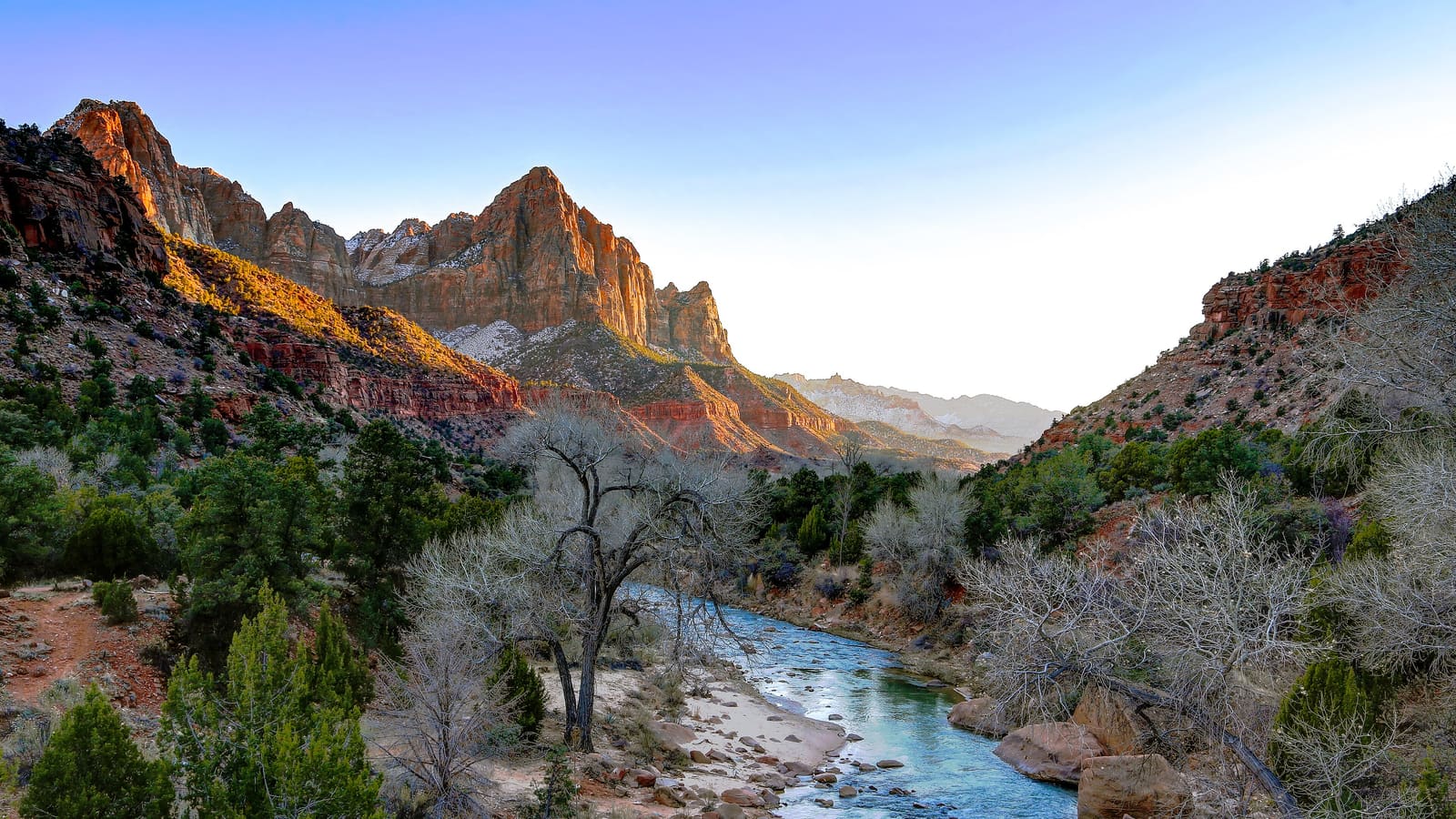
The Drive From Page to Zion
The route from Page runs northwest and west on US-89 to Kanab, Utah, then north on US-89 to Mount Carmel Junction, then west on UT-9. NPS puts Zion's East Entrance 13 miles west of Mount Carmel Junction. Note which entrance that is: driving from Page you arrive at the East Entrance, not the South Entrance at Springdale. Springdale sits on the far side of the park, and reaching it means driving the full length of the Zion-Mount Carmel Highway, through the tunnel and down a series of tight switchbacks -- a stretch that takes considerably longer than its mileage suggests. Total drive time runs to a few hours each way and varies with your destination inside the park, road conditions, and traffic, so treat any specific estimate as approximate and check a current mapping service before you commit to a schedule.
Because this is a genuinely long day if done round trip, an early departure from Page matters more than almost any other planning decision for this route. Fuel up before leaving, since stretches of this drive pass through sparsely populated areas with fewer services than a first-time visitor might expect.
Check your vehicle against the tunnel before you leave Page. The Zion-Mount Carmel Tunnel, on the road between the East Entrance and Canyon Junction, was completed in 1930 and is 1.1 miles long and genuinely narrow. Per NPS, any vehicle 7 feet 10 inches wide or wider (including mirrors, awnings, and jacks) and/or 11 feet 4 inches tall or taller requires a tunnel permit: rangers stop oncoming traffic and run the tunnel one-way so the vehicle can drive down the center. That permit costs $15, covers two trips through the tunnel within a seven-day period, and the escort service operates 8:00 a.m. to 6:00 p.m. daily. Outside those hours, oversized vehicles cannot use this route at all and must detour. NPS also sets hard limits for the whole section between Canyon Junction and the East Entrance -- 35 feet 9 inches long for a single vehicle, 50 feet combined, and 50,000 pounds -- and vehicles exceeding any of them are not permitted through, with no escort option. If you are driving a large RV or towing, confirm your dimensions and the current rules at nps.gov/zion before you commit to this route, because the detour is long and the turnaround point is deep into the drive.
Kanab: The Roadside Stop
Kanab, Utah sits roughly along the route between Page and Zion and has long served as a waypoint for travelers moving between the two, along with a history connected to the film and television industry that gave the town some of its character. It is a practical spot to refuel, eat, or take a short break partway through the drive.
Kanab also functions as a gateway to other nearby public lands, including areas toward Coral Pink Sand Dunes State Park, if you have extra time and want to extend beyond a straight Page-to-Zion route. Check current hours for any specific stop you are planning around, since small-town businesses can have limited or seasonal hours.
What to Expect Inside Zion National Park
Zion runs a shuttle system in the main canyon, and the rule is firmer than most first-time visitors expect: the Zion Canyon Scenic Drive, the road heading north from Canyon Junction to the Temple of Sinawava, is closed to private vehicles during shuttle season. If you want to reach the Narrows, the Grotto, or the Angels Landing trailhead, you ride the shuttle. The good news is that the shuttle is free and needs no ticket, permit, or reservation -- you only pay the park entrance fee. NPS says shuttles typically run daily March through November plus a short holiday period at the end of December, but the exact dates shift year to year, so confirm at nps.gov/zion before you go.
One important clarification, because the shuttle rule is often overstated: it applies to the Zion Canyon Scenic Drive only. Even while shuttles are running you can drive your own vehicle on the Zion-Mount Carmel Highway -- the UT-9 route you arrive on from Page -- as well as Kolob Terrace Road and Kolob Canyons Scenic Drive. A day-tripper from Page is not locked out of the park by the shuttle; you simply cannot drive the one scenic road up the main canyon.
Angels Landing is the trail most likely to derail a day-trip plan. Everyone who hikes it needs a permit, and NPS issues them only by lottery. There are two: a seasonal lottery you enter well in advance for ranked date and time preferences, and a day-before lottery that opens at 12:01 a.m. and closes at 3 p.m. Mountain Time, with results at 4 p.m. the same day. Costs have run $6 per application (covering up to six people) plus $3 per person. There is no same-day walk-up option, so a Page-based visitor who decides to hike it that morning cannot. You do not need a permit to hike as far as Scout Lookout -- the permit covers the chains section beyond it, which is where the exposure is. Entrance fees and trail conditions also change over time and are managed directly by the National Park Service, so confirm all of it at nps.gov/zion before you build a day around a specific trail.
Why Page Works as a Base for a Zion Day Trip
Lodging inside or immediately adjacent to Zion National Park can be limited and books up quickly, particularly in peak season, which pushes many travelers to base themselves further out and treat Zion as a day trip destination instead. Page, with its own set of attractions and a wider range of lodging, is a workable base for travelers who want to see Zion without competing for scarce in-park accommodations.
This approach trades a shorter, more relaxed visit to Zion for the convenience of staying in Page and combining the trip with Page's own attractions, like Antelope Canyon and Horseshoe Bend, on the days before or after. It works best for visitors who want a single, well-planned day inside Zion rather than an extended multi-day exploration of the park.
Timing the Trip
An early start from Page is the single most important scheduling decision for this trip, since it maximizes usable time inside Zion and helps you beat both crowds and, in warmer months, the worst of the midday heat on the drive itself.
The time difference is not a fixed offset, and getting it backwards costs you an hour of daylight. Utah observes daylight saving time; Arizona, apart from the Navajo Nation, does not. So from mid-March into early November, Zion is one hour ahead of Page -- leave Page at 7:00 a.m. and it is 8:00 a.m. when you cross into Utah. For the rest of the year the two are on the same clock. Factor that hour into your arrival, the last shuttle of the day, and your return drive, and remember it works against you on the way home too: an 8:00 p.m. departure from Zion is 7:00 p.m. back in Page, which sounds generous until you realize you have been driving in the dark for a while.
Alternatives and Nearby Stops
If a full Zion day trip feels too long given the drive, Coral Pink Sand Dunes State Park is a shorter alternative that captures some of the same southern Utah scenery without the full drive to Zion's main canyon. It is a Utah State Park roughly 22 miles from Kanab, reached from US-89 via Hancock Road or Sand Dunes Road, and it charges its own state-park day-use fee -- a National Park Service pass does not cover it. Check stateparks.utah.gov for current fees and hours. It is worth considering if your primary goal is a change of scenery rather than Zion specifically.
Whichever route you choose, build in flexibility. Road conditions, park shuttle status, and trail access can all change with little notice, and a day trip this long leaves less room to recover from an unexpected delay than a shorter local outing would.