What Is the Cactus League
The Cactus League is the Arizona half of Major League Baseball's spring training system, with Florida's Grapefruit League as its counterpart on the other coast. Every February and March, MLB teams that train in Arizona relocate their roster and coaching staff to the Valley for weeks of exhibition games, workouts, and roster evaluation before the regular season opens.
For visitors, this means big-league baseball in small, walkable ballparks at a fraction of regular-season crowds and prices in some cases, with far more access to the atmosphere around the field than a regular-season stadium typically offers. It has become one of the signature reasons travelers time a Valley trip for late winter.
The Valley Ballpark Clusters
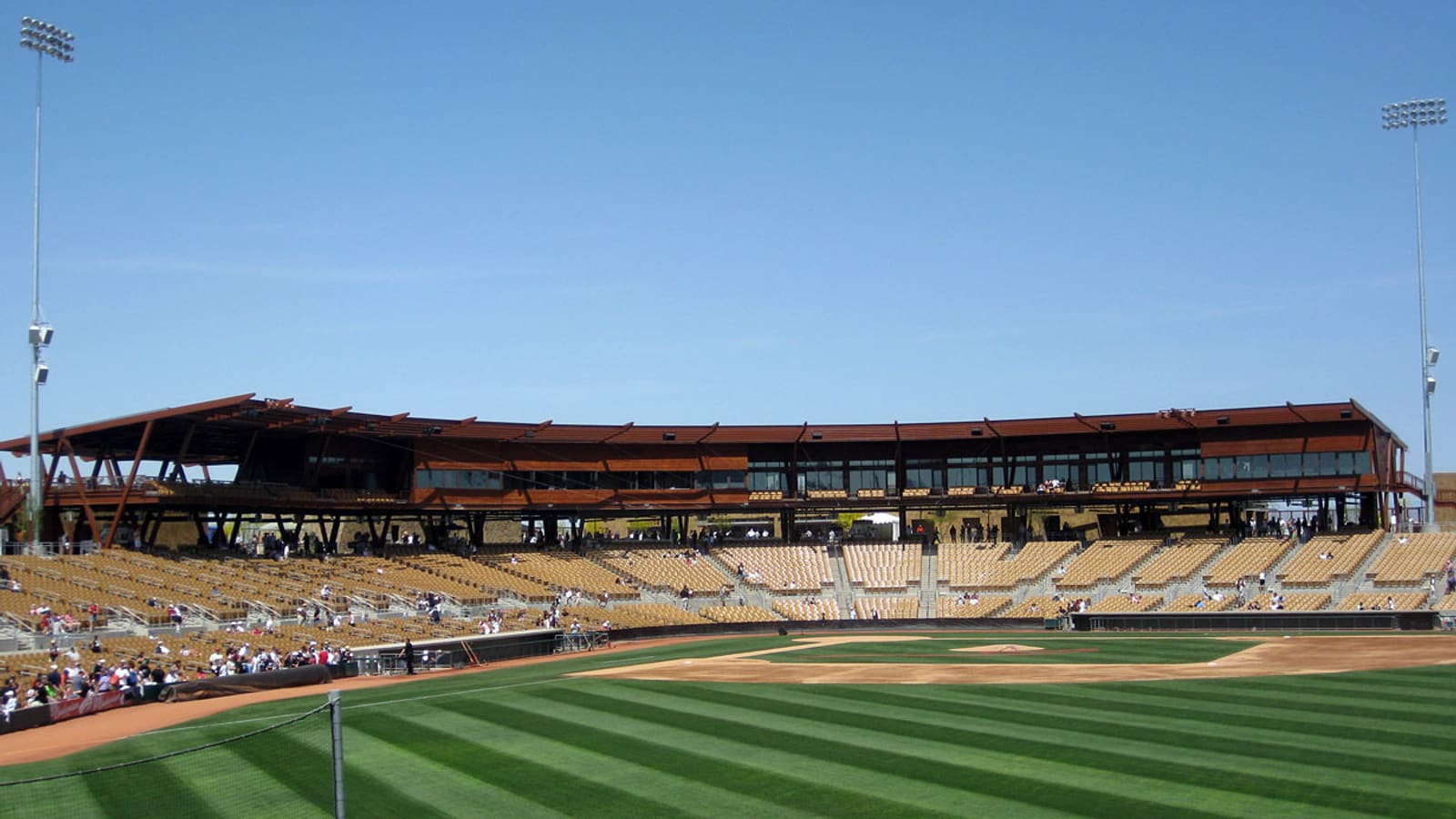
The Cactus League's ten ballparks split evenly, five to a side. The west-side group is Peoria Sports Complex, Surprise Stadium, and Goodyear Ballpark, plus two parks on the west side of Phoenix itself -- American Family Fields of Phoenix, a City of Phoenix facility in Maryvale, and Camelback Ranch-Glendale, which carries Glendale's name and is owned by the City of Glendale but physically sits inside Phoenix city limits. The east-side group is Hohokam Stadium and Sloan Park in Mesa, Tempe Diablo Stadium in Tempe, and Scottsdale Stadium and Salt River Fields at Talking Stick in Scottsdale -- Salt River Fields sits on and is operated by the Salt River Pima-Maricopa Indian Community.
Five of the ten parks are shared by two teams each, which is how ten ballparks host fifteen clubs, and it's part of what makes multi-game days realistic inside one group.
Which specific teams play at which ballpark can shift between seasons as franchises renegotiate facility agreements, so treat any specific team-to-park pairing as a starting point rather than a fixed fact, and confirm current assignments on the Cactus League's official site or the team's own site before building a trip around a particular franchise.
March Timing: When the Season Actually Runs
Cactus League exhibition play generally begins in the second half of February and continues until the regular season opens in late March or early April, with March being the heart of the schedule. Exact opening dates move around year to year based on the MLB calendar, so don't assume a specific date from a prior season will hold.
Early in camp, expect more roster experimentation and shorter appearances from star players as teams ease into the season; by mid-to-late March, lineups typically look closer to what you'll see on opening day. If seeing a specific player is the priority, later in the schedule is generally the safer bet, though this too varies by team.
Pairing Games with a Phoenix Trip
Spring training pairs naturally with the rest of a Valley basecamp trip: mornings for a desert hike before the heat builds, afternoon or evening games at a nearby ballpark, and northern loop days to Sedona or the Grand Canyon worked in around the schedule. Because the West Valley and East Valley clusters sit on opposite sides of the metro, a trip built around one cluster keeps drive times reasonable.
If you want to see more than one team, plan your lodging around whichever cluster has your priority games, and treat crossing the whole Valley for a second game the same day as an ambitious, traffic-dependent plan rather than a given.
Tickets, Parking, and Logistics
Spring training ballparks are smaller than regular-season stadiums, and popular matchups -- rivalry games, weekend dates, and games against traditionally well-followed teams -- can sell out. Ticket prices, parking fees, and gate policies vary by team and change year to year, so treat any number you see elsewhere as a rough guide rather than current pricing, and book through the team's official site for the most reliable information.
Parking at most Cactus League facilities is a mix of official lots and overflow parking, and arriving well before first pitch is the simplest way to avoid a scramble. Many facilities also allow fans close access to warmup areas and autograph lines before the game, which is a big part of the spring-training appeal, so factor extra arrival time into your plan if that's a priority.
Weather and What to Expect
February and March fall within the Valley's mild season, well short of the summer extremes, and most spring training days are sunny and comfortable. That said, day games mean hours of direct sun with little shade at most ballparks, and afternoons can warm up more than the pleasant forecast suggests, especially later in March.
Sunscreen, a hat, and water are worth bringing to any day game regardless of the forecast. The National Weather Service Phoenix office recommends 1 to 2 liters of water per hour for anyone spending time outdoors, which is a useful benchmark for a three-hour game in open sun even in March. Evening games are typically more comfortable temperature-wise but can cool off quickly after sunset, so a light layer is a reasonable addition to the bag.
Know the warning signs, because sun exposure adds up over nine innings. Heat exhaustion looks like cool, moist, pale skin, headache, dizziness, weakness, and nausea -- get the person somewhere cooler, have them rest, and if they are fully awake and alert give a half glass of cool water every 15 minutes. Heat stroke is different and far more serious: vomiting, confusion, a throbbing headache, reduced alertness or unconsciousness, and a body temperature that can reach 105 degrees F. That is a life-threatening emergency -- call 9-1-1 and cool the body fast by any means available.