Kitt Peak National Observatory
Kitt Peak sits about 54 miles southwest of Tucson at roughly 7,000 feet, in the Schuk Toak District of the Tohono O'odham Nation. The site hosts a large concentration of research instruments -- alongside its own major nighttime telescopes it hosts consortium facilities operating more than twenty optical telescopes and two radio telescopes. It is operated by NSF's NOIRLab and managed by the Association of Universities for Research in Astronomy (AURA) under a cooperative agreement with the National Science Foundation. The drive from Tucson runs roughly an hour to an hour and a half, west on State Route 86 and then up State Route 386, the summit access road, which climbs steadily. The elevation and clear, dry air of southern Arizona are part of why this site was chosen for astronomical research in the first place -- the same qualities that make it a compelling day trip destination.
Daytime options include general admission, which covers self-guided access to the visitor center and its science-center exhibits, as well as docent-led guided tours of individual historic telescopes, which have limited capacity and for which reservations are recommended. Kitt Peak also runs nighttime programs, including a nightly observing program and a longer overnight telescope observing program, which are considerably more popular and typically require advance reservations due to limited capacity -- these put visitors behind actual telescopes for a guided look at the night sky, a different and more involved experience than the daytime visit. Check which days the observatory is open to the public, and verify current program schedules, reservation requirements, and pricing directly through the observatory's website before planning your trip.
Because of the elevation gain and the drive length, treat Kitt Peak as its own dedicated trip rather than something to combine with other far-flung destinations on the same day. Check road conditions before winter visits, since snow and ice can affect the summit approach even when Tucson itself is mild.
Colossal Cave Mountain Park
Colossal Cave Mountain Park sits southeast of Tucson at 16721 E. Old Spanish Trail in Vail, in the foothills of the Rincon Mountains -- roughly 30 to 40 minutes from downtown depending on your starting point, and closer still from Tucson's east side. It is a 2,400-acre Pima County natural resource park, crossed by the Arizona National Scenic Trail, making it one of the more convenient day trips on this list. The centerpiece is a limestone cave system open for guided tours, and both the cave and the park's historic ranch are listed on the National Register of Historic Places.
Beyond the cave tour itself, the surrounding park has hiking, biking, horseback riding, birding, camping, picnicking, and the historic La Posta Quemada Ranch -- a stagecoach-era site whose story runs through bandits, ranchers, and a Civilian Conservation Corps camp. Activities beyond the core cave tour have varied over the years, so verify what's currently operating before you go. Multiple tour options are typically available, from a standard walking tour to more involved options for visitors who want a longer look at the cave system; verify current tour types, duration, and pricing on the park's website.
Because of the proximity to Tucson, Colossal Cave works well as a half-day trip if you're combining it with something else on the southeast side of the metro area, or as a relaxed full day if you add the surrounding trails and picnic areas. The park says the cave interior stays at a cool 70°F, which makes it a reasonable option even during the hottest stretches of Tucson summer -- though the trails and picnic areas above ground are fully exposed, so the heat and water guidance further down this page still applies.
Mission San Xavier del Bac
Mission San Xavier del Bac sits a short drive south of downtown Tucson at 1950 W. San Xavier Road, in the San Xavier District of the Tohono O'odham Nation -- the village of Wa:k -- and is widely cited as one of the finest examples of Spanish colonial mission architecture surviving in the United States. The mission was founded in 1700 by the Jesuit missionary Father Eusebio Francisco Kino, who first visited the village of Wa:k in 1692; the present church was built between 1783 and 1797 by the Franciscans, who by then had taken over from the Jesuits, and its two bell towers include one that was never completed. The white exterior and ornate interior -- statuary, murals, and baroque detailing -- have earned it the nickname "the White Dove of the Desert."
What distinguishes San Xavier from a typical historic site is that it remains an active Catholic parish serving the local Tohono O'odham community today, not a preserved museum piece. Visitors are generally welcome to view the interior outside of active services, but respectful behavior -- quiet voices, appropriate dress, no interrupting services or private prayer -- matters here in a way it wouldn't at a purely secular attraction. A gift shop and small museum area on-site provide additional historical context.
Because the drive is short, San Xavier is rarely a full day trip on its own -- most visitors pair it with other stops on Tucson's south side or treat it as a stop on the way toward destinations farther south, like Tubac or the border area. Verify current visiting hours before you go, since these can be adjusted around religious services and community events.
Tombstone and Bisbee
Tombstone, the Old West boomtown famous for the gunfight at the O.K. Corral, sits southeast of Tucson, reached by taking Interstate 10 east and then State Route 80 south. Note that this is not an interstate-only run: the second half is a two-lane state highway. The historic district preserves much of the 1880s-era downtown, with re-enactments, saloons, and Old West-themed attractions that lean heavily into the town's mining-and-gunfighter reputation. It's a genuinely walkable historic core, and most visitors can see the main sights in a few hours before heading back or continuing on to Bisbee.
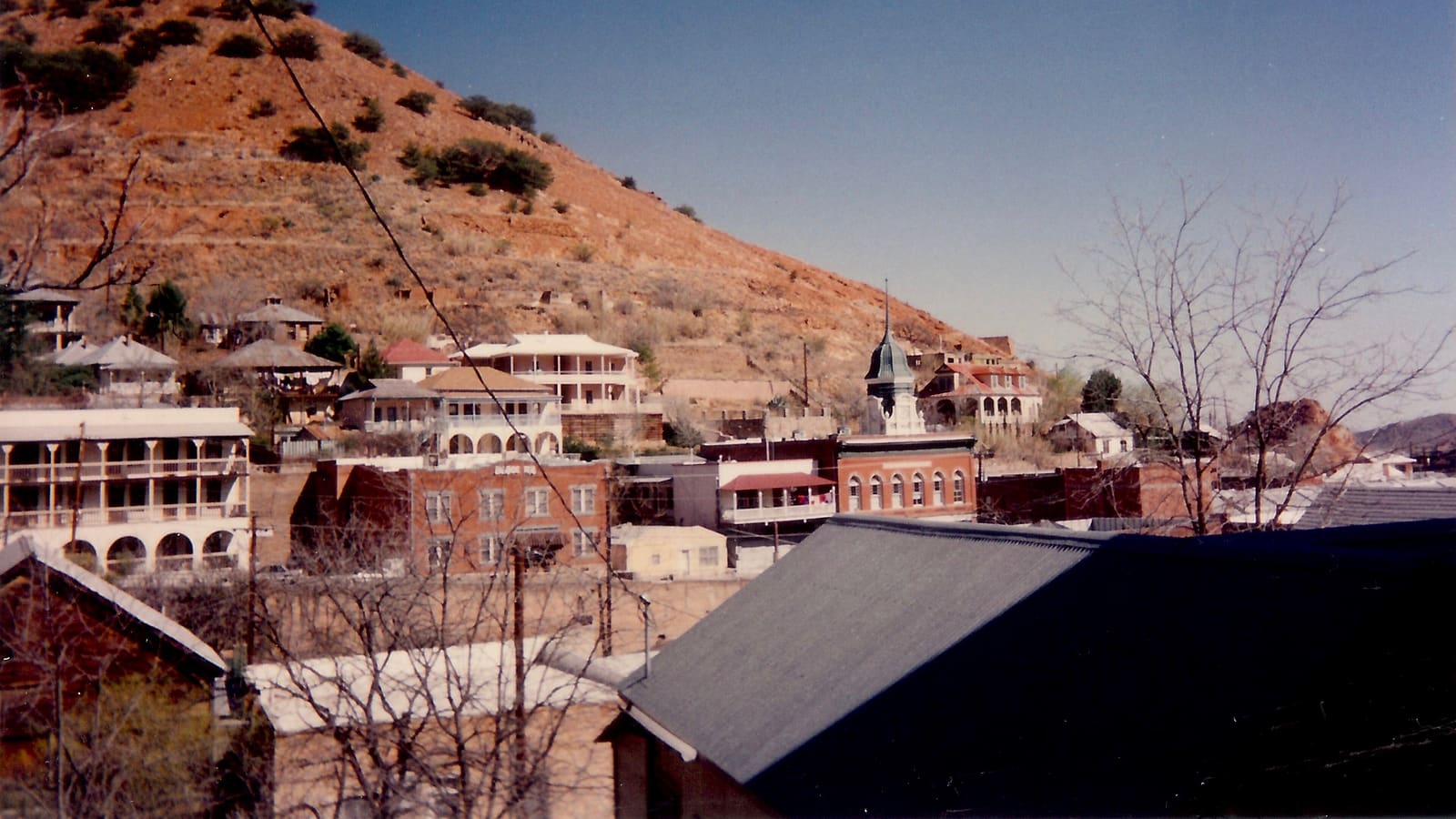
Bisbee, roughly 30 minutes further south of Tombstone and the farther of the two from Tucson, has a very different character -- a former copper mining town built into a steep canyon, now known for its artsy, bohemian atmosphere, historic architecture climbing the hillsides, and a well-known underground mine tour that puts visitors into an actual former copper mine. The two towns are close enough that some visitors combine them into a single long day, though that makes for a full and tiring day given the total drive distance and the amount there is to see in each.
If you have the flexibility, splitting Tombstone and Bisbee across separate trips, or building in an overnight stay in one of the towns, gives more breathing room than trying to fit both into a single day from Tucson. Verify current drive times and any road construction before you go, and check the mine tour schedule at Bisbee in advance if that's a priority, since tour times and availability are limited.
Driving Safety: Heat, Monsoon Flooding, and Remote Roads
Flash floods are the main driving hazard. The National Weather Service defines the monsoon season as June 15 through September 30, and southern Arizona has thousands of un-bridged low-water crossings where dry washes cross the road. The National Weather Service is unambiguous: never drive into a flooded roadway, because the depth is very easy to misjudge, and never drive around barricades. As little as ten inches to two feet of water can float most vehicles, including SUVs and trucks. Turn around, don't drown -- when in doubt, wait it out or find a safer route. Driving past a barricade onto a flooded road can leave you personally liable for the cost of your own rescue under Arizona's "Stupid Motorist Law" (A.R.S. § 28-910). Storms far upstream can send water down a wash that looks bone dry where you are standing.
Heat. The National Weather Service calls heat by far the number-one weather-related killer in Arizona, and normal high temperatures in Tucson run about 101°F in June, 100°F in July, and 99°F in August. Carry far more water than a same-length drive elsewhere would require -- for any walking or hiking on these trips, the National Park Service recommends about one quart of water per hour on hot days. Desert humidity is low enough that you can dehydrate without noticing. Never leave children or pets in a parked car.
Remote roads, dust, and lightning. Fuel, food, water, and cell coverage all thin out quickly once you leave the interstate corridors, particularly on State Route 86 toward Kitt Peak and on the State Route 80 stretch toward Tombstone and Bisbee. Top off the tank before you leave Tucson, carry extra water in the vehicle, and tell someone your route. If you drive into a dust storm, pull off the road as far as you safely can, turn off your headlights and taillights, and put the vehicle in park -- visibility can drop to near zero in seconds. And if you can hear thunder, you are close enough to be struck by lightning: when thunder roars, go indoors.
Planning Multiple Stops
These five destinations sit in different directions from Tucson, so realistic day-trip planning means picking a direction rather than trying to string all of them together. Kitt Peak is southwest and is best treated as its own dedicated day given the drive length and elevation change. Colossal Cave and Mission San Xavier del Bac are both close enough to the city that they can reasonably be combined with each other or with south-side Tucson activities in a single day. Tombstone and Bisbee are a southeastern pairing that stands apart from the other three.
All of the drive time estimates in this guide are approximate and will vary with your starting point in Tucson, traffic, and road conditions -- verify current estimates with a mapping app before you commit to an itinerary, particularly for the longer drives to Kitt Peak and the southeastern towns. Fill your gas tank before setting out on any of these routes; services thin out considerably once you're off the interstate corridors, particularly on the roads to Kitt Peak and Tombstone.
Hours, admission fees, and tour schedules for all five destinations are best verified directly with each site before you go, since these details are adjusted seasonally and are outside the control of any third-party travel guide. Building a small buffer into your schedule -- especially for the observatory and cave tours, which run on fixed departure times -- reduces the risk of missing a tour slot after a longer-than-expected drive.