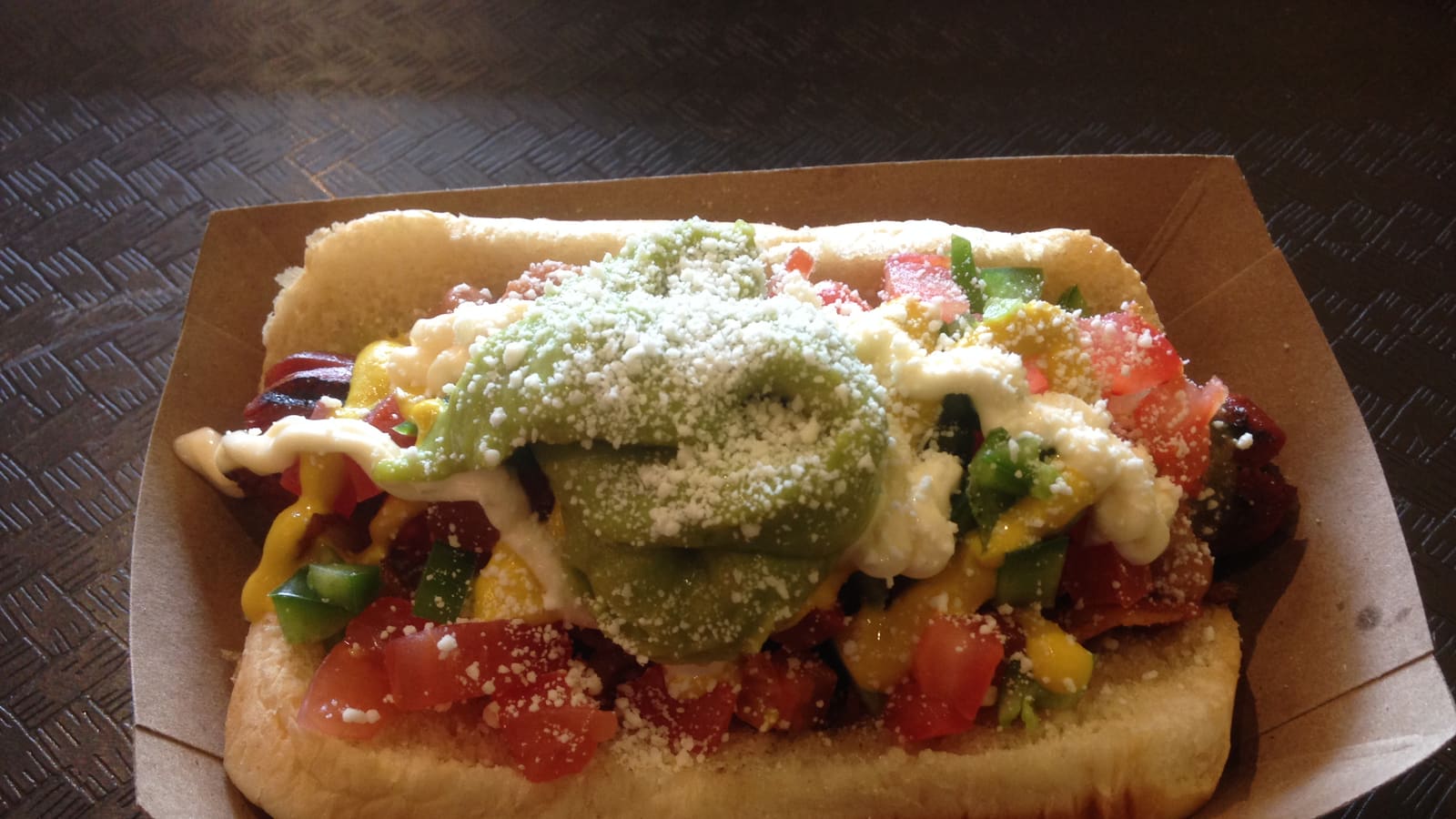
What Is a Sonoran Hot Dog?
A Sonoran hot dog is a hot dog wrapped in bacon and grilled, then served in a bolillo-style bun, a soft Mexican-style roll rather than a standard American hot dog bun. The toppings go on in layers: pinto beans, chopped onions, diced tomatoes, and then a mix of condiments that commonly includes mayonnaise, mustard, and a jalapeño salsa.
The bacon is the detail people notice first. It crisps on the grill and holds the hot dog together, which is why the dog tends to stay put inside a roll that would otherwise be too soft to carry this much on top.
Where the Style Came From
The Sonoran hot dog is generally traced to Hermosillo, the capital of the Mexican state of Sonora, where it took shape in the late 1980s. Some food writers theorize it existed earlier, as far back as the 1940s, so the origin story is not settled. What is clear is that it crossed the border and took root in Tucson and elsewhere in southern Arizona.
The vendors who make them are often called dogueros, and the classic setting is a street cart or a roadside stand rather than a restaurant dining room. A widely repeated estimate from 2009 put the number of places selling Sonoran hot dogs in Tucson above 200, which gives a sense of how common they are. Treat that as a snapshot from one year rather than a current count.
How to Order One
The easiest approach is to ask what comes on the standard version, then say what you want to add or leave off. Regional variations are common. Some stands add grilled peppers or grilled onions, and some finish with avocado or crumbled cheese. Others keep to the basic beans, tomato, and onion build. None of that is wrong; it is the stand's house style.
A few practical points:
- It contains pork in the form of bacon, so it is not a fit for every diet. Ask about ingredients if that matters to you.
- Salsa heat varies. Ask for sauces on the side if you are unsure about the spice level.
- Payment options differ by vendor, so confirm what a stand accepts before you line up.
- Hours at carts and stands can be short or seasonal, so check the vendor's current hours before making a special trip.
Why Tucson Is the Place to Try One
Tucson was named a UNESCO City of Gastronomy in 2015, the first city in the United States to receive the designation. The Sonoran hot dog is an easy way to taste what that means in practice: a cross-border dish, cooked by local vendors, sold in neighborhoods rather than only in tourist districts.
One restaurant that is frequently mentioned in coverage of the style is El Güero Canelo, which won a James Beard Foundation America's Classics award in 2018 for its Sonoran hot dogs. It is a reasonable starting point, but it is far from the only one, and locals tend to have strong opinions about their own favorite stand. Try more than one if you have the appetite; the differences between stands are the fun part.
Fitting It Into a Tucson Day
A Sonoran hot dog works well as a casual lunch or a late bite after a day outdoors. If you are staying near downtown or the university, the free streetcar described in the Tucson getting-around guide covers the central corridor, though many hot dog stands sit in neighborhoods away from the line, so plan on a car or rideshare for those.
Pair it with a Tucson itinerary that mixes outdoor time with food stops, and use the food guide for sit-down restaurants once you have had your fill of street food. Always confirm hours and prices directly, because stands open, move, and close without much notice.