Fort Apache Historic Park
Fort Apache Historic Park sits about 5 miles south of Whiteriver, just off Highway 73, on the Fort Apache Indian Reservation. The site preserves more than twenty historic buildings, along with ruins and remnants of others, spread across roughly 288 acres that once served as a U.S. Army post and, later, an Indian boarding school. The buildings date from the 1870s through the 1930s, giving the park a genuinely layered history spanning both the frontier military period and the subsequent boarding-school era.
The oldest structure is General Crook's Cabin, a log building dating to 1871, named for General George Crook, who commanded the fort in its early years. The park's former parade ground remains a central landscape feature, and walking the grounds gives a tangible sense of the fort's scale in a way that photographs alone don't convey.
The White Mountain Apache Cultural Center and Museum
At the western end of the park is Nohwike' Bagowa, "House of Our Footprints," the White Mountain Apache Cultural Center and Museum. It presents permanent and rotating exhibits, along with historic photographs and documents, telling the story of the White Mountain Apache Tribe in the tribe's own terms -- a meaningfully different framing than the fort buildings alone provide.
The museum is the natural starting point for a visit, both for orientation and for context on the fort's role in Apache history before you walk the grounds. Because this is a tribal institution rather than a federal or state museum, hours, exhibits, and programming are set by the White Mountain Apache Tribe and can change -- check current hours before you plan your visit around it.
Kinishba Ruins
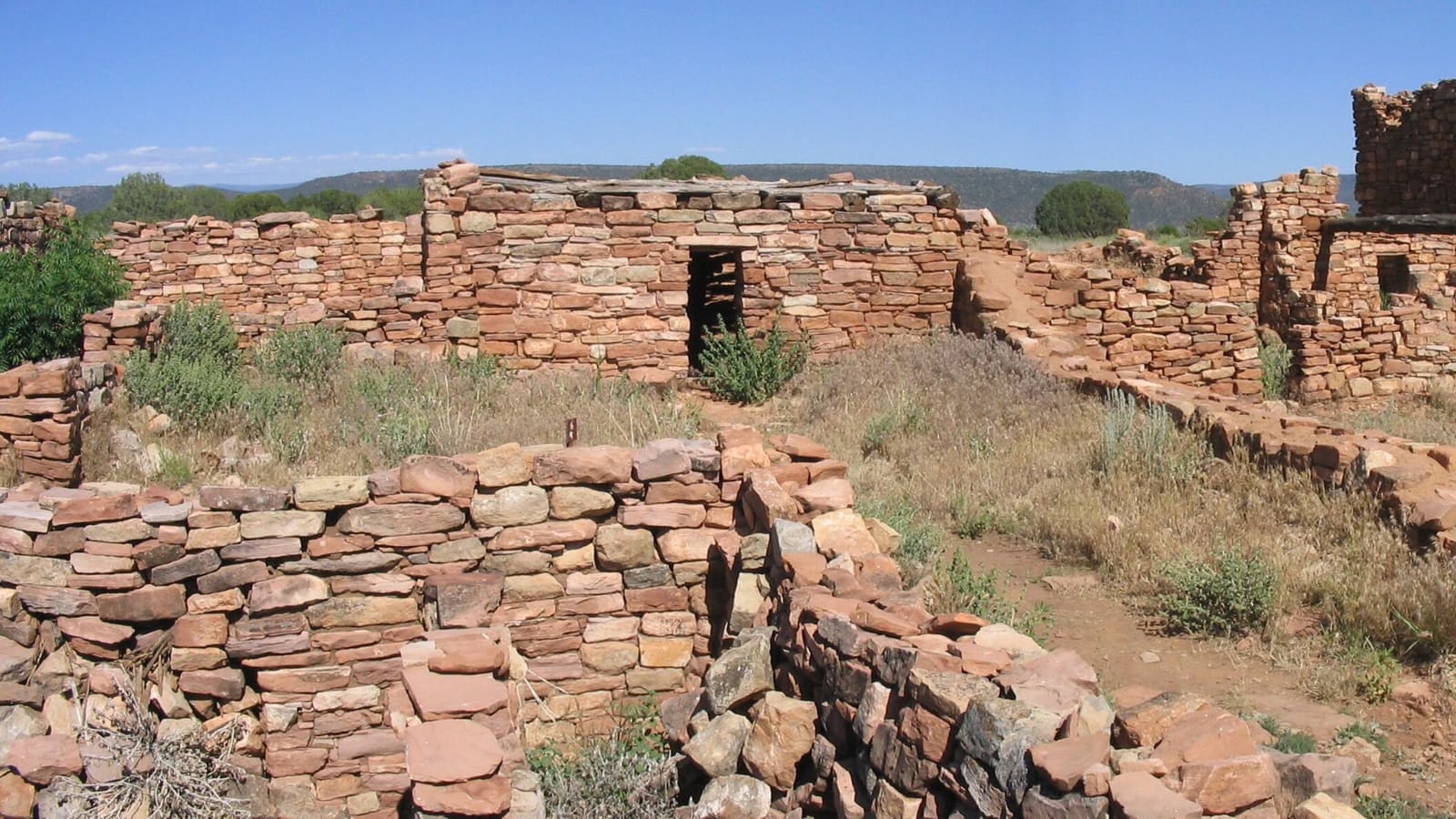
Kinishba Ruins sits just west of Fort Apache and Whiteriver, on White Mountain Apache tribal land, in a grassy, conifer-fringed valley draining into the White River. It's the sprawling remains of a plaza-focused ancestral Puebloan village occupied roughly from the 12th to the 14th or early 15th century, with about 600 rooms across nine major building mounds -- some room blocks were originally three stories tall. The site was designated a National Historic Landmark on July 19, 1964.
Archaeologist Byron Cummings led excavations from 1931 to 1940, uncovering at least 220 rooms and rebuilding roughly 140 of them; the site saw limited additional cleanup and restoration in 2005 to 2007. The ruins have weathered since that original excavation work, and the tribe administers access -- some sources describe entry as included with museum and historic park admission, while the tribe has also been reported to require a separate permit specifically for Kinishba. Confirm current access requirements directly with the historic park before you plan a visit around seeing the ruins.
Visiting as a Non-Tribal-Member: Respect and Access
This entire area is the Fort Apache Indian Reservation, home to the White Mountain Apache Tribe, and it operates under the tribe's own governance, not a National Park Service or Arizona State Parks framework. Recreation on tribal land generally requires its own permits and rules -- the tribe's Game and Fish Department, for instance, requires a Recreation Permit for uses not otherwise specifically covered -- so the museum and historic park's standard admission process is the right starting point, but it's worth confirming whether any planned activity beyond the marked park and museum needs separate authorization.
Treat the site the way you would any living community's history: this is not an abandoned ruin managed purely as a tourist attraction, but a place actively stewarded by the White Mountain Apache Tribe, with its own protocols and priorities. Stay on marked paths, follow posted rules, and direct specific questions about access, photography, or current restrictions to park or museum staff rather than assuming standard national-park conventions apply.
Planning Your Visit
From the Pinetop-Lakeside area, Fort Apache Historic Park is roughly 25 miles by road via AZ-73, about a 40-minute drive, making it a reasonable half-day trip if you're already based in the White Mountains for a longer stay. AZ-73 is a U-shaped state highway that primarily serves the reservation, so allow time for the drive itself as part of the visit rather than treating it as an incidental commute.
Because this is a smaller, tribally run site rather than a major national landmark with a large visitor infrastructure, don't expect extensive food or lodging options on-site -- plan to eat and fuel up in Pinetop-Lakeside, Show Low, or Whiteriver before or after your visit. Confirm current museum and park hours, admission, and any Kinishba-specific access requirements ahead of time; hours at tribal institutions can shift with staffing and season in ways that a generic web listing may not reflect.