Why Dams Matter Here
Yuma gets very little rain. The reason the area grows winter vegetables at scale is that the Colorado River is diverted into canals and spread across the valley. Dams upstream of town are what make that diversion possible, and two of them, Laguna Dam and Imperial Dam, are the ones you will hear about most often in local conversation. Our winter lettuce guide shows what that water grows, and our Colorado River guide covers recreation along the river.
Laguna Dam
Laguna Dam is the older of the two. It was built by the federal government in the early 1900s as part of the early Yuma reclamation work and is generally described as completed around 1909. It is northeast of Yuma, and the water behind it has over the years been shaped by sediment. Today it is best understood as a historic piece of the river system. Its exact role in current water operations is a detail we have not verified, so rely on the Bureau of Reclamation for current information.
Imperial Dam
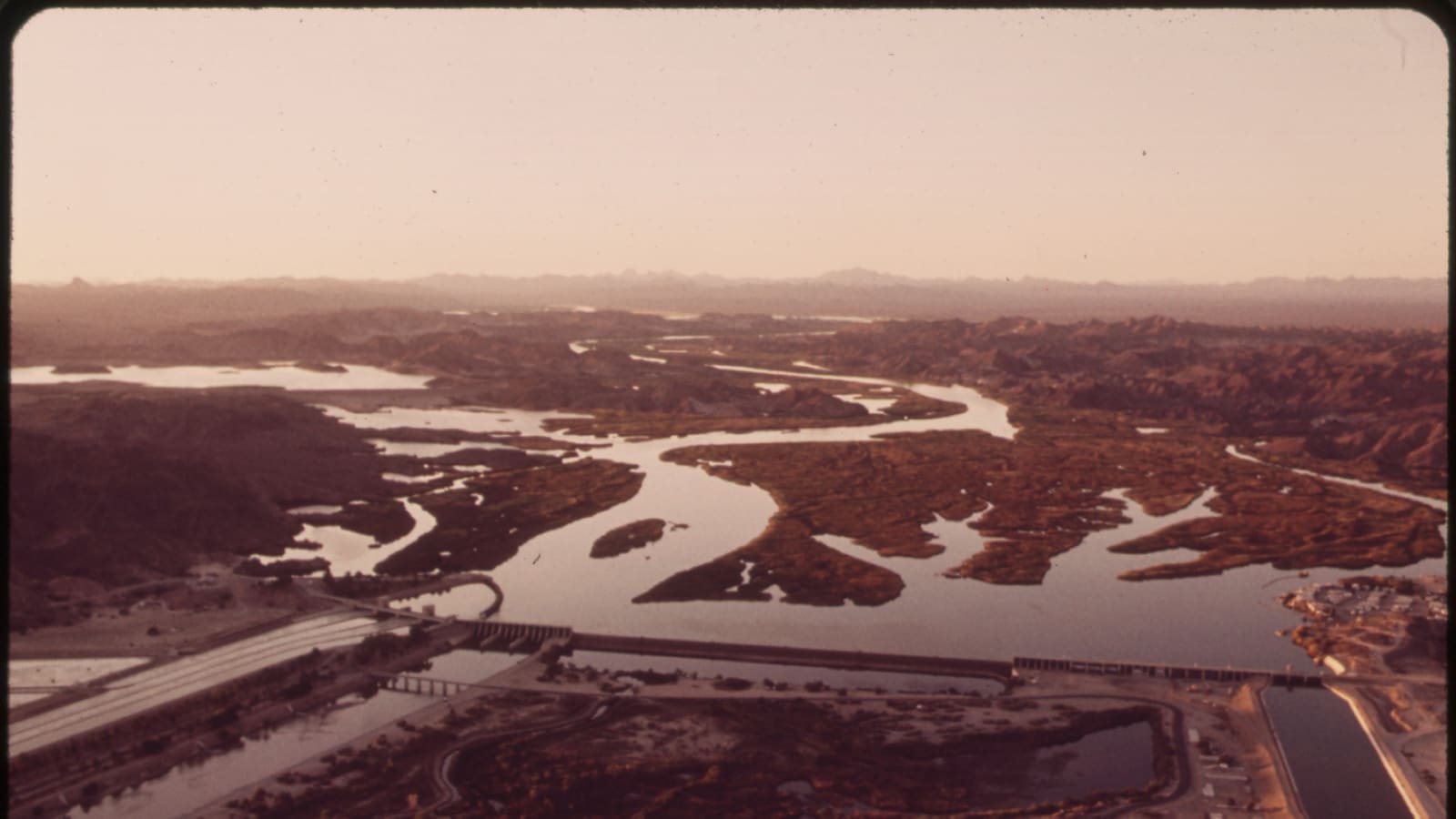
Imperial Dam lies farther upstream and was built in the 1930s. It is a diversion dam, which means it holds the river at a level where water can be sent into canals rather than storing a large reservoir. It is widely described as the point where water is turned into the All-American Canal, which serves California's Imperial Valley, and into the Gila Gravity Main Canal, which serves farmland in Arizona. The archival photograph at the top of this page shows the dam and the backwater maze of channels and marshes beside it.
What Visitors Can Actually Do
Because these are active water facilities, do not expect to walk on the dams or along the canals. Structures and canal facilities may be fenced or closed, and posted signs rule. The better plan is to focus on what is open to the public nearby:
- The backwaters and lakes along the river, such as Mittry Lake, for fishing, paddling, and birding
- Public recreation areas managed by the Bureau of Land Management, some of which are used by winter campers. Rules, fees, and permits vary, so check before you go
- Wildlife viewing at the Imperial National Wildlife Refuge, which lies along the river in this same stretch
Road Conditions and Safety
Some roads in this area are unpaved and can be rough after rain. Services are limited, summer heat is severe, and cell coverage can drop out. Bring water, fuel, and sun protection, and let someone know your route. Never swim or wade near canal intakes, gates, or dam structures. Currents near diversion works can be strong and are not obvious from the surface.
Fitting It Into a Trip
A sensible half day links the dams story to one outdoor stop and one meal in town. Our 3-day Yuma itinerary and day trips guide show how to stack it with other stops, and the Yuma hub lists more.