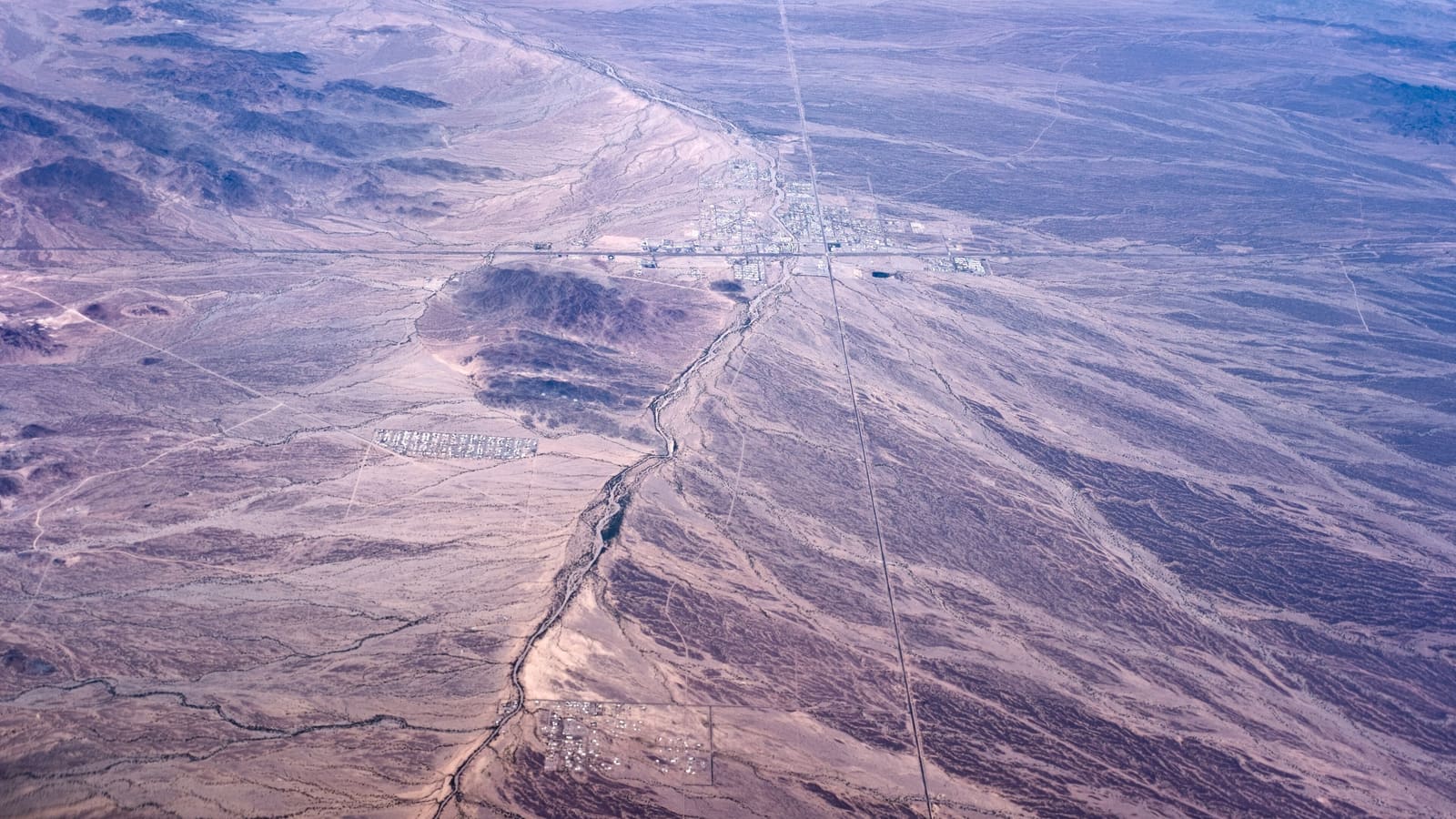
What Quartzsite Is, and Why It Explodes Every Winter
For most of the year, Quartzsite is a quiet desert town along the general corridor north of Yuma. Every winter, that changes dramatically: a large wave of RVers, many of them boondocking on the surrounding Bureau of Land Management public land, converges on the area for a season built around gem and mineral shows, swap meets, and vendor gatherings. The population increase during peak weeks is dramatic compared to the town's normal size, though exact figures vary by source and year, so treat any specific population claim you see elsewhere as approximate. That camping is regulated rather than a free-for-all: the BLM operates designated Long-Term Visitor Areas here -- the four La Posa LTVAs, roughly 11,400 acres in total, whose entrances sit about two miles south of town on Highway 95 -- and a permit is required to use a designated LTVA between September 15 and April 15.
The phenomenon has built up over decades into a genuine winter institution for a segment of the RV and rockhound community, and it's become well known enough that even visitors with no interest in gems or RVs sometimes make the trip simply to see the scale of the gathering firsthand.
The Gem and Mineral Shows
Quartzsite's reputation is closely tied to its gem, mineral, and rock shows, which draw dealers and collectors from around the country. Multiple shows tend to run across the winter season, often clustering more heavily around January, when the broader gathering also tends to peak. Show names, exact dates, and venues change from year to year, so check a current show calendar before planning a trip around a specific event rather than relying on last year's schedule.
Even outside the biggest headline shows, rockhounds and casual visitors alike often find plenty to look at, since the gem-and-mineral identity runs through much of the town's winter vendor activity, not just the largest named events.
Swap Meet Culture
Alongside the gem shows, Quartzsite is known for large, informal swap meets where vendors sell everything from tools and RV parts to collectibles, clothing, and general flea-market goods. The atmosphere is casual and sprawling rather than curated, and part of the appeal for visitors is simply wandering row after row of vendor stalls in a way that feels distinct from a typical retail shopping trip.
Because vendor lineups and swap-meet locations can shift year to year, and because parking and crowd conditions during peak weeks can be significant, it's worth arriving with some flexibility rather than a rigid plan for exactly which vendors you intend to visit.
The Drive From Yuma
Quartzsite sits north of Yuma, and the connecting road is US-95 -- the Arizona Department of Transportation describes US 95 as the highway connecting Yuma with Interstate 10, Quartzsite, and the rest of western Arizona. The drive is commonly treated as a feasible day trip for visitors based in the Yuma area. Exact mileage and drive time depend on where in Yuma you start, so check a current map before you go rather than relying on a fixed figure. Building in extra time during the peak winter show weeks is a reasonable precaution, since traffic in and around the town increases substantially during that period.
What a navigation app will not convey is how empty that corridor is. US-95 north of Yuma crosses long stretches of undeveloped desert: the U.S. Fish and Wildlife Service places the Kofa National Wildlife Refuge about 40 miles up the road on the east side of the highway, and states plainly that there are no facilities on the refuge for towing, gasoline, sanitation, or drinking water. Treat this as a remote-desert drive rather than a cross-town errand. Fill the tank in Yuma before you leave, carry drinking water for everyone in the vehicle plus a reserve, download offline maps rather than assuming you will have a signal the whole way, and tell someone your route and expected return time. In warm weather the National Weather Service advises at least two liters of water a day even without exertion, and notes that heat-associated deaths in Arizona can occur at temperatures in the mid-80s and hotter -- and never leave a child, a dependent adult, or a pet in the parked vehicle while you walk the vendor rows. The NWS is explicit that this is never safe, in any season.
Planning Around the January Rush
The gathering is widely associated with a major push around January, when several of the best-known shows tend to cluster and the town sees its heaviest crowds and traffic of the season. If you're aiming for a quieter, lower-key visit, going earlier or later in the winter season -- outside the January peak -- can mean a more manageable experience, though it also means missing some of the largest events.
Whichever window you choose, check current show calendars and any traffic or parking advisories before you go, since conditions during the busiest weeks can differ significantly from a typical winter weekday.
What to Bring and Expect
Because Quartzsite's winter footprint is largely outdoor and desert-based, plan for sun exposure and expect informal, cash-friendly vendor setups rather than a polished retail environment. Carry water and drink it before you feel thirsty -- the National Weather Service recommends at least two liters a day even on a low-exertion day in Arizona's lower deserts -- and wear lightweight, light-colored clothing, a hat, and sunscreen. Winter days here are mild, but the sun is not. Services in town can be stretched thin during the busiest weeks given how much the population swells, so a day trip from a Yuma base -- rather than trying to find lodging in Quartzsite itself during peak season -- is often the more comfortable approach for casual visitors.