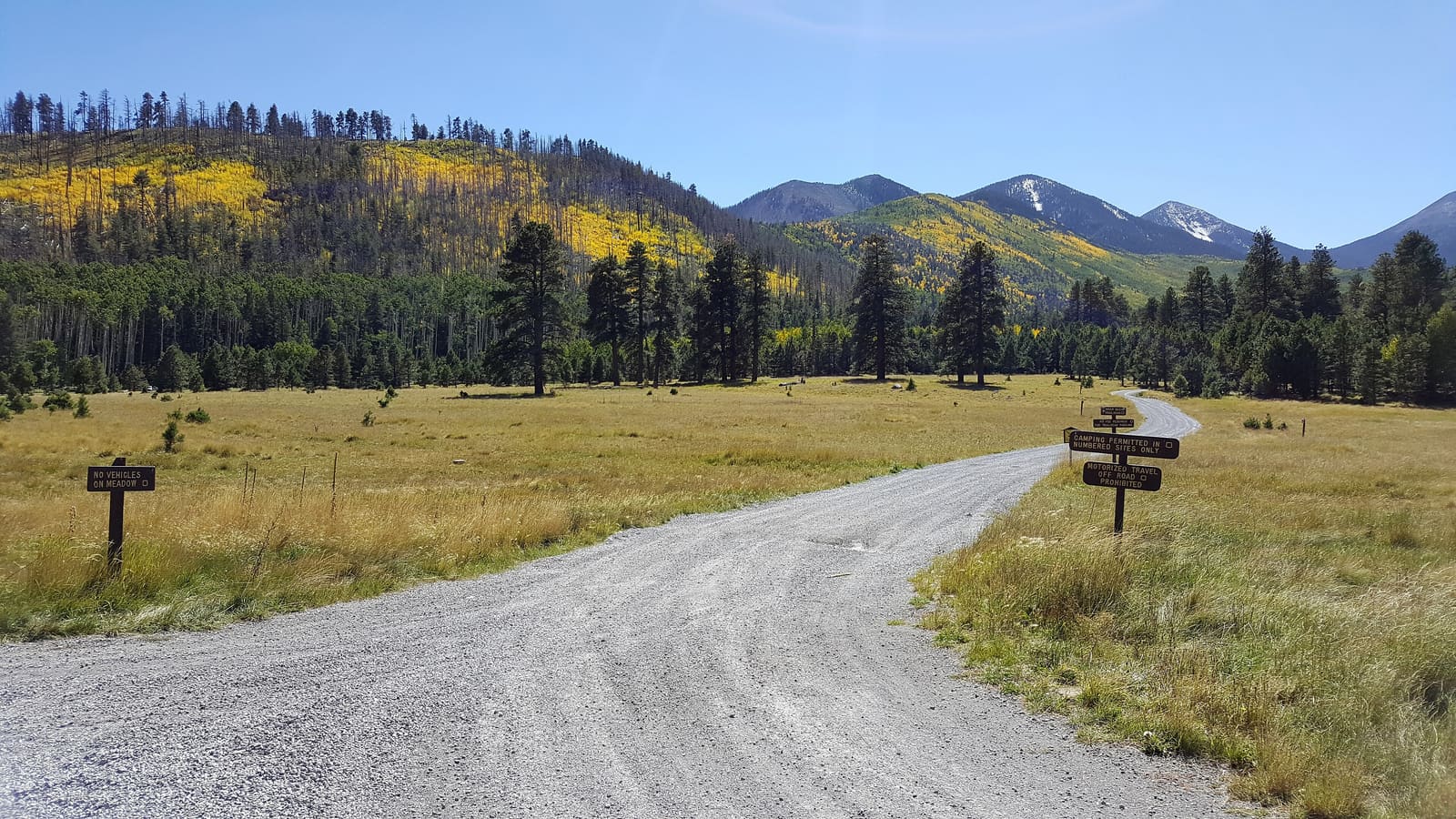
Flagstaff sits at 7,000 feet in the Coconino National Forest — which means it has actual seasons, actual weather, and a completely different climate calendar than the rest of Arizona. The question of when to visit depends entirely on what you're after: summer cool-down, fall foliage, ski season, or a specific event. Here's the honest breakdown, month by month.
Quick Answer: The Best Time to Visit Flagstaff
Best overall: September and October. Post-monsoon weather is crisp and dry, the aspen groves turn gold on the San Francisco Peaks, crowds thin out after Labor Day, and hotel rates drop. It's the sleeper season that most visitors miss because they assume fall means cold.
Best for summer escape: June. It's the driest summer month — the monsoon hasn't started yet, temperatures hit the low-to-mid 70s, and 2026 has an extra draw: the Route 66 Centennial celebration on June 6.
Best for skiing: January and February. Arizona Snowbowl at 11,500 feet gets real snow, and mid-week lift lines are nearly nonexistent.
Flagstaff Month-by-Month at a Glance
| Month | Avg High | Avg Low | Crowds | Rating |
|---|---|---|---|---|
| January | 41°F | 16°F | Low | ⭐⭐⭐ (skiers) |
| February | 44°F | 19°F | Low | ⭐⭐⭐ (skiers) |
| March | 50°F | 23°F | Low | ⭐⭐ (shoulder) |
| April | 58°F | 30°F | Moderate | ⭐⭐⭐ (hikers) |
| May | 67°F | 37°F | Moderate | ⭐⭐⭐⭐ (great) |
| June | 79°F | 44°F | High | ⭐⭐⭐⭐⭐ (peak) |
| July | 82°F | 52°F | Very High | ⭐⭐⭐⭐ (busy + monsoon) |
| August | 80°F | 51°F | Very High | ⭐⭐⭐⭐ (busy + monsoon) |
| September | 75°F | 45°F | Moderate | ⭐⭐⭐⭐⭐ (best) |
| October | 64°F | 35°F | Moderate | ⭐⭐⭐⭐⭐ (best) |
| November | 52°F | 24°F | Low | ⭐⭐ (shoulder) |
| December | 43°F | 17°F | Moderate | ⭐⭐⭐ (holidays) |
Average temperatures are approximate. Source: Discover Flagstaff.
Spring in Flagstaff (March–May)
March — Weather Whiplash
March is the wild card. You can get 60°F and sunshine or a foot of snow in the same week — sometimes in the same day. The ski season at Arizona Snowbowl can extend into March on good snow years, and the Coconino National Forest trails are thawing out. If you're flexible and don't mind layers, March's low crowds and cheaper hotel rates make it worth considering. Don't count on reliable hiking above 8,000 feet.
April — Hiking Season Opens
April is when Flagstaff starts to feel like itself again. Snow becomes rare at city elevation, the ponderosa pines are lush green, and the trail network fully opens up. Temperatures are in the mid-to-upper 50s — ideal for hiking without sweating through your shirt. Crowds are building but haven't peaked. A solid choice if you want good conditions without paying summer prices.
May — The Sweet Spot Before the Rush
May is quietly excellent. Days hit the upper 60s, nights stay cool (mid-30s to low 40s), and the summer crowds haven't arrived yet. All trails are accessible, wildflowers begin appearing in meadows above 7,500 feet, and hotel availability is still easy to find. If you want good weather without competing for parking at the trailhead, May is underrated.
Summer in Flagstaff (June–August)
June — The Best Summer Month
June is the summer sweet spot. Pre-monsoon means clear blue skies, low humidity, and the most reliable outdoor conditions of the year. Average highs reach 79°F — warm enough for a t-shirt during the day, cool enough for a jacket at night. This is peak escape season for Phoenix and Tucson residents, so book ahead.
In 2026, June has an extra pull: the Route 66 Centennial on June 6 — a free all-day celebration with classic cars, live music, and street art in downtown Flagstaff. The Hullabaloo Festival runs the same weekend (June 6–7) at Wheeler Park. The Summer Concert Series kicks off Memorial Day weekend with free Friday-evening shows at Heritage Square through Labor Day. June is the busiest and most event-packed month on the calendar.
July & August — Monsoon Season
Arizona's monsoon arrives in early July and runs through mid-September. In practical terms: mornings are clear and warm (low 80s), afternoons bring dramatic thunderstorms with lightning and rain, and evenings clear back up. It's not the kind of rain that ruins a trip — it's more like a daily light show. But it does mean you need to plan outdoor activities in the morning and be off exposed ridgelines by noon.
July and August are the busiest months of the year. Hotels book out weeks in advance for weekends, especially near the Fourth of July. If you're coming in summer and want any flexibility, visit June instead. If July is your only option, book early and embrace the monsoon — the afternoon storms over the San Francisco Peaks are genuinely spectacular.
Book Flagstaff Tours & Experiences
From Grand Canyon day trips to Lowell Observatory night tours — book ahead, especially for summer.
Browse Tours on ViatorWe earn a small commission if you book — at no extra cost to you.
Fall in Flagstaff (September–October) — The Best Overall
September — Post-Monsoon Paradise
When the monsoon ends in mid-September, Flagstaff transforms. The air is clean and dry, wildflowers that bloomed through the summer storms are finishing their cycle, and the aspen groves above 8,500 feet start to turn. September highs sit in the mid-70s with nights in the mid-40s — perfect hiking weather. Crowds drop sharply after Labor Day, and hotel rates follow. This is when locals exhale and get back out on the trails.
October — Fall Foliage Peak
October is Flagstaff at its best for most travelers. The aspen groves on the Kachina Trail and in the Inner Basin of the San Francisco Peaks turn brilliant gold, typically peaking in the second and third weeks of October. Daytime highs in the low 60s, overnight lows in the mid-30s. The crowds are manageable — not empty, but nothing like July. This is also the best time to combine Flagstaff with a Sedona day trip: the red rocks and the aspens together in one frame.
One note: peak foliage timing varies by a week or two depending on the year. Follow local reports as you get close to your trip. The Kachina Trail is the most reliable spot — start from the Snowbowl parking area and hike east.
Winter in Flagstaff (November–February)
November — Quiet and Getting Cold
November is the shoulder season between fall tourism and ski season. Temps drop into the 50s during the day and the 20s at night. Snowfall becomes possible toward the end of the month. The National Monuments (Walnut Canyon, Sunset Crater, Wupatki) are open year-round and often completely uncrowded in November — you might have the cliff dwellings entirely to yourself. A good pick for travelers who value quiet over warmth.
December–February — Ski Season
Arizona Snowbowl opens for the season, typically in late November or December, and runs through March depending on snowpack. At 11,500 feet at the summit, it gets real snow — not the marginal conditions you'd expect from Arizona. January and February are the peak skiing months, with the best snow coverage and conditions.
Downtown Flagstaff is charming in winter — holiday lights on Route 66, the smell of wood smoke, and far fewer tourists than summer. If you're coming for skiing, weekdays are dramatically less crowded than weekends. Accommodation prices are reasonable outside of holiday windows (Christmas week, Presidents' Day weekend).
Best Time to Visit by Trip Type
Families with kids: June or early July. School's out, temperatures are warm enough for water activities at Slide Rock, and the Summer Concert Series gives you free evening entertainment. Book hotels 4–6 weeks ahead.
Couples: September or October. Fall foliage, quieter trails, candlelit restaurants without a 45-minute wait, and rates that won't require a spreadsheet to justify. The 2-day itinerary works well in this window.
Serious hikers: May or September. Comfortable temperatures, dry conditions, and full trail access without summer crowds. Humphreys Peak is typically snow-free from mid-June through mid-October — plan accordingly.
Stargazers: Any month works — Flagstaff is a designated Dark Sky City and Lowell Observatory runs public viewing nights year-round. Fall and winter have the longest nights and clearest skies. Book Lowell Observatory evening tours well in advance regardless of season.
Budget travelers: November or March. These shoulder months have the lowest hotel rates, smallest crowds, and full access to the free trails and national forest. Bring layers.
Skiers and snowboarders: January or February. Peak snowpack, best conditions, mid-week lift lines that are almost laughably short for a ski resort.
Flagstaff Hotel Prices by Season
Expect to pay the most in July and August (peak summer), followed by June and October (popular but slightly more available). The cheapest windows are November and March, with January and February mid-range due to ski season demand.
Downtown hotels within walking distance of Route 66 book fastest for summer weekends and major events. If you're visiting for the Route 66 Centennial (June 6, 2026), that entire weekend is already showing limited inventory — book immediately. For fall foliage weekends in mid-October, book 3–4 weeks ahead minimum.
Find the Right Hotel for Your Dates
Prices vary significantly by season. Compare availability and rates before your trip.
Check Flagstaff Hotels on ExpediaWe earn a small commission if you book — at no extra cost to you.
What to Pack for Each Season
Spring (March–May): Layers are non-negotiable. A fleece or light down jacket, waterproof shell, and warm base layers. Trail conditions above 8,000 feet can be muddy or snowy through April.
Summer (June–August): Sunscreen and sunglasses are critical at altitude — UV intensity is significantly higher at 7,000 feet. A light rain jacket for monsoon afternoons in July and August. Mornings can still be in the 50s, so a light layer for the first hour of a hike.
Fall (September–October): T-shirt days and sweater nights. A mid-weight fleece and one warmer layer for evenings. October mornings can dip below 40°F at the trailhead.
Winter (November–February): Full cold-weather gear. Insulated jacket, warm base layers, waterproof boots if there's snow. Driving to Snowbowl in winter requires all-weather tires — ice on the access road is common.
Frequently Asked Questions
What is the best month to visit Flagstaff, AZ?
September and October for most travelers. The monsoon has ended, temperatures are ideal for hiking and exploring, fall foliage peaks mid-October, and you won't be fighting summer crowds for parking or restaurant tables. June is the best choice if you're locked into summer travel.
Is Flagstaff cold in summer?
No — pleasantly cool, not cold. June averages 79°F highs and 44°F lows. It's 20–30°F cooler than Phoenix in the same week, which is exactly why people make the drive. Bring a light jacket for evenings and mornings.
What month is cheapest to visit Flagstaff?
November and March are the cheapest months. These are the shoulder seasons between ski crowds and summer tourists, with the lowest hotel rates and most available inventory. Trails and attractions are open; you just need to dress for cooler temperatures.
When is fall foliage in Flagstaff?
Flagstaff's aspen groves typically peak in late September through mid-October. The Kachina Trail on the San Francisco Peaks is the best spot. Timing shifts a week or two depending on the year — follow local conditions as you get close to your trip date.
Does it snow in Flagstaff in summer?
Almost never at city level. Snow is a December-through-March phenomenon for downtown Flagstaff. The summit of Humphreys Peak (12,633 ft) can hold snow patches into early June, but your hotel and the hiking trails will be snow-free all summer.