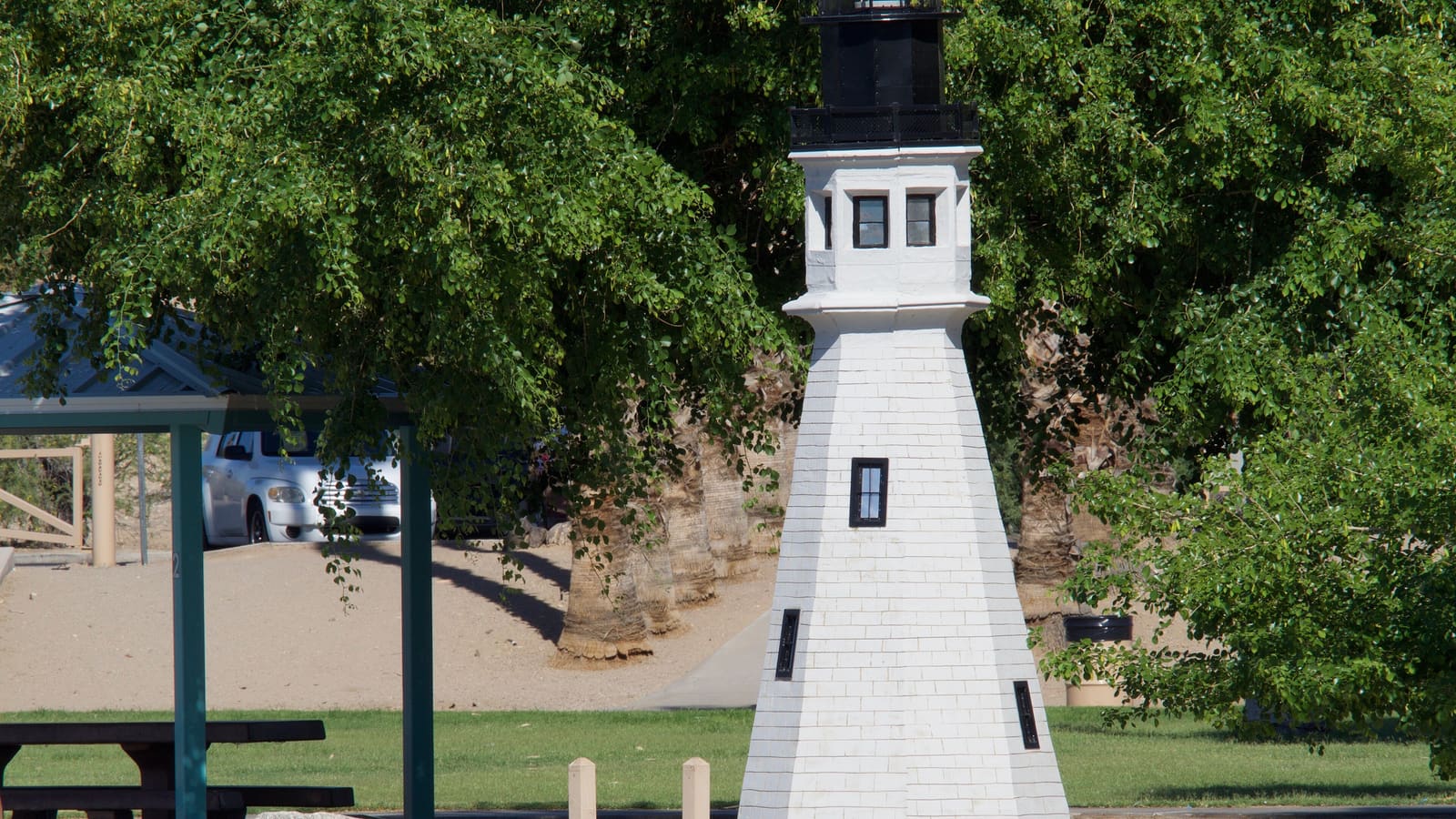
What the Lighthouse Collection Is
Scattered around Lake Havasu's shoreline and the Bridgewater Channel is a collection of replica lighthouses -- each one a scaled-down version of a real, well-known lighthouse from elsewhere in the United States. The project has been built and maintained largely through volunteer effort tied to the Lake Havasu Lighthouse Club, a local group dedicated to installing, restoring, and caring for the replicas over time.
The replicas are typically built at around one-third the scale of the originals they represent, which keeps them modest in size while still clearly recognizable as the lighthouse they are modeled on. Many are wired with working lights and registered as private aids to navigation, meaning they are not purely decorative -- several genuinely help boaters read the shoreline after dark, echoing the practical purpose of the full-size lighthouses they copy.
How Many Lighthouses, and Which Ones
The exact number of replicas in the collection is not a fixed figure worth memorizing -- the Lake Havasu Lighthouse Club has added, relocated, and restored structures over the years, so any specific count you read in an older article or blog post may already be out of date. What is durable is the idea: a rotating, growing set of scaled replicas modeled on famous American lighthouses, installed at points around the lake rather than clustered in one spot. As of the club's own published location guide, the collection stands at 28 replicas, and the club posts a downloadable map that is the only count worth trusting on the day you go.
Because names and locations shift as the collection is maintained, treat any list of specific lighthouse names and their exact spots as a snapshot rather than a permanent map. The Lake Havasu Lighthouse Club and the Lake Havasu City visitor resources are the best sources for a current list before you go looking for a particular replica.
Seeing Them by Boat or Kayak
Water is the most complete way to experience the collection, since the replicas are spread along the shoreline and channel rather than concentrated where a land visitor can easily reach all of them. A slow cruise or paddle past the shoreline turns the lighthouses into a kind of running landmark trail -- useful for orienting yourself on the water as much as for the novelty of spotting each one.
If you do not own a boat, the rentals and guided cruises covered in our boating guide are a straightforward way to get on the water for an afternoon, and a lighthouse-spotting pass combines naturally with a longer day that also takes in the Bridgewater Channel and the anchor-out coves. Paddlers looking for a quieter, slower pace can also cover a good stretch of shoreline by kayak or paddleboard, particularly in the calmer morning hours -- see our watersports guide for rental options and conditions to expect.
Before you push off: Arizona law requires a U.S. Coast Guard-approved wearable life jacket on board for every person on any vessel — and that includes kayaks and paddleboards, which many visitors do not realize are legally vessels here. Children 12 and under must actually be wearing one whenever the vessel is underway, not just have one aboard. Arizona also prohibits operating a watercraft while even slightly impaired; there is no "one beer is fine" threshold on this lake. Arizona State Parks and the Arizona Game & Fish Department enforce both rules. There are no lifeguards anywhere on Lake Havasu, the water gets deep fast off the shoreline, and afternoon wind can turn a flat morning paddle into a hard slog back — another reason the early hours are the better window.
Seeing Them on Foot
Not every replica requires a boat. A number of the lighthouses sit close enough to shore to be visible, or reachable by a short walk, from shoreline parks and public access points around Lake Havasu City, including stretches near the London Bridge and the Bridgewater Channel. Exactly which replicas are walkable changes as the collection is maintained, so check a current map from the Lake Havasu Lighthouse Club or the visitor center rather than assuming a specific park guarantees a specific lighthouse.
If you are combining a lighthouse walk with other sightseeing, it pairs well with a broader stroll around the English Village and channel-front area covered in our things-to-do guide, since several of the shore-accessible replicas are within easy walking distance of that same stretch.
Tips for Visiting
Best time of day
Early morning and the hour or two before sunset generally offer calmer water, softer light for photos, and lower temperatures than midday, which matters more than it sounds: normal daily highs here average roughly 110°F in July and 107°F in August (Western Regional Climate Center). The National Weather Service advises shifting outdoor activity to the coolest hours, drinking water steadily before you feel thirsty, and never leaving a child or pet in a parked vehicle. Carry more water than you think a short shoreline walk needs. If any of the replicas you are hoping to see are lit at night, an evening pass on the water can also be worthwhile, though which lights are active can vary.
Get a current list first
Because the collection changes over time, it is worth checking with the Lake Havasu Lighthouse Club or the Lake Havasu City visitor center for a current map or list before you set out, rather than relying on an older blog post, ours included, for exact names and positions.
Combine it with a bigger day on the water
A lighthouse-spotting pass rarely needs to be its own dedicated trip. It slots naturally into a longer boating or paddling day that also covers the channel, the coves, and the London Bridge, so plan it as one stop on a fuller itinerary rather than a standalone outing.