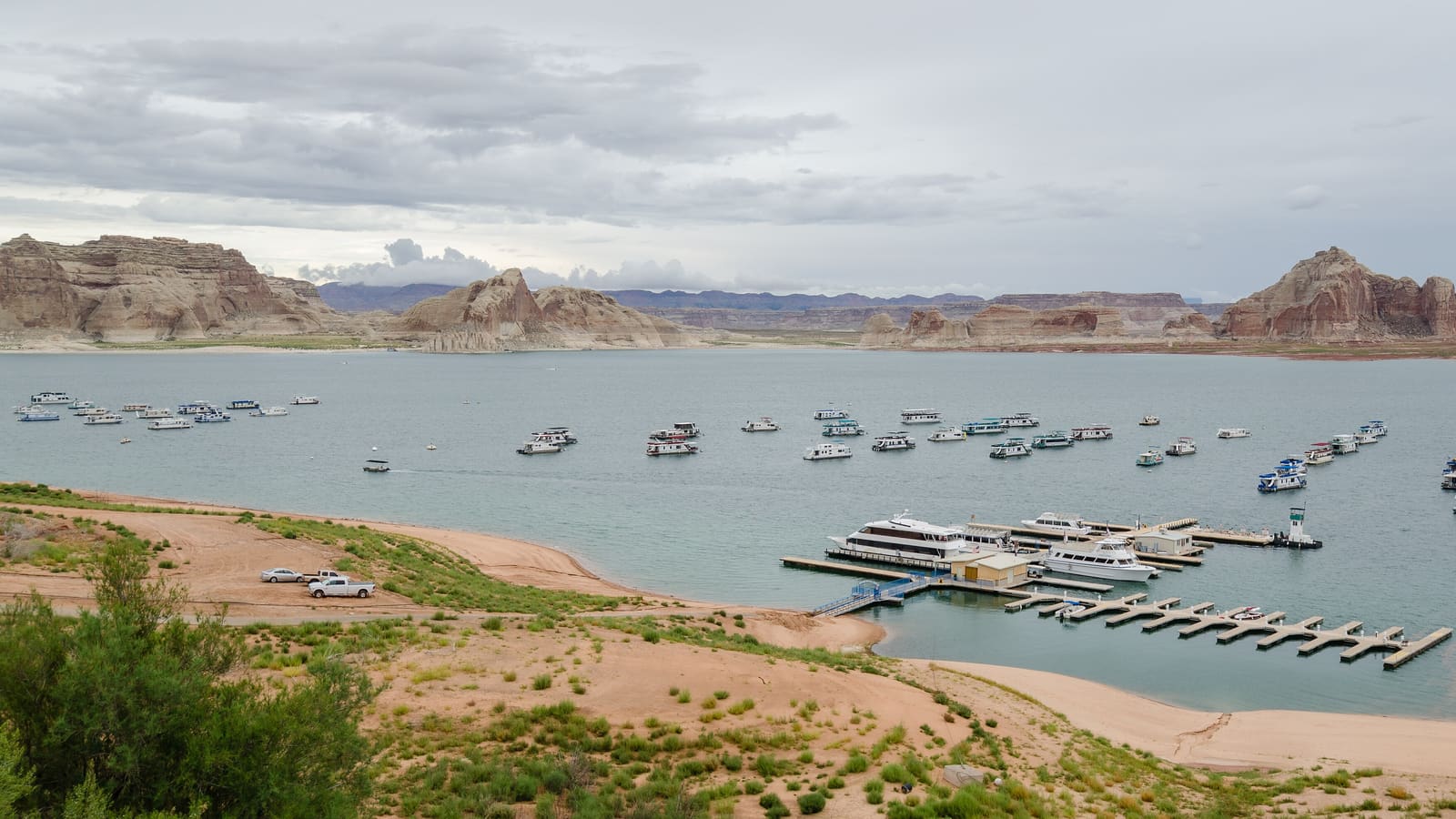
May — The First Sweet Spot
May is the first month when Lake Powell feels like “the lake.” Daytime air temperatures climb into the seventies and eighties, water temperatures rise into the swimmable range by mid-month, and crowds remain meaningfully below the summer peak until Memorial Day weekend. Houseboat availability is still reasonable, and Antelope Canyon tour spots, while booking up, are not impossible to find.
The main risk in May is wind. Spring weather over Lake Powell can bring sustained afternoon winds that turn the open lake choppy and make kayaking or paddleboarding unpleasant or unsafe. Plan around weather forecasts and treat afternoons as the higher-wind window.
If you have flexibility, the second and third weekends of May are often a sweet spot — warm enough to enjoy the water, late enough that conditions are usually settled, and early enough to avoid the price spike that hits over Memorial Day.
June, July, August — Peak Season and Real Heat
June through August is high season at Lake Powell. Houseboats book months in advance, marina parking fills, and major attractions (Antelope Canyon, Horseshoe Bend, Rainbow Bridge tours) operate near capacity. Water temperatures are at their warmest. If you want the postcard Lake Powell summer experience, this is the window.
It is also genuinely hot. Daytime highs of one hundred to one hundred and ten degrees Fahrenheit are routine in July, and the canyon walls trap heat well into the evening. Be honest about how your group handles sustained heat — a houseboat without good shade structure becomes brutal mid-afternoon, and slot canyon tour windows mid-day can be uncomfortable for kids and older travelers.
July and August also bring the Southwest monsoon. Afternoon thunderstorms can be sudden, intense, and dangerous, particularly for anyone in slot canyons or along washes. Flash flood watches are common. The storms make for spectacular sky photos and they end as quickly as they start, but they are not to be ignored. Check the forecast and the National Weather Service flash flood outlook every morning.
September — The Quiet Sweet Spot
September is the most underrated month at Lake Powell. After Labor Day weekend, crowds drop sharply. Houseboat availability opens up, Antelope Canyon tour slots become much easier to book, and the daytime heat finally backs off into the eighties. Water temperatures stay warm enough for swimming well into the month.
September weather is generally settled. Monsoon storm activity tapers off in most years by mid-month. Wind events are typically less severe than in spring. The risk is the trade-off you accept for the lower crowds — some marina services scale back after Labor Day, and on the northern lake (Bullfrog, Halls Crossing) the post-summer schedule reduction is more pronounced.
For travelers without school-age kids who do not need to be on the lake in summer specifically, September is the month we most often recommend.
October — The Last Warm Window
Early October stays mild and warm. By mid-month, daytime highs begin dropping into the seventies and overnight lows fall into the forties. Water temperatures cool quickly through October — swimming becomes brisk and then unpleasant by the end of the month. Houseboat operators often offer reduced rates in October relative to peak summer pricing.
October is the right month for visitors who prioritize photography, slot canyon visits (the light is excellent and the crowds are lower), or quiet shoreline exploration over swimming. The desert light in October is famously beautiful — long shadows, golden hour stretching for hours.
By late October the day-to-day weather becomes less predictable, with the first winter weather systems sometimes pushing through. Bring layers and check the forecast the day before you go on the water.
November Through February — The Quiet Season
Winter at Lake Powell is quiet. Daytime air temperatures range from the forties to the low sixties, depending on month and weather pattern. Water temperatures are too cold for casual swimming. Many of the seasonal services scale back. Houseboat rentals are limited (some operators do not rent in winter at all). This is not a beach vacation season.
It is, however, an excellent time for photographers, hikers, and visitors who want the canyon country without the crowds. The low-angle winter light on the canyon walls is striking. Horseshoe Bend without three thousand other tourists is a different experience. Hiking is far more comfortable than in summer.
Winter does bring real weather risk. Snow can fall on US-89 between Flagstaff and Page, and on the Utah approach routes. Cold rain can make slot canyon access dangerous (flash flooding remains possible). Plan around the forecast, not the calendar.
March and April — The Spring Sweet Spot for Hiking
March and April are the best months for the hiking-and-exploring style of trip. Daytime temperatures are comfortable for desert walking, the wildflowers are in bloom by late March in lower elevations, and the slot canyons (when access is permitted) are at their most pleasant. Water-based recreation is still cold, so this is not the season for a houseboat trip.
Spring shares May’s wind risk and adds the possibility of late-season cold snaps. April can swing from seventy-five degrees and sunny to forty-five degrees and windy within twenty-four hours. Plan loosely and pack for both.
If your reason to visit Lake Powell is the surrounding country — the slot canyons, Horseshoe Bend, the hiking trails, the dramatic landscape — rather than the water itself, March and April are an excellent window.