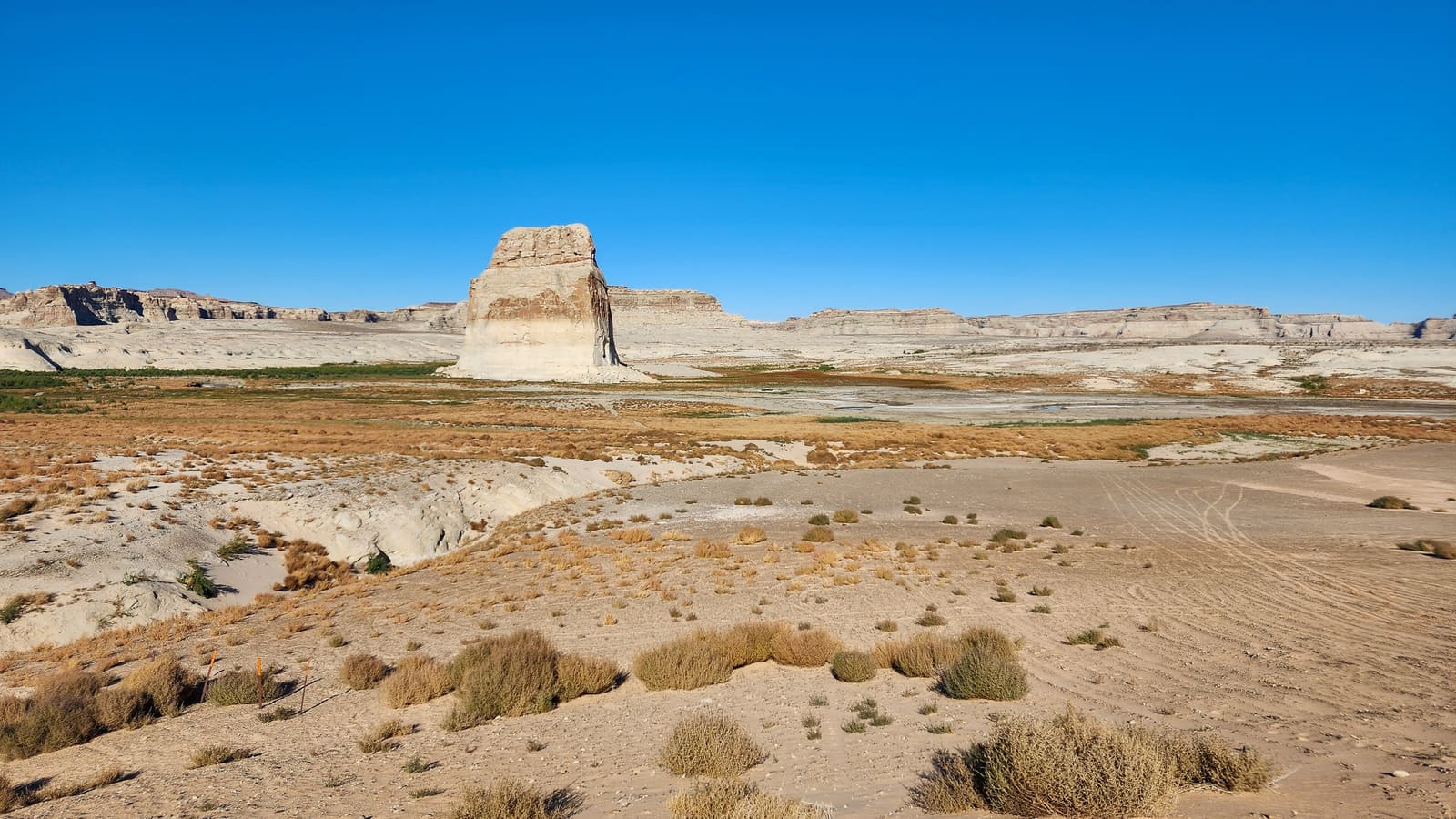
Lone Rock Beach: Drive-In Primitive Camping
Lone Rock Beach sits just off US-89 a few miles north of Page, making it the most accessible primitive camping area in the Glen Canyon National Recreation Area. Vehicles -- including RVs and trucks with trailers -- can drive directly onto the sand and camp without reservations. There is no formal site layout; campers spread across the beach and set up where they find space.
The facilities at Lone Rock Beach are basic. There are vault toilets at the site, but no water hookups, no showers, and no electricity. The fee is charged per vehicle per night, and the rate can change -- verify the current fee structure with Glen Canyon NRA or Recreation.gov before you arrive. The site operates seasonally; check current open dates with the NRA, as winter closures and seasonal access restrictions apply.
What Lone Rock offers that no developed campground can match is direct vehicle-to-water access. You can park within walking distance of the beach and launch a kayak or wade in from your campsite. For families who want the simplest possible Lake Powell experience without booking months in advance, Lone Rock is the practical answer. Arrive early on summer weekends -- by Friday afternoon, prime spots near the water are taken.
Wahweap Campground: Developed Camping Near Page
Wahweap Campground is operated by the NPS concessionaire and sits within the Wahweap Marina complex a few miles west of downtown Page. The campground offers sites with full hookups as well as tent sites, and the facilities include restrooms and shower access during operating hours. It is the most comfortable developed camping option in the immediate Lake Powell area.
Reservations are strongly recommended for Wahweap in spring and summer, and peak dates can fill many weeks or months in advance. The proximity to the marina means you are within walking distance of the boat launch, the convenience store, and the marina services that make Lake Powell trips easier. Verify current site availability, pricing, hookup options, and shower hours with the concessionaire before booking -- these details change between seasons.
The trade-off at Wahweap versus primitive camping is noise and density. In peak season the campground is busy, and generators and other campers are part of the experience. If you want the silence of the desert, primitive camping at Lone Rock or beach camping from a boat will serve you better. Wahweap is the right call when you want convenience, reliable hookups for an RV, and close access to marina amenities.
Lees Ferry Campground: Quiet Option Downstream
Lees Ferry Campground sits below Glen Canyon Dam at the historic ferry crossing where the Colorado River becomes accessible before it enters the Grand Canyon. The atmosphere at Lees Ferry is fundamentally different from the main lake -- it is a river campground, not a reservoir campground, and the dominant activity is fly fishing and float trip staging rather than powerboating.
The campground has no hookup sites but does have a boat ramp, restrooms, and access to the Lees Ferry Historic District. The Colorado River here is cold and clear -- dam releases keep the temperature low year-round -- and the fishing for rainbow trout below the dam is a distinct and well-regarded experience from fishing the main reservoir. Verify current campsite details, fees, and reservation requirements with the NPS before your trip.
Lees Ferry is worth considering if you want a quieter base with direct access to the river. It is also well-positioned for day trips to Marble Canyon, the Vermilion Cliffs National Monument, and the condor viewing areas along US-89A. The distance from Page means you would be commuting to the main lake marinas if you wanted to boat on the reservoir itself -- factor that into your planning.
Primitive Beach Camping by Boat
The experience most associated with Lake Powell houseboating is anchoring in a remote side canyon and camping on the beach directly off the boat. This style of camping requires either a houseboat or a motorboat with enough range to reach the more remote canyon arms, and it requires campers to be fully self-sufficient for waste management. Glen Canyon NRA requires that watercraft camping parties comply with portable waste containment rules -- verify the current requirements with the NRA before your trip, as regulations have changed over time.
The sandy beaches throughout Lake Powell are not developed in any way. There are no fire rings, no tables, and no facilities of any kind at most beach sites. Leave No Trace principles apply strictly: pack out everything you pack in, and do not bury waste or leave any trace of your camp. Most marina operators who rent houseboats will brief renters on the current waste management requirements as part of the checkout process.
No fee is charged at most primitive beach sites, but the Glen Canyon NRA rules still apply. The practical experience of sleeping on a sand beach in a canyon with no other sounds than wind and water is the defining Lake Powell experience for many repeat visitors. It requires more planning and self-sufficiency than developed camping, but nothing else at Lake Powell comes close to it.
RV Camping at Lake Powell
RV campers have two developed options in the main Lake Powell area: Wahweap Campground near Page and Bullfrog Resort and Marina on the Utah side. Both have hookup sites with electric and water connections. Wahweap is more convenient for visiting Antelope Canyon, Horseshoe Bend, and the southern lake; Bullfrog is the right base for the northern lake and the Escalante country to the north and east.
Generator hours are typically restricted at both campgrounds to reduce noise during quiet hours. Verify the specific generator policy with the campground operator before you arrive, as the rules vary by season and site. Dump stations are available at the developed campgrounds for black and gray water -- a necessary consideration for any multi-night RV stay.
Lone Rock Beach also sees heavy RV use despite being a primitive site with no hookups. Large RVs and truck-camper rigs routinely use the beach, running on battery or generator power. The lack of hookups is the main disadvantage, but the direct beach access and no-reservation policy make it attractive for RV travelers who prefer flexibility. Check the current size and weight restrictions for the Lone Rock beach access road with Glen Canyon NRA before bringing a large rig.
Desert Camping Essentials at Lake Powell
Sun protection is the first priority for any Lake Powell camping trip. The reservoir sits at roughly 3,700 feet in open desert, and there is almost no shade at most camping areas. A quality shade shelter or awning is more useful than a tent canopy during daylight hours. Afternoons in summer regularly exceed 100 degrees Fahrenheit at the lake level, and the water reflecting UV adds to the exposure intensity.
Wind is a significant factor on open water and at exposed beach sites. Afternoon wind builds reliably in summer and can be strong enough to collapse a standard camping tent or scatter gear. Stake everything, and position your shelter to block the prevailing wind direction. On the water, wind creates chop that makes small boat travel uncomfortable and can turn a calm cove rough within an hour.
Monsoon thunderstorms are common at Lake Powell from roughly mid-July through early September. These storms can arrive quickly and bring lightning, heavy rain, and -- in the canyon system -- flash flooding. Do not camp in dry washes, and monitor weather forecasts during monsoon season. The mornings in monsoon season are typically calm and beautiful, which makes early starts rewarding and getting off the water before afternoon storms the practical approach.