Page's Climate at a Glance
Page sits at roughly 4,100 to 4,300 feet elevation on Manson Mesa, in high desert country with a cold desert climate: low year-round precipitation, intense sun, and a wide gap between summer and winter temperatures. Best Time to Visit Page, AZ covers month-by-month crowds and Antelope Canyon booking timing; this guide focuses on the weather itself -- what the numbers mean and what to pack for it.
Summer (June-August): Triple-Digit Heat and Afternoon Storms
NOAA's 1991-2020 climate normals put Page's average daytime high near 94°F in June, 98°F in July, and 95°F in August, with individual days pushing past 100°F. Nights cool only into the low-to-mid 70s, so there is limited overnight relief. Humidity stays low outside of monsoon activity, which makes the heat more tolerable than a humid climate at the same reading, but it does not make it safe to underestimate -- the exposed sandstone around Horseshoe Bend and Lake Powell radiates heat back through the afternoon.
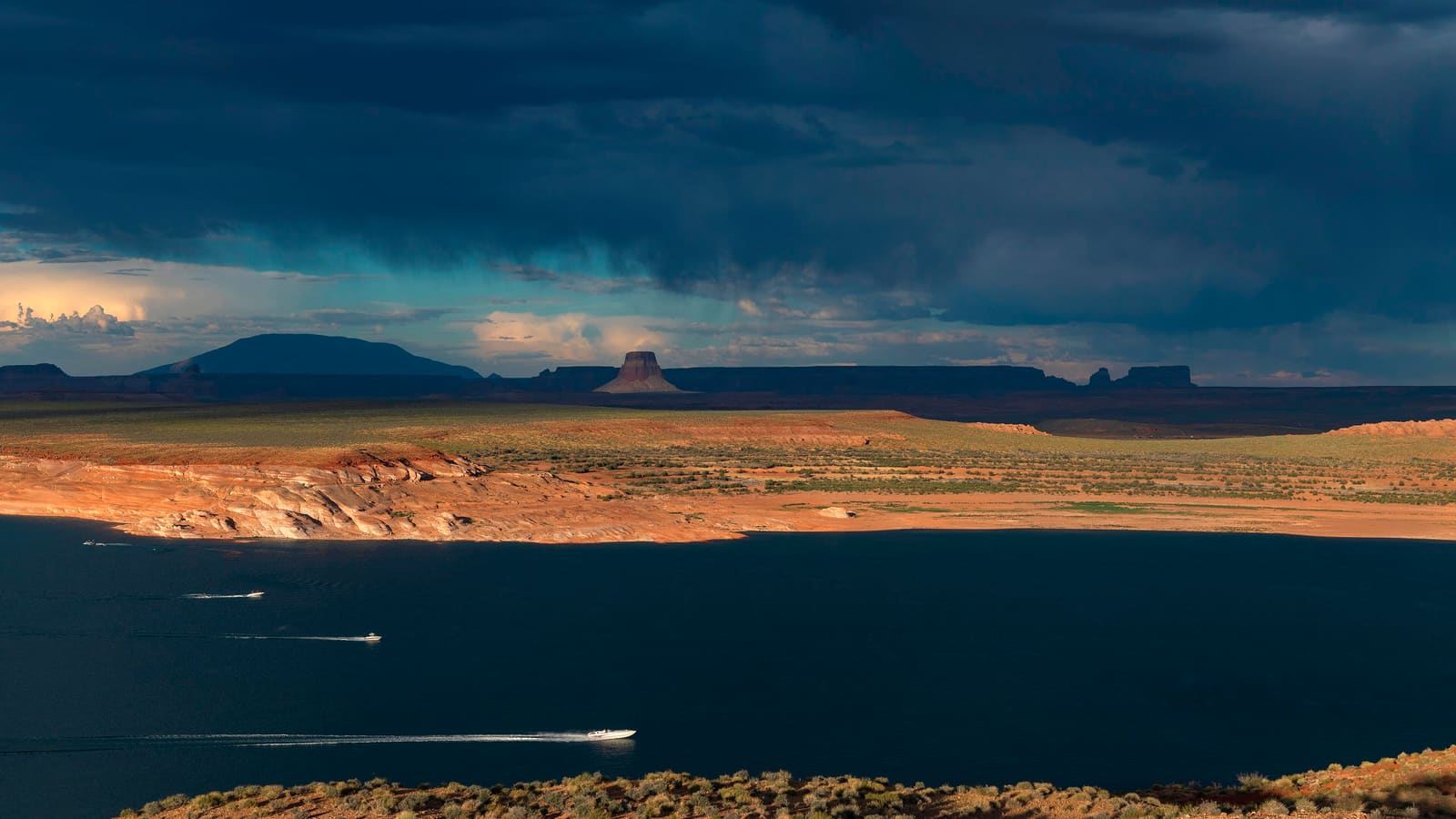
From June 15 through September 30, the National Weather Service's official monsoon window, afternoon thunderstorms can build from a clear sky to lightning and heavy rain within an hour or two. Mornings are normally storm-free; afternoons need a weather buffer built into any outdoor plan.
Fall (September-October): The Shoulder Season
September stays warm -- NOAA's normals give an average high near 87°F -- while October cools to about 72°F, and the monsoon window closes on September 30. Nights get noticeably crisper by mid-October. This stretch is widely considered the most comfortable of the year for hiking, driving, and time on the water, with warm days and manageable evenings.
Winter (November-February): Cold Nights, Mild Days
Average lows drop near freezing in December and January, with plenty of nights in the 20s, while average highs in those two months sit only around 45°F. Cold arrives fast after sunset in a desert climate with little humidity to hold heat, so a 45°F afternoon can feel like a different day than a 20-something night. Snow is possible but not reliable or heavy around Page itself -- flurries happen more often than accumulating snow. Wind is more of a comfort factor than a precipitation one.
Spring (March-May): Wind, Warming, and Wide Swings
March is one of the most pleasant months, with an average high near 63°F and an average low near 41°F, though early-month nights can still dip into the 30s. Temperatures climb quickly from there -- April averages 72°F, May 82°F -- and afternoons in late May can already push into the 90s. Spring is also the windiest season around Page; gusty afternoons are common and worth planning around for anything on the water.
Monsoon Season and Flash Flood Risk
The Arizona monsoon officially runs June 15 through September 30 per the National Weather Service, though moisture typically does not reach northern Arizona in force until early July. Storms are fast and localized: a thunderstorm many miles upstream can send a flash flood through a slot canyon or wash on a day that looks dry where you're standing. This is the single most important weather fact for anyone visiting Antelope Canyon, Waterholes Canyon, or other narrow canyons near Page during summer -- check the forecast for the drainage upstream, not just your own location, and follow your tour operator's call if a trip is delayed or canceled for weather.
What to Pack by Season
Summer: lightweight, light-colored clothing, a wide-brim hat, high-SPF sunscreen, and more water than feels necessary -- the National Park Service's advice for the Horseshoe Bend trail is to drink water even before you're thirsty. Winter: layers, since a 45°F afternoon can follow a 20-something night, plus a windproof outer layer for exposed overlooks. Spring and fall: layers again, with a light jacket for morning and evening, sun protection for midday, and something wind-resistant in spring. Year-round: sun protection is not optional at this elevation and latitude, and open-toed shoes are a poor choice on hot sandstone or loose slot-canyon terrain.