Last updated: 2026-07-01
1. The short verdict: March-April and October are the sweet spots
Spring wildflower season (mid-March to late April) and October offer the most balanced combination: comfortable hiking temperatures, reasonable crowds, and consistent weather. Sedona sits at approximately 4,350 feet elevation — warmer than Flagstaff (roughly 2,500 feet higher, near 6,900 feet) and cooler than Phoenix (roughly 3,250 feet lower, near 1,100 feet). This mid-elevation position means Sedona gets warm summers without Flagstaff-level snow and cold winters without Phoenix-level year-round heat.
For trail-by-trail conditions by season, see our Sedona hiking guide.
2. Spring (March to May): wildflowers, mild temps, spring break
March through May brings wildflowers across the red rock terrain, mild daytime temperatures (typically the 60s to low 80s Fahrenheit), and the best conditions for moderate and strenuous hiking. Spring break (late March and early April) brings peak crowds comparable to summer. Outside of spring break, March and April are among the least crowded months of the year. May temperatures start climbing, and inner-canyon areas can reach 90 degrees Fahrenheit by afternoon.
Book lodging well in advance if visiting during spring break. See our Sedona hotels guide for advance booking notes and zone-by-zone options.
3. Summer (June to August): heat, monsoons, and long daylight
June temperatures regularly exceed 100 degrees Fahrenheit in Sedona. July and August are the peak of the Arizona monsoon season (officially June 15 through September 30): afternoon thunderstorms (typically after 3 PM), dramatic skies, and lightning and flash flood risk in canyon areas. Morning hiking before 8 AM is comfortable; midday is not. The benefit of summer: long daylight (sunset after 8 PM in June), full availability of jeep tour operators, and the least competitive lodging pricing outside of holiday weekends.
For the full monsoon guide including flash flood risk areas and how to read the daily forecast, see our monsoon season guide.
4. Fall (September to November): best overall hiking window
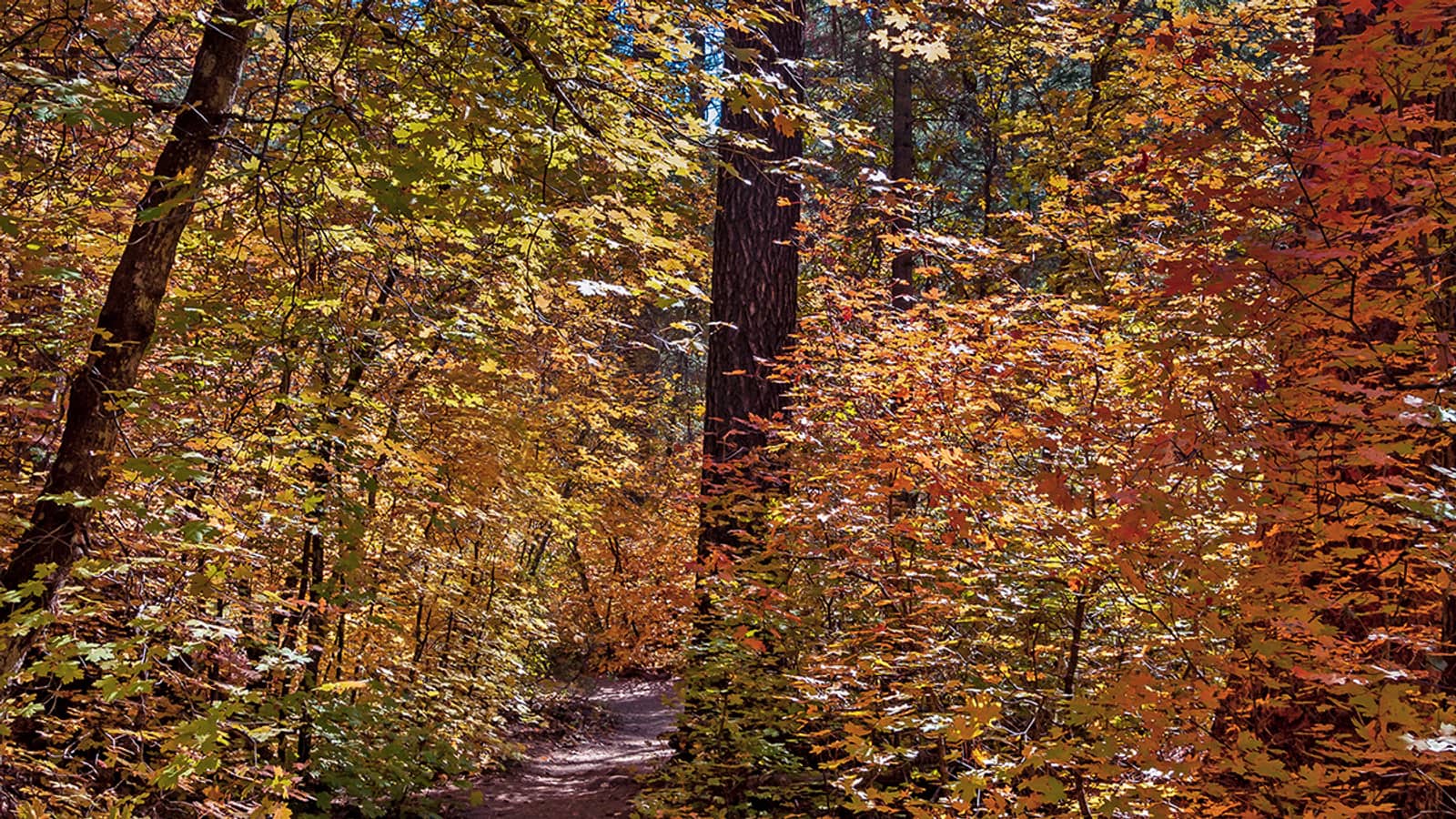
After Labor Day, Sedona transitions into its best hiking season. September still carries summer heat, but conditions improve steadily through the month. October is the standout month: daytime temperatures in the mid-60s to mid-70s Fahrenheit, low humidity, reliable sunshine, and lower crowds than spring break or summer. Cottonwood trees along Oak Creek change color in late October and early November. November cools quickly, with cold mornings and shorter daylight.
For fall photography timing — cottonwood color peaks, sunset angles, and the best time to hit popular viewpoints — see our Sedona photography guide.
5. Winter (December to February): solitude and occasional snow
Winter is the least crowded season. Sedona rarely gets heavy snow — its lower elevation compared to Flagstaff means most winter precipitation falls as rain. Occasional light dustings on the red rocks create striking photographs and melt quickly. Daytime temperatures in December and January typically range from the mid-40s to low 60s Fahrenheit. Morning starts require layers. The major holiday periods (Christmas, New Year) bring notable visitor spikes; early January through mid-February is the quietest window of the entire year.
For winter stargazing opportunities — one of the genuine advantages of the low-crowd winter season — see our dark sky stargazing guide.
6. Month-by-month quick reference
January: cold mornings, minimal crowds, great for short hikes and stargazing. February: similar to January, slightly warming, the quietest month for lodging rates. March: wildflowers begin, spring break spike late month. April: peak wildflower week, ideal temperatures, spring break traffic early month. May: warming fast, start morning hikes early. June: peak heat, start hikes by 6 AM. July: monsoon begins mid-month, afternoon storms, dramatic skies. August: similar to July. September: crowds drop, heat lingers. October: best overall month for hiking and visiting. November: cottonwoods color, cold nights, reduced daylight. December: holiday crowd spike then drop after Christmas.
For trip logistics — how long to stay, getting here, what to pack — see our Sedona travel planning guide.
Book a Guided Sedona Experience
Viator runs Pink Jeep-style jeep tours, Red Rock helicopter flights, and guided hiking experiences in Sedona. Browse current availability and compare tour operators.
Browse Sedona Tours on Viator →Affiliate link — we earn a small commission at no cost to you.