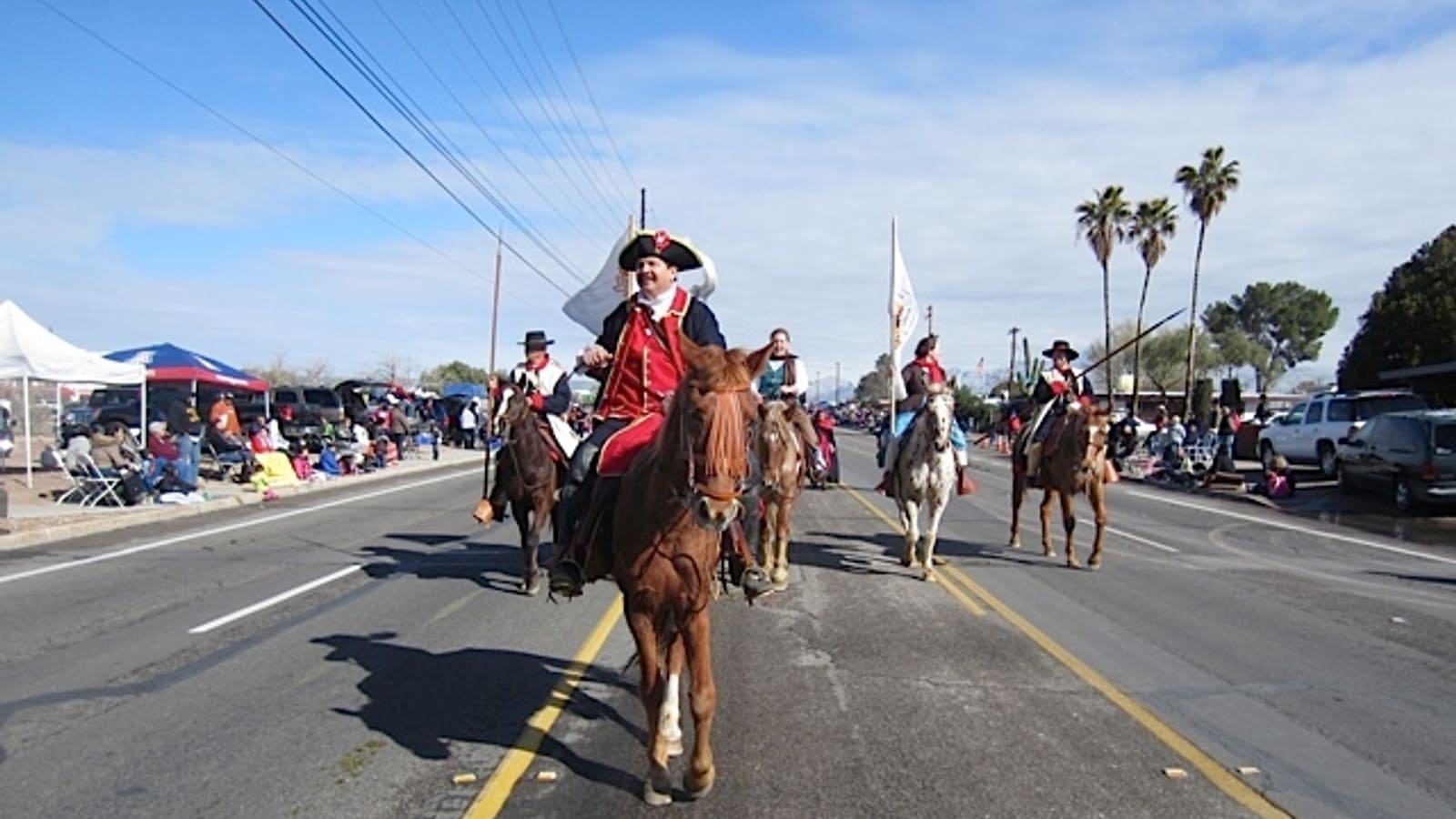
What La Fiesta de los Vaqueros Is
La Fiesta de los Vaqueros -- literally "the festival of the cowboys" -- is Tucson's long-running professional rodeo, generally referred to in English simply as the Tucson Rodeo. It was established in 1925, conceptualized by Leighton Kramer, and it is one of the city's signature annual events, drawing competitors from the professional rodeo circuit along with spectators from across the region and beyond.
The event has not always been where it is now. The first rodeo was held at Kramer Field, in what is today the Catalina Vista neighborhood, and moved to South 6th Avenue and Irvington Road in 1932 -- the south-side location the rodeo grounds still occupy. That matters for planning, because it puts both the rodeo and its parade well south of downtown rather than in the city center.
The rodeo itself sits alongside an associated parade that has, over the decades, become an attraction in its own right, separate from the rodeo grounds and drawing crowds who may never attend the actual competition. The parade originated in February 1925, the same year as the rodeo. Together, the two events form one of Tucson's most visible expressions of its ranching and Old West heritage.
When the Rodeo Happens
The Tucson Rodeo is held in February, a timing closely associated with the event across its history, though the exact dates shift from year to year. As of this writing the rodeo's own site lists February 20–28, 2027 for the next edition, with the parade stepping off Thursday, February 25, 2027 at 9 a.m. Treat those as the organizers' announced dates and reconfirm them before booking anything non-refundable -- dated event claims go stale, and this guide is not the authority on them.
The official Tucson Rodeo website is the authoritative source for confirmed dates, and it is worth checking well ahead of a planned trip, since hotel availability in the city can tighten during rodeo week.
The Parade: The Longest Non-Motorized Parade in the Nation
Get the superlative right, because it is commonly garbled into a claim about size. The Tucson Rodeo Parade Committee bills the event as "the longest non-motorized parade in the nation" -- a claim about length, not crowd size or entry count. The procession is built around horse-drawn wagons, mounted riders, folk dancers, and marching bands rather than engine-powered floats or vehicles. That wording is the organizer's own billing rather than a designation conferred by any outside body, so attribute it accordingly, but the no-motors rule behind it is real and is what gives the parade its deliberately old-fashioned character.
The parade draws large crowds, and arriving early for a good viewing spot is worthwhile if it is a priority for your trip. Note that the route runs on Tucson's south side, not through downtown: for 2027, the committee has published a route beginning at South 12th Avenue and Drexel Road, running east on Drexel to Old Nogales Highway, then north to end at Irvington Road, stepping off Thursday, February 25, 2027 at 9 a.m. Routes and dates are set annually, so confirm the current map and start time with the parade committee rather than assuming a past year's route.
The School-Holiday Tradition
This is not folklore or a loose tradition -- it is a named holiday on official district calendars. Tucson Unified School District schedules Rodeo Break in February, closing all schools and district offices, and Sunnyside Unified School District carries a Rodeo Break on its calendar as well. The break typically falls on the Thursday and Friday of rodeo week, which lines up with the Thursday parade. Few American cities close their schools for a rodeo; Tucson does, and it tells you how deeply the event is woven into the local calendar rather than existing as just another visitor attraction.
The practical consequence is that rodeo week brings local families out in force alongside visitors, which lifts crowd levels and lodging demand beyond what the event's ticket sales alone would suggest. The exact dates move each year and are set district by district, so check the current TUSD and Sunnyside calendars directly rather than assuming a fixed pattern.
What to Expect If You Attend
Expect a genuine professional rodeo atmosphere at the grounds -- competitive events, a real Western-heritage crowd, and vendors and food typical of a rodeo setting -- alongside a separate, larger public gathering for the parade itself in the city. February in Tucson is generally mild and comfortable weather-wise, which is part of why the event works well as an outdoor winter draw.
Ticketing, seating, and specific event schedules within rodeo week are set by the organizers and can vary, so treat any pricing or schedule details from a past year as outdated until you confirm the current version on the official site.
Planning a Trip Around Rodeo Week
Booking lodging as early as possible is the most practical advice for a rodeo-week visit, since the event is a significant enough draw that rooms and rates can tighten as the dates approach. Build in flexibility around parade-morning traffic as well -- but note that the closures fall on the south side along the published route, around Drexel Road, Old Nogales Highway, and Irvington, not in the downtown core. If you are staying downtown, plan the drive out to the route rather than expecting the parade to pass your hotel.
Because February generally offers comfortable weather in Tucson, rodeo week can pair well with other outdoor plans on the trip -- Saguaro National Park, Sabino Canyon, or a day trip -- provided you build the schedule around the rodeo and parade rather than trying to squeeze them into an already packed day.