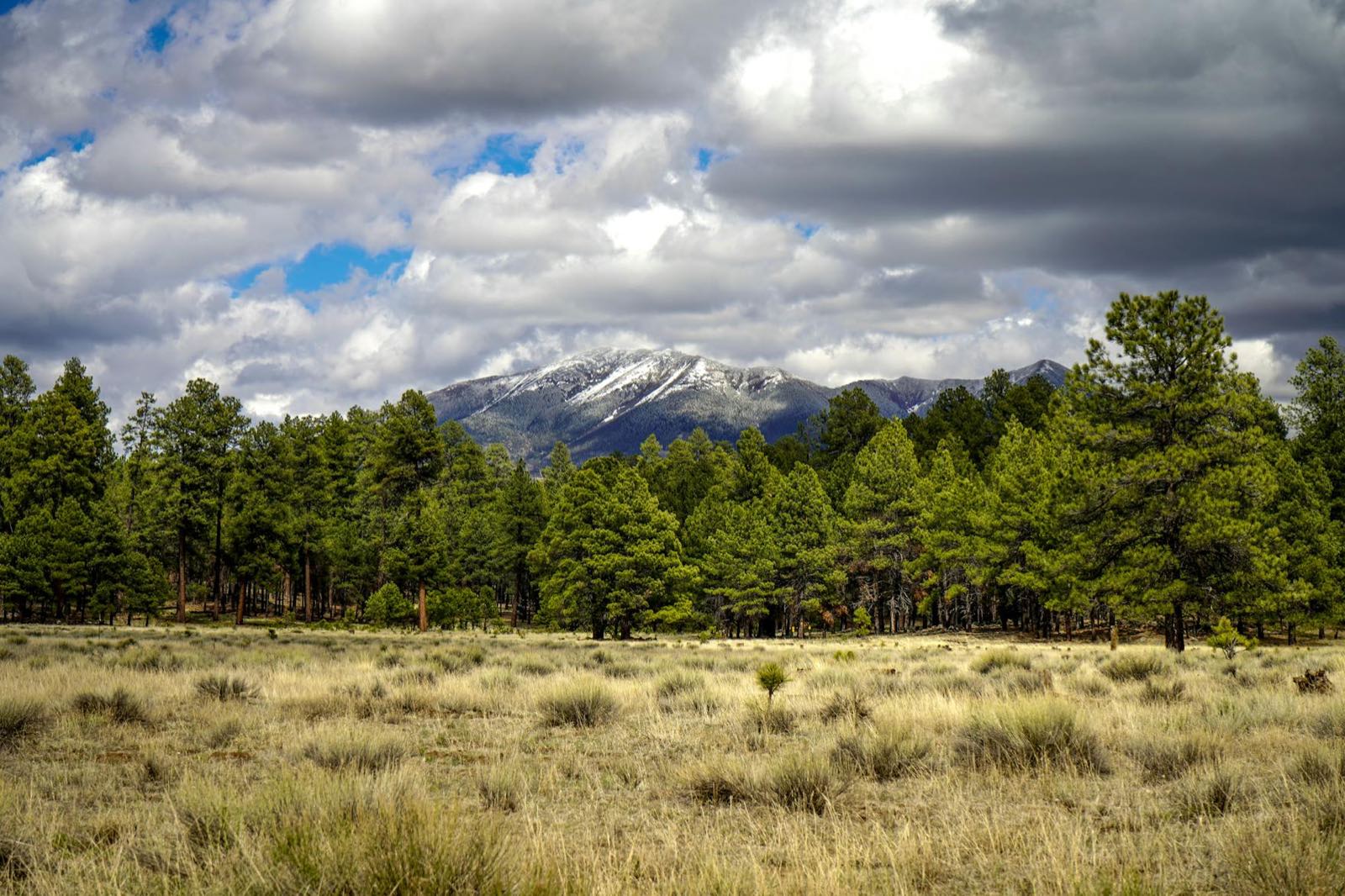
Of the three towns that make up the White Mountains cluster, Greer is the smallest, the highest, and the most quietly alpine. It sits at roughly 8,300 feet in a meadow valley at the headwaters of the Little Colorado River, a half-hour or so off the main SR-260 corridor and a different world from the commercial hub of Show Low or the cabin-and-golf density of Pinetop-Lakeside. There is no strip of chain hotels here — just a scatter of cabins, a handful of historic lodges, spruce and aspen forest, and a creek running through open meadow.
This guide covers what Greer actually is, why people make the detour, and how to plan a visit. For the full three-town picture, see our White Mountains travel guide; for the winter half of the year, our skiing guide covers nearby Sunrise Park Resort, and our hiking and trails guide covers the Mount Baldy trails that start near the village.
A Note on the Land Around Greer
Greer sits close to the Fort Apache Indian Reservation, homeland of the White Mountain Apache Tribe. Mount Baldy's true summit lies on tribal land and is closed to non-tribal access out of respect for its sacred status — hiking trails from the Greer area lead to the wilderness boundary, not the top. Some fishing and recreation nearby may require a Tribal permit rather than a state one. Treat this as living Apache homeland, not scenery, and confirm current permit and access rules before venturing off marked, public trails.
What Greer Is — and Isn't
Greer is a village in the literal sense: a small year-round population, a loose cluster of cabins and lodges strung along the valley, and almost no commercial infrastructure beyond what's needed to serve visitors staying there. There's no grocery store chain, no strip of restaurants, and limited fuel and cell service compared to Show Low or Pinetop-Lakeside — plan to arrive with what you need or make a supply stop before heading in. What Greer does have is elevation and quiet: at roughly 8,300 feet it's the highest of the three cluster towns, tucked into a meadow that follows the Little Colorado River's headwaters, ringed by spruce and aspen rather than the Ponderosa-dominant forest lower down.
That combination — high elevation, open meadow, a real mountain stream, and minimal development — is exactly why people make the detour. Greer isn't trying to be a resort town; it's the corner of the White Mountains that still feels like a genuinely small mountain village.
The Little Colorado River Headwaters
The Little Colorado River — the major tributary that eventually joins the main Colorado River inside the Grand Canyon — begins as a cold, meandering stream through the meadows around Greer. At the village itself it's a small, walkable creek rather than the wide desert river it becomes downstream, and it's a draw for stream anglers and for anyone who wants a quiet meadow walk along moving water. See our fishing guide for how the Greer creek fits into the broader White Mountains trout picture.
Fall Color: Greer's Signature Season
Late September into mid-October is when Greer earns its reputation. The aspen stands that ring the meadow and climb toward Mount Baldy turn gold, and the combination of open valley, running water, and surrounding peaks makes for some of the most photographed fall scenery in the White Mountains. The exact peak window shifts by a week or two year to year depending on weather, so if fall color is the primary reason for your trip, check current color reports in the days before you travel rather than locking in dates months in advance.
Gateway to the Mount Baldy Wilderness
Greer is the standard jumping-off point for hiking toward Mount Baldy, Arizona's second-highest peak. The West Baldy and East Baldy trailheads are reached from the Greer area and climb through spruce-fir forest and alpine meadow toward the wilderness boundary. As noted above, the actual summit sits on White Mountain Apache tribal land and is closed to non-tribal hikers — trails here take you to the boundary, not the top, and that closure should be respected rather than treated as a suggestion. Full trail details, distances, and seasonal notes are in our hiking and trails guide.
Staying in Greer vs. Basing Elsewhere
Greer has a handful of historic lodges and cabin rentals, and staying in the village itself is the way to get the full quiet-meadow experience, particularly for a sunrise or fall-color trip. That said, because services are limited, many first-time visitors base in Show Low or Pinetop-Lakeside — both of which have more lodging inventory, groceries, and gas stations — and treat Greer as a dedicated day trip or a one- or two-night add-on rather than the whole vacation's home base. Either approach works; the choice comes down to how much you want quiet versus convenience. Booking ahead matters more in Greer than in the larger towns, since the lodging inventory is genuinely small — especially around the fall-color peak and any Sunrise Park ski weekend.
Guided Tours Near Greer & the High Country
Fall-color drives, guided hikes toward the Mount Baldy Wilderness, and other White Mountains experiences — hand-picked from Viator. Affiliate disclosure.
Browse White Mountains ToursWe earn a small commission if you book — at no extra cost to you.
More White Mountains Guides
Hiking & Trails
The West Baldy and East Baldy trails from Greer, plus the wider White Mountains Trail System.
Mount BaldySkiing & Snow
Sunrise Park Resort, the closest ski area to Greer, plus Nordic and snow-play options.
WinterLakes & Fishing
Big Lake and the Little Colorado headwaters — the trout water closest to Greer.
Trout FishingScenic Drives
The Coronado Trail and Salt River Canyon — the drives that frame a Greer detour.
Road TripFrequently Asked Questions
How big is Greer, Arizona?
Very small. Greer is a village, not a town in the Show Low or Pinetop-Lakeside sense — a scatter of cabins, a handful of lodges, and a small year-round population set in a meadow valley at roughly 8,300 feet. There's no commercial strip to speak of. People come to Greer specifically because it's quiet and small, not despite it — it's the least developed and most alpine of the three White Mountains cluster towns.
What is Greer known for?
Three things mainly: its elevation and alpine feel (the highest of the cluster towns, ringed by spruce and aspen rather than just Ponderosa pine), the Little Colorado River headwaters that run through the meadow, and fall color — the aspens around Greer and up toward Mount Baldy turning gold in late September into October is one of the signature seasonal draws of the entire White Mountains region. It's also the closest village to Sunrise Park Resort.
Can you hike Mount Baldy from Greer?
Yes, Greer is the standard access point for the West Baldy and East Baldy trails, which climb through spruce-fir forest and alpine meadow toward the Mount Baldy Wilderness. Note that the true summit of Mount Baldy lies on White Mountain Apache tribal land and is closed to non-tribal access out of respect for its sacred status — trails lead hikers to the wilderness boundary, not the summit itself. Check current trail conditions and any permit requirements before you go.
Is Greer a good base, or just a day trip from Show Low or Pinetop-Lakeside?
Either works, and it depends on what you want. Greer has a handful of historic lodges and cabin rentals, so it can absolutely serve as a base for a quiet, service-light stay. But because it lacks the grocery stores, gas stations, and broader services of Show Low or Pinetop-Lakeside, many first-time visitors base in one of those two towns and treat Greer as a deliberate day trip or a one- or two-night splurge rather than the whole trip's home base.
When is the best time to visit Greer?
Late September into mid-October is the marquee window for fall color, when the aspens turn gold against the meadow and the crowds are lighter than the summer peak. Summer (June through August) is the classic cool-escape season, with the creek and meadow at their greenest. Winter brings snow and proximity to Sunrise Park Resort. Spring can be muddy with snow lingering at this elevation into May — check current conditions before an early-season trip.