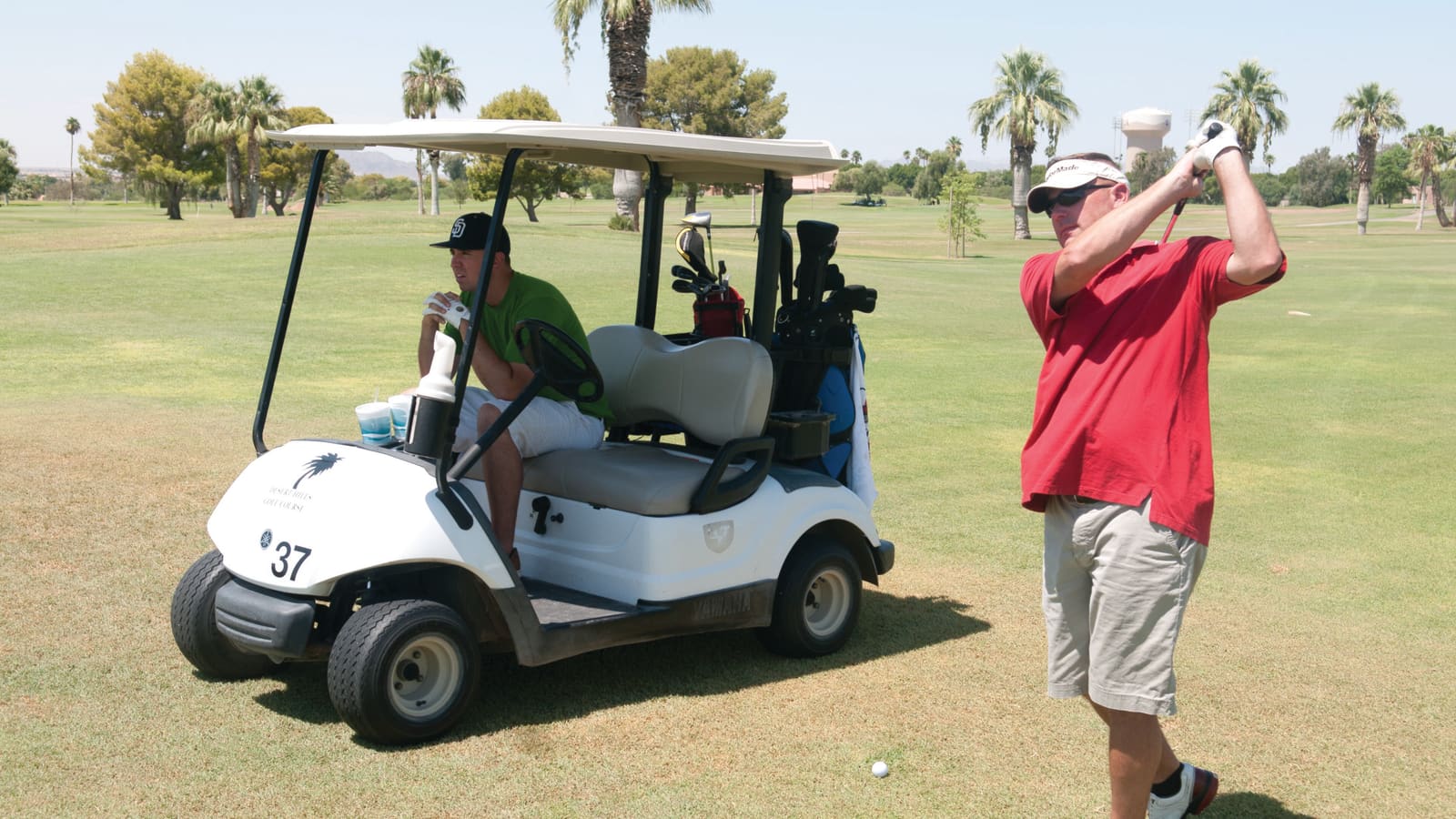
Why Yuma Becomes a Winter Golf Town
Yuma's winters are mild and dry, which is the same reason it draws a large seasonal RV and snowbird population in the first place. That combination of sunshine, mild daytime temperatures, and a population that skews toward retirees with time and disposable income to spend on recreation has made golf a well-established part of the local winter economy. It's not a coincidence that golf courses and RV resorts often market to the same seasonal visitor.
Compared to summer, when daytime heat makes outdoor recreation genuinely risky, winter in Yuma offers a long stretch of comfortable, playable weather. That reliability is a big part of the draw for golfers who split their year between a colder home climate and a warm-winter base.
The Snowbird Golf Season: November Through March
The same November-through-March window that defines Yuma's broader snowbird season is also the practical golf season. Courses generally see their heaviest play during these months, when both weather and population are at their peak, and tee sheets tend to fill up faster than they do in the shoulder months. Outside that window, particularly in summer, extreme heat makes daytime play genuinely dangerous rather than merely unpleasant, and course traffic drops off accordingly. See the heat and lightning section below before you book a warm-season round.
Within the winter season itself, demand tends to build gradually, with the deepest snowbird months seeing the busiest courses. If you have flexibility, checking a course's typical seasonal pattern -- and asking about their busiest weeks -- can help you plan around the crowds.
What the Course Landscape Generally Looks Like
Yuma and the surrounding area have several golf courses that operate on a seasonal-demand model, ranging from public municipal-style courses to courses attached to RV resorts and retirement communities. The exact mix of public, semi-private, and resort courses -- along with which ones are currently open, renovated, or under new management -- changes over time, so we're intentionally not naming specific courses, rates, or hole counts here.
For a current list, the Yuma visitors bureau and local golf directories are the most reliable starting points. They're updated more frequently than any static guide can be, which matters in a market where course ownership and offerings can shift from one season to the next.
Booking a Tee Time During Peak Season
Because the winter population swells so significantly, popular tee times -- particularly early morning slots, when temperatures are most comfortable -- can book up well ahead of the date, especially at courses attached to large RV resorts with a built-in customer base. Booking a few days in advance, rather than expecting walk-up availability, is generally the safer approach during the peak months.
Booking windows, online reservation systems, and guest-versus-member policies vary from course to course, so check directly with whichever course you're interested in rather than assuming one course's rules apply across the board.
Golf as Part of a Broader Snowbird Stay
For many winter visitors, golf isn't a standalone trip but one piece of a longer seasonal stay that also includes RV park life, day trips to the Imperial Sand Dunes or Kofa National Wildlife Refuge, and the general slower pace that draws snowbirds to Yuma in the first place. Some RV resorts bundle course access or offer preferred rates for residents, which is worth asking about if you're already booking a longer stay.
If golf is a priority for your trip, it can be worth choosing lodging based partly on proximity to the courses you're most interested in, since the seasonal traffic can make cross-town drives slower during peak months.
Heat and Lightning: The Two Things That Actually Hurt Golfers Here
Heat is the dominant hazard in this corner of Arizona, and a golf course is four to five hours of walking or riding in full sun with no shade to speak of. The National Weather Service office that forecasts Arizona's lower deserts recommends doing strenuous activity during the coolest part of the day, which it puts at roughly 4:00 a.m. to 7:00 a.m., drinking at least two liters of water a day even if you are mostly indoors, and wearing lightweight, light-colored clothing. It also points to collaborative CDC research finding that heat-associated deaths in Arizona can occur at temperatures in the mid-80s and hotter -- which is the real argument for an early tee time even on a day the forecast looks unremarkable. Drink before you are thirsty, take the cart path shade where it exists, and be willing to walk in after nine.
Know the difference between the two heat illnesses, because the responses are opposite. Heat exhaustion looks like heavy sweating, weakness or tiredness, cool clammy skin, a fast weak pulse, cramps, dizziness or nausea; move the person somewhere cooler, loosen clothing, apply cool wet cloths, and offer sips of water. Heat stroke looks like a throbbing headache, confusion, slurred speech, hot skin that may be red and dry, and a body temperature above 103 degrees. That is a severe medical emergency: call 911 or get them to a hospital immediately, start cooling them, and do not give fluids. The NWS is explicit that delay can be fatal. Separately, and regardless of season, never leave a child, a dependent adult, or a pet waiting in a parked car or an unattended cart while you finish a round -- the NWS states plainly that this is never safe, even in winter.
Lightning is the second hazard, and it is the one golfers most often get wrong. Yuma is dry, but summer monsoon storms do reach the lower deserts, and an open fairway is among the worst places to be caught. The NWS rule is short: when thunder roars, go indoors, and stay there until 30 minutes after the last clap of thunder. Do not wait for rain before seeking shelter, and do not head back out just because the rain stopped. The part that matters most on a course: a golf cart is not shelter. The NWS specifically lists golf carts among the vehicles that are not safe in lightning storms, because they have open cabs -- the same category as tractors and construction equipment. Open-sided ramadas and shade structures are not shelter either, and an isolated tree is worse than none. What counts is a substantial enclosed building or a fully enclosed hard-topped vehicle: the clubhouse or your car. If a storm is building, put the clubs down and go, and accept losing the round.
Planning Your Round
Before you plan a specific round, check a current local directory for which courses are open, confirm rates and tee-time policies directly with the course, and consider booking early-morning slots during peak winter weeks when demand is highest. Weather in the desert southwest can still bring occasional wind or cool mornings even in winter, so checking the forecast the day before is a reasonable habit -- and in the warm months, checking it is not optional. Carry more water than you think a round needs, start early, and know before you tee off where the nearest fully enclosed building is if a storm builds.