Tucson and Flagstaff are both Arizona mountain towns. Both have universities. Both have a strong outdoor culture, a good restaurant scene, and summer temperatures cooler than Phoenix. They're about 255 miles apart.
If you're in Tucson and you haven't made this trip, you should. Here's why, and how.
Make the Drive the Destination
Our Route 66 audio tour covers Flagstaff's stretch of America's most famous road — GPS-triggered narration at 8 stops from the classic drive-ins to the Wigwam Motel. First 3 stops free.
Why Tucson Residents Love Flagstaff
The pitch is simple: July in Tucson averages 104°F. July in Flagstaff averages 82°F. That's a 22-degree difference between two cities that are about 4 hours apart by car.
But the escape-the-heat angle is only part of it. Flagstaff offers things Tucson residents don't have nearby:
- The Grand Canyon is 1.5 hours from Flagstaff — it's a 4-hour drive from Tucson. Using Flagstaff as a base makes the canyon accessible as a day trip instead of a dedicated overnight.
- Arizona Snowbowl — real skiing at 11,500 feet and a scenic chairlift in summer, nothing comparable near Tucson
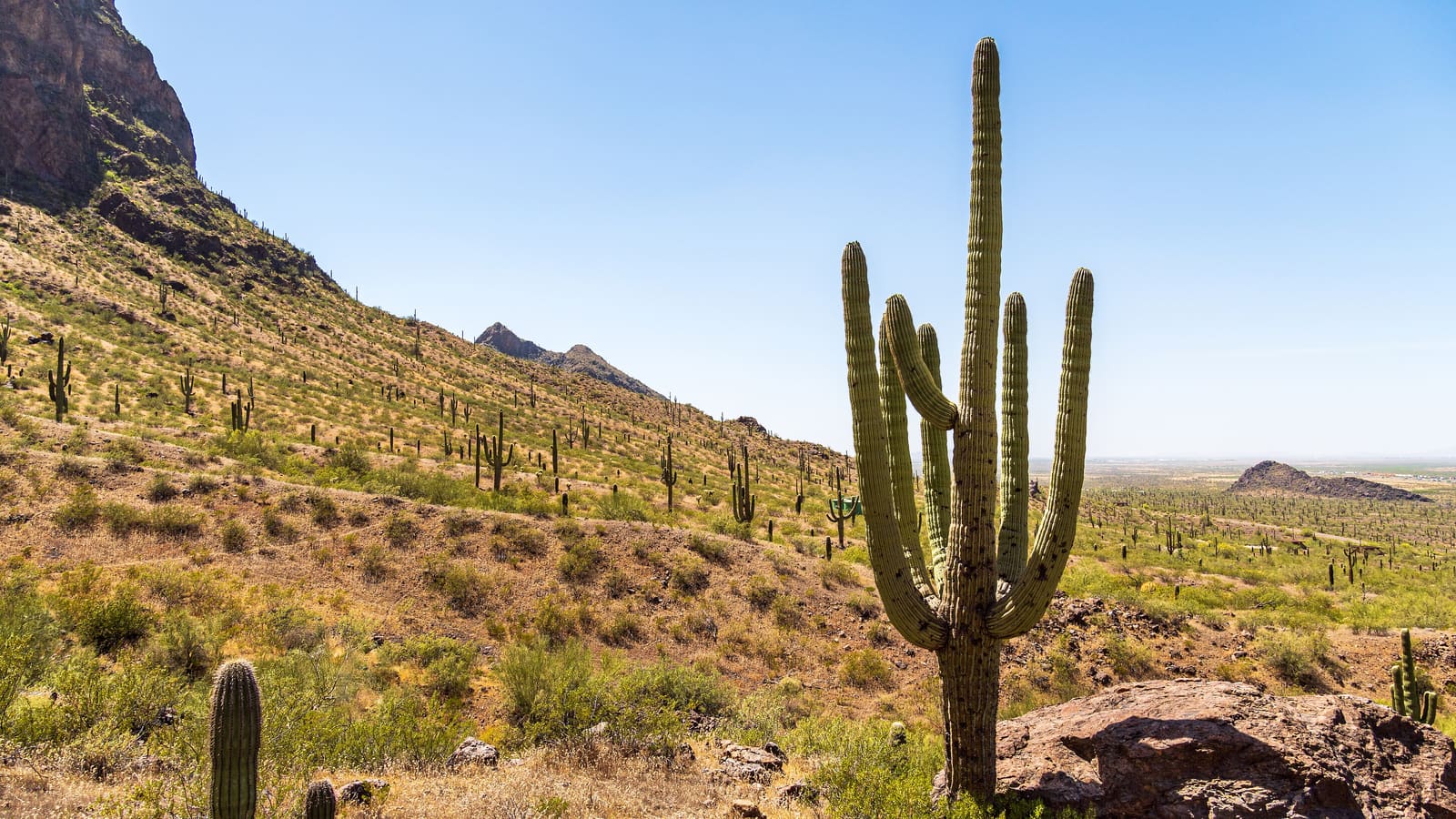
- A completely different forest — Flagstaff sits in the largest ponderosa pine forest on Earth. After the saguaro desert around Tucson, the transition to dense pine is visceral
- Route 66 — the historic downtown strip and the 2026 Centennial celebrations
The Drive: Tucson to Flagstaff Route Options
Option 1: The Direct Route — I-10 to I-17 North (Fastest, ~4 Hours)
Take I-10 west from Tucson to I-17 north near Chandler/Tempe (outside Phoenix). Run I-17 north 140 miles through the Verde Valley to Flagstaff.
Stops on the direct route: Arcosanti (Mile marker 262 on I-17, Exit 262): The experimental architecture project founded by Paolo Soleri in the 1970s sits just off I-17 north of Phoenix. It's been under construction for 50+ years and looks unlike anything else in Arizona. Tours run daily; the bakery and café serve food. Worth a 45-minute stop if you haven't seen it. Camp Verde / Montezuma Castle (Exit 289): Montezuma Castle National Monument is a 900-year-old Sinaguan cliff dwelling built into a limestone alcove 100 feet above Beaver Creek. It's less visited than Walnut Canyon near Flagstaff and in better structural condition. $10/person, 30-minute visit. If you haven't seen these cliff dwellings before, this is a strong stop. Jerome viewpoints (from I-17): The hillside mining town of Jerome is visible from I-17 near the Prescott turnoff. It's not on the direct route, but if you take the scenic alternative (see below), Jerome is the main event.Option 2: The Prescott and Jerome Scenic Route (Adds ~1 Hour, Strongly Recommended)
This is the route I take every time. From Tucson, take I-10 west to US-60 west (or I-10 to AZ-89N through Wickenburg) to Prescott. From Prescott, take AZ-89A north through Jerome to Cottonwood, then pick up AZ-89A to Sedona and I-17 north to Flagstaff.
Prescott:Arizona's former territorial capital sits at 5,400 feet — elevated enough to have real seasons, low enough that summer is mild rather than cold. The Victorian downtown around Courthouse Plaza is intact and walkable. Whiskey Row (Montezuma Street, one block off the plaza) has been the center of Prescott's bar culture since the 1880s and remains exactly as advertised.
Prescott feels like a smaller, quieter Flagstaff — the same mountain town energy without the Route 66 tourism and with a different architectural character. Stop for lunch or coffee before heading up to Jerome.
Jerome:Jerome is built into a hillside at a 30-degree angle. The streets literally run diagonally across the slope. The town started as a copper mining camp in 1876, grew to 15,000 people by 1929, and was nearly a ghost town by the 1950s after the mines closed. Artists moved in during the 1970s attracted by cheap property, and the town was gradually revived.
Today Jerome is the most visually striking small town in Arizona. The hillside setting, the mix of original mining-era buildings and contemporary galleries, and the 360-degree views from the upper streets make it a compelling 1–2 hour stop. The Jerome Grand Hotel (the old hospital, now a hotel and restaurant) sits at the highest point with views across the Verde Valley to the Red Rock country above Sedona.
AZ-89A from Jerome to Flagstaff:After Jerome, AZ-89A drops into Cottonwood and Clarkdale, then climbs through Sedona's Oak Creek Canyon toward Flagstaff. The canyon section — 12 miles of switchbacks between 4,000-foot red rock walls, with the creek below — is one of the best scenic drives in Arizona. At the top, the road levels into Flagstaff's pine forest.
If you take this route, you'll enter Flagstaff from the south on AZ-89A, arriving on the east side of town near the university. The total drive from Tucson: about 5 hours with stops.
Day Trip: Tucson to Flagstaff and Back
Is it worth doing as a day trip? The honest answer: not really. Tucson to Flagstaff is about 4 hours each way. A day trip means roughly 8 hours of driving for just a few hours in Flagstaff. You'll see the place but not feel it.
If you're doing it as a day trip, the single best use of your time is to pick one thing and do it fully: either hike Humphreys Peak or Elden (a full-day commitment that's worth the drive) or spend the day in downtown Flagstaff with no specific agenda.
Don't try to add the Grand Canyon to a Tucson day trip. That's roughly 9 hours of driving from Tucson to the canyon and back. It's too much.Weekend Itinerary: 2 Nights in Flagstaff from Tucson
Friday: Arrive via Prescott Scenic Route, Settle In
Leave Tucson by 11 AM. Take the Prescott/Jerome scenic route — arrive in Flagstaff by 3:30–4 PM after lunch in Prescott and an hour in Jerome.
Check in downtown. Walk Heritage Square before dinner. First dinner at one of the downtown Flagstaff restaurants — the Southside district (South San Francisco Street between Birch and Cottage) has the best concentration of independent restaurants.
Saturday: Full Flagstaff Day
Morning (7–11 AM): Hike. Pick your level from our Flagstaff trails guide:- Easy: Buffalo Park Loop (flat, off-leash dog sections, views)
- Moderate: Kachina Trail from Snowbowl (aspen groves at 9,000 feet)
- Hard: Humphreys Peak (12,633 feet — Arizona's highest point, 6–8 hours total)
The Arizona Snowbowl scenic chairlift runs in summer from Memorial Day through mid-October. A 25-minute round trip to 11,500 feet with views of the Grand Canyon rim on clear days. Tucson visitors find the elevation dramatic — it's genuinely cold at the top even in July.
Evening: Brewery circuit on Butler Avenue. The Flagstaff brewery scene is walkable and excellent. If skies are clear, evening telescope viewing at Lowell Observatory is a genuine highlight — book in advance.Sunday: Grand Canyon or Morning Hike, Drive Home
Option A — Grand Canyon day trip:Leave Flagstaff by 7:30 AM, reach the South Rim by 9 AM. A day at the Grand Canyon is no longer a 4-hour drive each way from Tucson — from Flagstaff it's 1.5 hours. This accessibility is one of the best arguments for using Flagstaff as a base. Drive back to Flagstaff in the afternoon and then home to Tucson by evening.
See our Grand Canyon day trip guide for planning details.
Option B — Sedona day trip on the way home:Head south from Flagstaff on AZ-89A through Oak Creek Canyon toward Sedona. This is the most scenic drive in central Arizona. The canyon drops from 7,000 feet (pines, creek, walls) to 4,500 feet (red rock, oak, sage). Slide Rock State Park has natural swimming holes in Oak Creek — popular in summer.
From Sedona, take I-17 south to Tucson. Total drive: about 3.5 hours.
See our Sedona day trip guide for the specific Sedona stops.
Option C — Sleep in, late morning departure:The Flagstaff Farmers Market is Saturday morning, but several good breakfast spots open early on Sunday. Grab coffee at Tourist Home Urban Market, walk Heritage Square one more time, and head home by 10 AM via I-17 south to Tucson.
Top-Rated Tours & Activities
Book guided hikes, stargazing tours, Grand Canyon day trips, and more.
Browse ToursWe earn a small commission if you book — at no extra cost to you.
Where to Stay in Flagstaff for Tucson Visitors
Find the Best Hotel Deals in Flagstaff
Compare prices across 100+ hotels. Free cancellation on most bookings.
Check Hotel PricesWe earn a small commission if you book — at no extra cost to you.
Downtown Flagstaff is the best base for most Tucson visitors — it puts you walking distance from restaurants and breweries and a short drive from trailheads. The east side of downtown near Butler Avenue is slightly closer to the Snowbowl and Elden trailheads.
Flagstaff hotel rates run $130–280/night mid-range, less than Sedona and significantly less than Grand Canyon Village lodging. July 4th and October aspen-leaf weekends fill early — book 2–3 weeks out if those are your target dates.
See our Flagstaff hotels guide for specific recommendations by budget.
The Tucson Advantage: What's Newly Accessible From a Flagstaff Base
The distances from Flagstaff that should resonate specifically with Tucson residents:
| Destination | From Tucson | From Flagstaff | Savings |
|-------------|------------|----------------|---------|
| Grand Canyon South Rim | 4 hours | 1.5 hours | 2.5 hours each way |
| Antelope Canyon | 4.5 hours | 2.5 hours | 2 hours each way |
| Horseshoe Bend | 4.5 hours | 2.5 hours | 2 hours each way |
| Sedona | 3.5 hours | 50 minutes | 2.5+ hours each way |
If you've been putting off visiting the Grand Canyon because the drive from Tucson is a commitment — a Flagstaff base solves that. It's a 1.5-hour morning drive and you're standing on the South Rim.
Practical Tips
Altitude adjustment: Tucson sits at 2,389 feet. Flagstaff is at 7,000. If you're going straight from Tucson to hiking in Flagstaff, drink extra water and give yourself the first evening to acclimate. The difference is real — you'll notice reduced endurance on trail if you try to hit Humphreys Peak your first morning. Pack layers: The temperature differential between Tucson and Flagstaff on the same day in summer is typically 20–25°F. Bring a fleece or light jacket even in July; evenings at Flagstaff's elevation are genuinely cool. Cell coverage on AZ-89A (Prescott to Jerome): Spotty through parts of the canyon and the Jerome hillside. Download offline maps before leaving Prescott if you're taking the scenic route. Gas in Prescott: Fill up in Prescott or Cottonwood on the scenic route — Jerome doesn't have a gas station. The stretch from Cottonwood through Sedona to Flagstaff has stations but at higher prices than the Valley.Frequently Asked Questions
How far is Tucson from Flagstaff?
Approximately 255 miles via the direct I-10/I-17 route. The scenic route through Prescott and Jerome runs slightly longer but is the better drive.
How long is the drive from Tucson to Flagstaff?
About 4 hours via I-17 north with no stops. Roughly 5 hours via the Prescott/Jerome scenic route with stops. Most Tucson visitors find the scenic route worth the extra time.
Is there a scenic route from Tucson to Flagstaff?
Yes — via Prescott and Jerome on AZ-89A. Prescott is a well-preserved Victorian mountain town and Jerome is a former copper mining town built into a hillside with dramatic views. The AZ-89A section through Oak Creek Canyon between Sedona and Flagstaff is one of the best scenic drives in the Southwest.
Is Flagstaff worth visiting from Tucson?
Yes, particularly in summer when Flagstaff's 82°F average is a significant relief from Tucson's 104°F. The added bonus: Flagstaff puts the Grand Canyon 1.5 hours away instead of 4 hours from Tucson, making a canyon day trip realistic rather than exhausting.
Can you visit Sedona on the way from Tucson to Flagstaff?
Yes — Sedona is directly on the AZ-89A scenic route between Cottonwood and Flagstaff. On the return trip from Flagstaff, driving south through Oak Creek Canyon to Sedona and then picking up I-17 to Tucson is a natural loop and one of the best drives in Arizona.
What's the best time of year for a Tucson to Flagstaff trip?
June through August for the temperature escape (Tucson's summer heat makes Flagstaff's mountain climate most compelling). September and October for aspen leaf season — Lockett Meadow is the usual destination for this, but its access road (Forest Road 552) and campground are closed to all traffic, including foot and bicycle, July 14 through the end of November 2026 for maintenance (Coconino National Forest Order #03-04-08-26-04), so confirm current status before planning a trip around it. Spring (April–May) for wildflowers and the start of hiking season. Winter is possible and Flagstaff gets real snow, but check road conditions on AZ-89A before taking the scenic route.