By The Lowdown Guide Editorial Team · Last updated: 2026-07-26
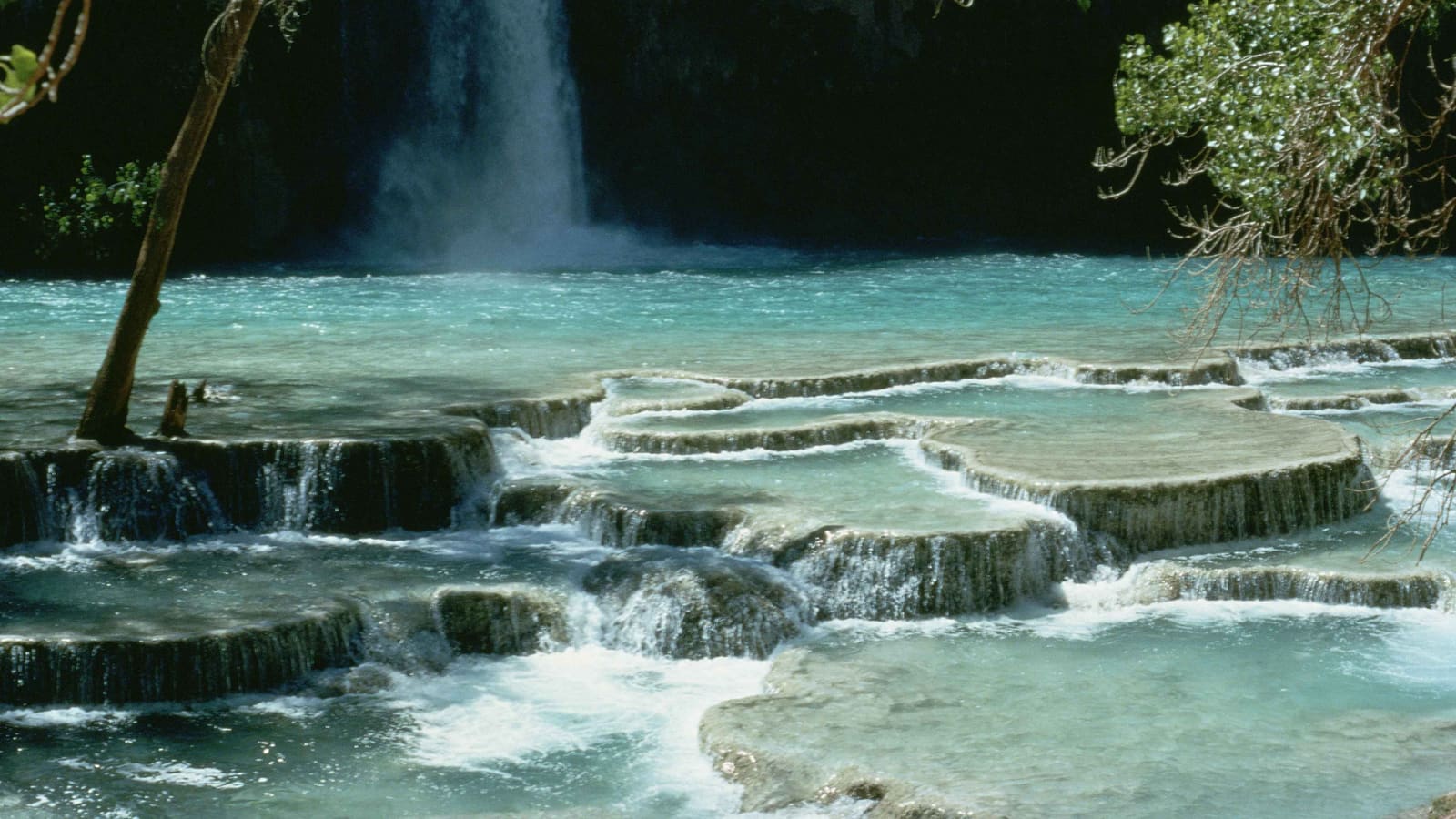
Havasu Falls is one of the most photographed waterfalls in the Southwest, and it's also one of the most misunderstood. Visitors regularly search for it alongside Grand Canyon National Park itineraries, assuming a park pass and a day trip will get them there. Neither is true. Havasu Falls, along with Mooney Falls and the rest of the blue-green cascades below it, sits on the Havasupai Reservation, land belonging to the Havasupai Tribe ("people of the blue-green water"), and it operates under an entirely separate reservation and permit system from the National Park Service.
This guide covers what actually matters before you plan a trip: where the falls sit relative to the park, how the permit system works, what the hike involves, and why an overnight stay is mandatory rather than optional. If you're weighing this against other canyon-area trips, it's worth reading how it differs from a standard South Rim visit in our South Rim real-world guide, and if you're deciding between remote reservation land and a more accessible viewpoint, see our Grand Canyon Skywalk guide for a completely different kind of tribal-land experience.
It's Not Part of Grand Canyon National Park
The single most important fact to internalize before you plan anything: Havasu Falls is not inside Grand Canyon National Park. It's located in a side canyon on the Havasupai Reservation, sovereign tribal land governed by the Havasupai Tribe, not the National Park Service. Your park entrance pass, America the Beautiful annual pass, or any NPS reservation system does not apply here in any way. The Havasupai Tribe runs its own independent booking platform, its own campground and lodge, its own rules, and its own fee structure.
Because the reservation sits in a remote corner of the greater canyon region, most visitors approach from the Hualapai Hilltop trailhead, which itself requires a long drive on remote roads well outside the national park's boundaries. Build in extra time for the drive alone, and confirm current road and access conditions with the tribe before you leave, since conditions and closures can change with the season.
Permits Are Reservation-Only and They Sell Out
There is no walk-up option, no lottery, and no way to buy your way in once you arrive at the trailhead. Every visitor must hold a confirmed reservation made in advance directly through the Havasupai Tribe's official booking system. These reservations cover your entire stay, including lodging, and they routinely sell out within the first booking window of the season, sometimes within hours.
Because demand consistently outstrips supply, plan to be online and ready the moment a new booking window opens, and have flexible dates in mind rather than a single fixed week. Cancellations do occasionally open up mid-season, so it's worth checking back periodically even after the initial release sells out, but treat that as a bonus chance rather than a plan.
The Hike: Hualapai Hilltop to Supai and the Campground
The standard route starts at the Hualapai Hilltop trailhead and descends into the canyon toward the village of Supai, a hike that runs roughly 8 miles one way over rugged, exposed switchbacks before leveling into the canyon floor. From Supai, the campground sits a couple more miles beyond, closer to the falls themselves — roughly 10 miles total from the trailhead to the campground, per the tribe's own reservation FAQ. Confirm current mileage and trail conditions with the Havasupai Tribe before you go, since trail routing and conditions can shift.
There is minimal shade for much of the descent, and temperatures at the bottom of the canyon run significantly hotter than on the exposed rim sections. Carry more water than you think you'll need, start early to avoid the worst heat, and treat this as a genuine backcountry hike rather than a casual walk to a viewpoint. Pack-mule and horse transport services for gear have operated seasonally in the past through independent operators, which can be worth investigating if you'd rather not carry a full overnight pack down and back up.
If you're used to maintained national park trails, this is a different experience. For a sense of how NPS-maintained descents compare, our Bright Angel Trail guide covers resthouses and water stations that simply don't exist on the Havasupai route — you're more self-reliant here.
No Day Hiking: Overnight Stays Only
This is the rule that trips up the most first-time planners: the Havasupai Tribe does not permit day hiking into the canyon. You cannot hike in, see the falls, and hike back out in the same day. Every visitor must book a multi-night stay as part of their reservation, either at the tribe's campground near the falls or at Havasupai Lodge in the village of Supai.
Given the length of the hike in both directions, the no-day-hiking rule makes practical sense — few people could safely hike in, explore the falls, and hike back out in daylight hours anyway. Plan for at least a few nights so you actually have time to see Havasu Falls, Mooney Falls, and the other cascades downstream without spending your entire trip hiking.
What to Actually Expect
The water color is the reason this place went viral, and it lives up to the photos: high mineral content gives the creek and falls a turquoise-blue color that looks almost artificial in person. Beyond Havasu Falls itself, most itineraries also include Mooney Falls, reached by a steep, chain-assisted descent that is not for anyone uncomfortable with exposure, and sometimes a further hike to Beaver Falls.
Cell service is largely absent once you're in the canyon, the village of Supai has a small general store with limited supplies, and summer heat at the canyon floor can be intense. Pack layers for cool mornings and hot afternoons, bring a water filter or purification method as backup, and expect a genuinely remote experience with minimal infrastructure compared to the developed South Rim. This is a physically demanding, logistically strict trip — worth it for many, but not a casual add-on to a broader Arizona itinerary. If you're building a wider Grand Canyon trip around it, see our packing list for general canyon-country essentials, then adjust for the extra remoteness here.
Last updated: 2026-07-26. Fees, permit windows, trail conditions, and helicopter shuttle availability change often — always verify current details directly with the Havasupai Tribe before finalizing plans.
Book a Guided Grand Canyon Experience
Viator runs helicopter flights, guided rim hikes, and Grand Canyon Railway day packages that bundle transport, entry, and a guide — useful when you would rather skip the driving and parking logistics for your main South Rim visit.
Browse Grand Canyon Tours on Viator →Affiliate link — we earn a small commission at no cost to you.