By The Lowdown Guide Editorial Team · Last updated: 2026-07-26
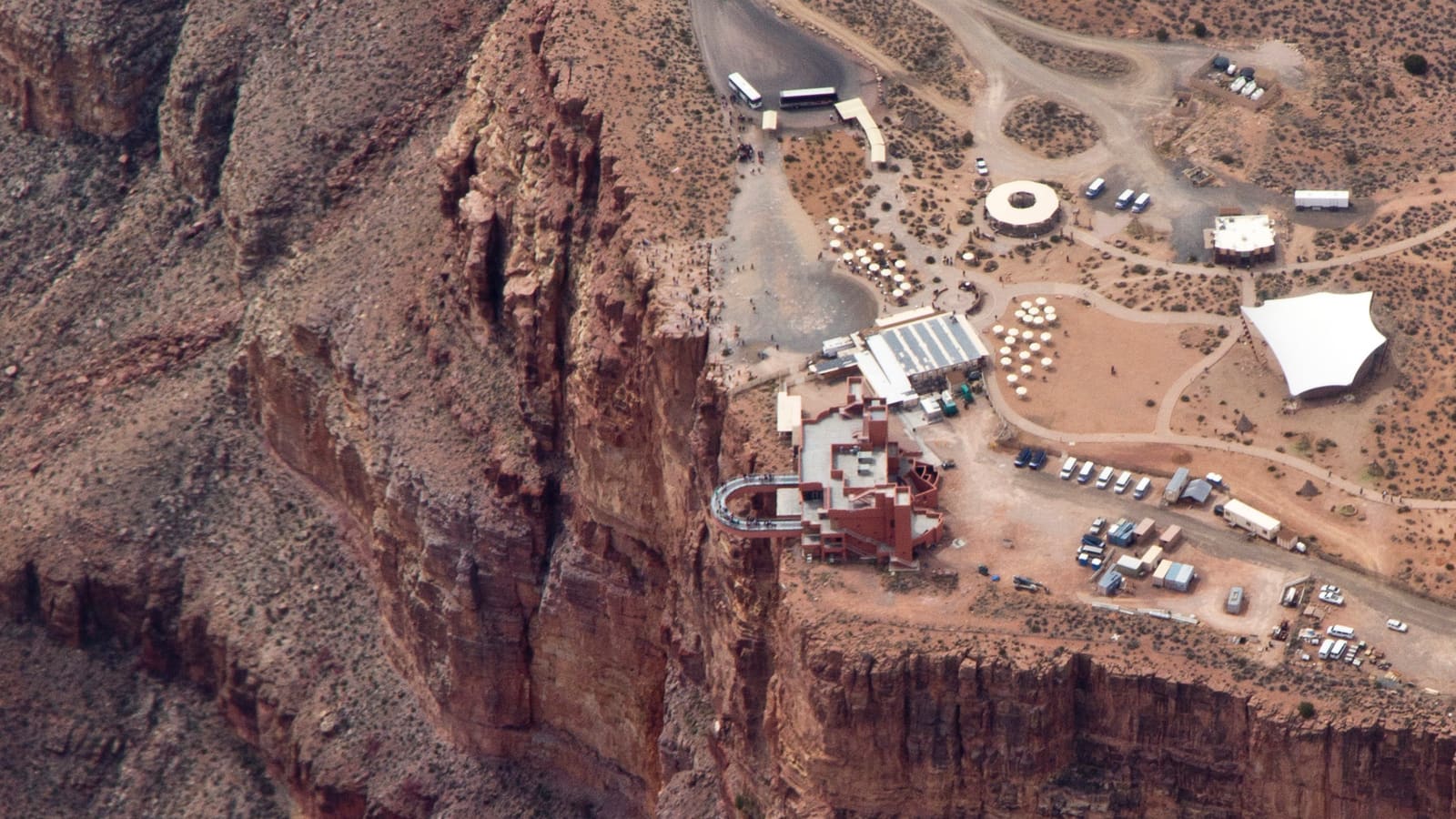
The Grand Canyon Skywalk is one of the most recognizable canyon images online: a horseshoe-shaped glass walkway cantilevered out over the rim. What often doesn't make it into the photo caption is that the Skywalk sits at Grand Canyon West, on land belonging to the Hualapai Tribe, and it is a completely separate destination from Grand Canyon National Park. Different entrance, different management, different distance from most standard canyon itineraries.
If you're trying to decide whether Grand Canyon West fits your trip, this guide walks through what it actually is, how it compares to a South Rim visit, and who it's genuinely built for. If you're coming from Nevada, our Grand Canyon from Las Vegas guide compares day-trip options including this route, and if you're weighing the two main rims of the actual national park against each other, see South Rim vs North Rim for that separate comparison.
A Separate Destination From Grand Canyon National Park
Grand Canyon West is operated by the Hualapai Tribe on their reservation land, entirely independent of the National Park Service. It has its own entrance fee structure, its own ticket tiers, and its own access road system. A national park pass does not get you into Grand Canyon West, and a Grand Canyon West ticket does not get you into the South Rim or North Rim developed areas of the national park.
This distinction matters because a lot of first-time canyon visitors book a Skywalk tour from Las Vegas assuming it's a shortcut into the national park itself, then arrive expecting the depth of view, ranger programs, and trail network of the South Rim. It's a different canyon experience by design, not a scaled-down version of the park.
The Skywalk: What It Actually Is
The Skywalk is a horseshoe-shaped glass-floored bridge that extends out from the canyon rim, letting visitors stand over open air with the canyon floor visible below through the glass. It is a paid add-on experience on top of the base Grand Canyon West entry ticket, and personal cameras, bags and similar belongings are not permitted on the walkway itself, though cell phones are allowed, with official photography services offered instead.
For most visitors, the Skywalk itself is a five-to-fifteen-minute novelty experience rather than the centerpiece of a full day. The broader value of a Grand Canyon West visit comes from combining it with the other viewpoints on the property, not from the glass walk alone.
Eagle Point and Guano Point
Eagle Point is home to the Skywalk and also features a rock formation resembling an eagle in flight, along with cultural demonstrations and exhibits on several Native tribes of the region. It's the most developed of the Grand Canyon West stops, with the largest visitor facilities.
Guano Point, a separate stop on the property, offers a wide-open canyon panorama and a short walk up to the remains of an old aerial tramway once used for guano mining, with views considered by many repeat visitors to be more dramatic than Eagle Point's. Most day packages include shuttle transport between the two points and other stops on the property, so plan to budget time for both rather than just the Skywalk location.
Some visit packages also include Hualapai Ranch, a Western-themed stop with horseback rides and similar activities, depending on which ticket tier you choose. Review the current stop list on your specific package before you go, since offerings have changed over time.
How It Differs From the South Rim
The South Rim, inside the national park, sits at a higher, more forested elevation with a dense network of maintained trails, a free shuttle system, lodges, restaurants, and the full range of ranger-led programs. Grand Canyon West is lower in elevation, more desert in character, and built primarily around a handful of scenic stops rather than a trail network — there is no equivalent to the Rim Trail or Bright Angel Trail here.
If extended hiking, a broad range of viewpoints, or the classic postcard depth-of-canyon photo is your priority, the South Rim delivers that more completely — see our Grand Canyon day hikes guide for what that side of the canyon offers. Grand Canyon West instead offers a specific, novel experience — the Skywalk — packaged into a manageable day trip from a Las Vegas base, without the multi-hour drive to the park's developed South Rim area.
Who Should Book Grand Canyon West
Grand Canyon West suits Las Vegas-based travelers with a day to spare who want a canyon experience without committing to the long drive or multi-day stay a South Rim trip typically requires. It also suits anyone specifically drawn to the Skywalk's novelty, or travelers combining a canyon stop with a broader Nevada-Arizona road trip that doesn't route through the park's main entrances.
It's a weaker fit for hikers, photographers chasing the classic deep-canyon panorama, or anyone planning to combine it same-day with a South Rim visit — the drive between the two is too long for that to work comfortably. Plan Grand Canyon West as its own trip, and if you later want the national park experience too, treat that as a separate visit built around our best time to visit guide and a proper South Rim itinerary.
Last updated: 2026-07-26. Ticket packages, hours, and included stops change periodically — verify current details with Grand Canyon West or the Hualapai Tribe before booking.
Book a Guided Grand Canyon Experience
Viator runs day trips to Grand Canyon West from Las Vegas and helicopter flights over the South Rim, useful when you'd rather skip the driving and let a guide handle logistics and ticketing.
Browse Grand Canyon Tours on Viator →Affiliate link — we earn a small commission at no cost to you.