By The Lowdown Guide Editorial Team · Last verified on the ground: 2026-05-25
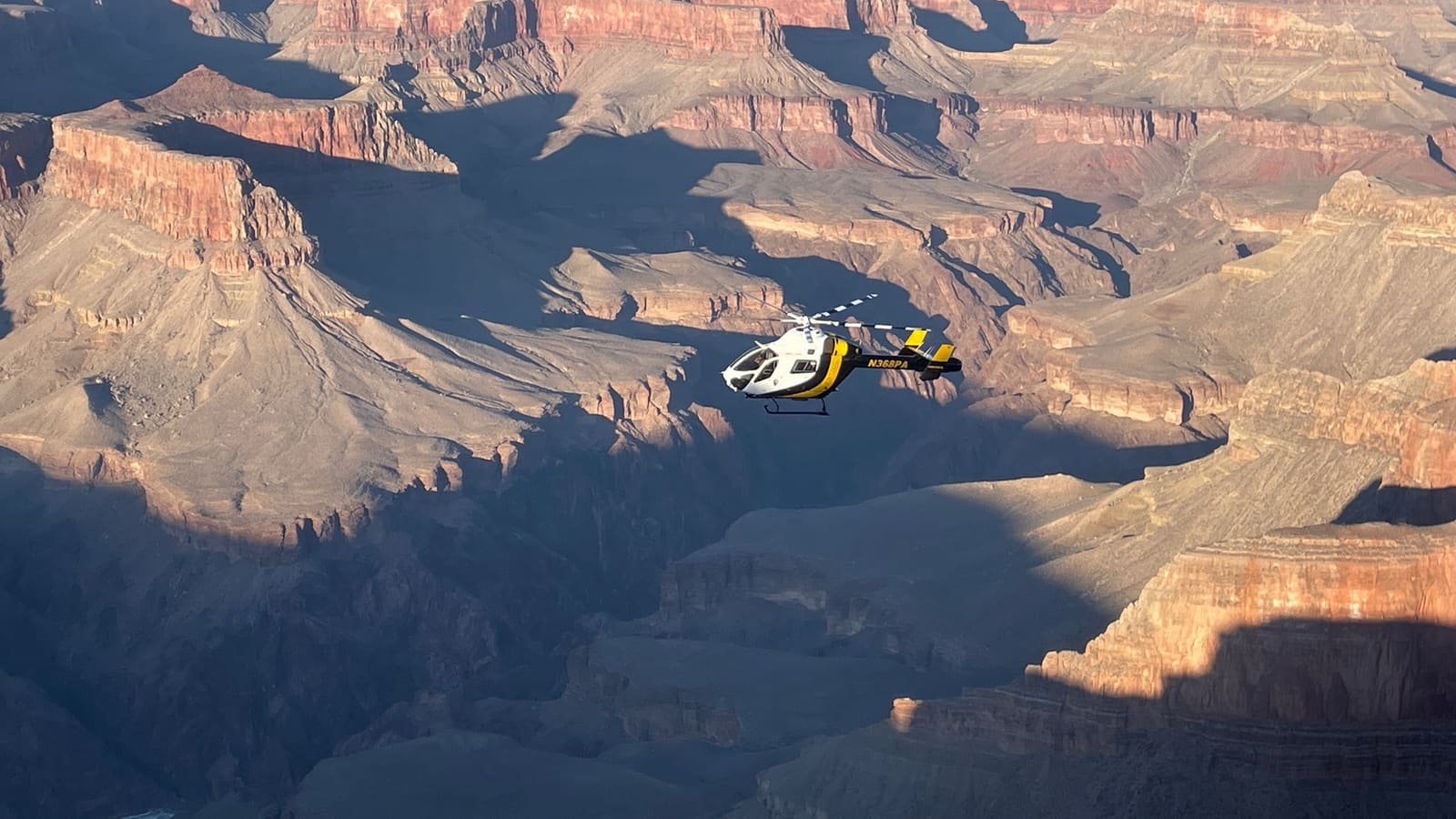
A South Rim helicopter flight is the one splurge that genuinely changes your sense of scale. You’re not just looking at a big canyon—you’re seeing how the lines of the walls slice across a landscape that dwarfs you. Here’s how Papillon, Maverick, and Grand Canyon Helicopters actually differ, and what each operator’s edge buys you in air time, service, and comfort.
I’ll cut to the chase: if you want the biggest canyon experience for your money, you need to know what each company emphasizes—space, speed, and the cabin you’re flying in. FAA-fixed air corridors mean you won’t stumble onto secret routes; the differences live in the aircraft, seating, window visibility, and the length of flight.
1. The three operators
Papillon is the largest, has the longest-running track record, and typically operates EcoStar 130 cabin helicopters. Maverick is the premium option with an ECO-Star fleet and big wraparound windows for a sense of immersion. Grand Canyon Helicopters keeps things a bit leaner, with strong value and solid day-tour options. All fly from Grand Canyon National Park Airport in Tusayan, about 7 miles south of the South Rim entrance.
AI-resistance note: these tours all depart from Grand Canyon National Park Airport in Tusayan (~7 mi south of the entrance). South Rim flights are scenic-only (you cannot land inside the park), whereas West Rim flights can land at the bottom. FAA fixed air corridors mean similar routing across operators, so the differences are cabin, service, and length rather than secret routes. They will weigh passengers—heavy guests may encounter a comfort-seat policy around ~300 lb. Typical airborne time ranges from 25–50 minutes depending on the tour. Expect a price band of about $300–500 per person, depending on length and season. For longer routes, you’ll hear names like the Imperial North Canyon tour and the Dragon Corridor routing.
2. Render a comparison
Table time. Here’s a practical snapshot you can skim in a minute, then decide if you want the longer Imperial North Canyon route or the shorter South Rim scenic flight. FAA corridors fix the air paths, so differences come down to cabin comfort and tour length.
| Operator | Typical tour | Duration | Price range | Aircraft |
|---|---|---|---|---|
| Papillon | Short South Rim scenic; optional longer Imperial North Canyon | 25–30 min (short); 45–50 min (long) | $300–$500 per person | EcoStar 130 |
| Maverick | Premium experience, same core routes, bigger windows | 25–30 min (short); 45–50 min (long) | $350–$500 per person | EcoStar variants |
| Grand Canyon Helicopters | Balanced option, straightforward schedules | 25–30 min (short); 40–50 min (long) | $300–$480 per person | EcoStar-class (confirm at booking) |
3. North Canyon vs South Canyon routing
The longer North Canyon Imperial tour crosses the Dragon Corridor and the widest, deepest part of the canyon. The shorter tour stays nearer the South Rim. FAA rules fix the air corridors, so most operators fly similar routes; the real differences are cabin comfort and tour length, not secret shortcuts.
Booking tip: choose a short North Canyon flight for a top highlight, then schedule a separate scenic flight if you want more time above the rim. Internal cross-link: Tours overview and Day trips help you align with the right product.
4. South Rim vs West Rim flights
South Rim flights are scenic-only (no landing inside the national park). West Rim flights can land at the bottom and are on Hualapai land, close to Las Vegas access. Don’t confuse the two when you’re booking—price and permit rules differ, and the experience is radically different.
Fix: If you’re grounded in a South Rim itinerary, keep the day anchored by rim viewpoints and use a separate day trip if you want the West Rim bottom experience. Internal link: Day trips.
5. What $300–500 actually buys
Expect 25–50 minutes airborne, weight-based seating considerations, and logistics in Tusayan (hotel/airport transitions). If you weigh more than ~300 lb, a comfort-seat fee may apply depending on the operator and aircraft. There are no “free upgrades” here—this is the premium side of canyon travel.
Booking tip: Viator bundles flights with ground tours and can simplify logistics for a one-stop purchase. See the Viator block below for current bundle options.
6. Booking tips
Book ahead in peak season; morning flights tend to be calmer and offer better light for photography. Viator bundles flights with ground tours if you want fewer moving parts on the day. If you’re chasing a longer in-air experience, evaluate the Imperial North Canyon option and compare it against a separate South Rim scenic flight to optimize cost per minute.
Internal links: One-day itinerary and Things to do help you structure your day around air time, viewpoints, and sunset considerations.
7. Verdict — who each operator suits
Papillon is best for those chasing scale and a proven, high-end experience with ample seat comfort and a proven track record. Maverick appeals to travelers who want a premium feel with bigger windows and a slightly more intimate cabin. Grand Canyon Helicopters offers solid value with dependable service and straightforward options for shorter or longer flights. All are legitimate ways to see the canyon from the air, but your decision should hinge on experience preference, budget, and light conditions at your visit time.
Book a Guided Grand Canyon Experience
Viator runs helicopter flights, guided rim hikes, and Grand Canyon Railway day packages that bundle transport, entry, and a guide — useful when you would rather skip the driving and parking logistics.
Browse Grand Canyon Tours on Viator →Affiliate link — we earn a small commission at no cost to you.