By The Lowdown Guide Editorial Team · Last updated: 2026-08-07
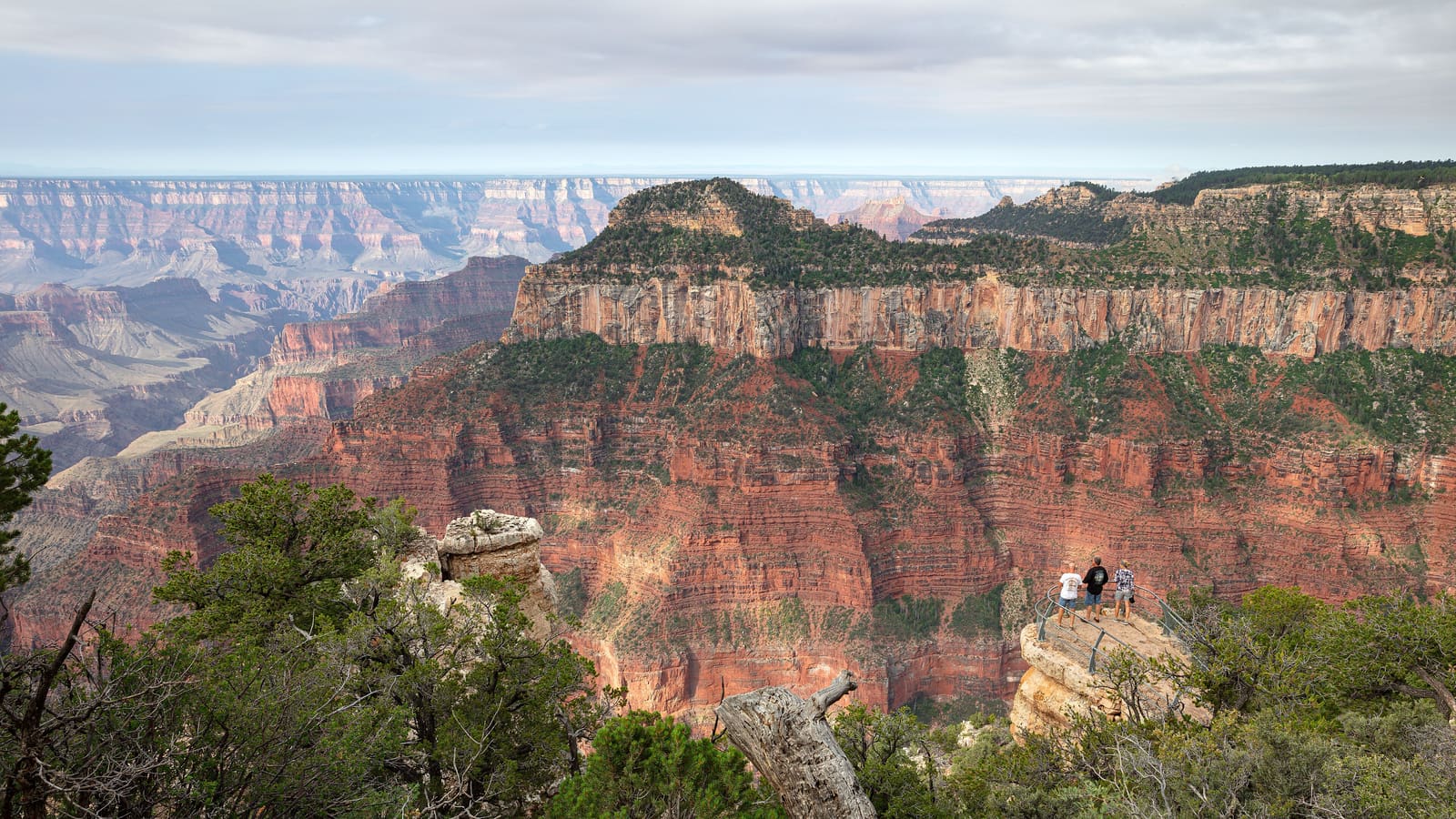
The large majority of Grand Canyon National Park visitors never set foot on the North Rim, and that's exactly why the people who do go tend to come back talking about it. The North Rim sits higher, colder, and further from any major highway than the South Rim, and its developed area operates on a short seasonal window rather than year-round. It rewards travelers willing to plan around that, with the quiet and the sweeping views to show for it.
This guide covers the practical basics: when it's actually open, how the drive compares to the South Rim, what there is to do once you're there, and who should make the trip. For a direct comparison between the two rims, see our South Rim vs North Rim breakdown, and if you're considering hiking between them, our Rim to Rim hike guide covers the multi-day route that connects the two on foot.
Higher Elevation, Shorter Season
The North Rim sits at roughly 8,000 feet, noticeably higher than the South Rim's approximately 7,000-foot elevation. That extra altitude brings cooler summer temperatures, a shorter growing season for the surrounding forest, and — critically for trip planning — heavier and earlier winter snowfall that forces the developed area to close for the season.
Because the window is short and weather-dependent, build flexibility into your plans if you're visiting near the edges of the season, and pack layers regardless of when you go — even midsummer mornings at this elevation run cool.
The Drive From the South Rim
There's no direct road across the canyon, so getting from the South Rim to the North Rim means a long loop around, roughly four and a half hours by car through northern Arizona and a slice of Utah. This isn't a same-day round trip for most travelers — treat the North Rim as its own separate leg of a longer Southwest itinerary rather than a quick add-on to a South Rim visit.
Because of that drive time and the North Rim's more limited services, most visitors plan at least one night in the area rather than trying to see it and move on the same day. If your itinerary also includes nearby Utah parks or a longer road trip loop, the North Rim slots in naturally along that route in a way it doesn't for a tight South-Rim-only trip.
Grand Canyon Lodge and Bright Angel Point: What's Changed Since the 2025 Fire
Bright Angel Point, the short paved overlook walk that used to start near the lodge, is closed for the 2026 season along with the Widforss, Transept, and Uncle Jim trails. The North Kaibab Trail has reopened for foot traffic only, with stock use suspended for the season and ongoing repair work following fire damage. Confirm current trail and facility status with the National Park Service before planning around any specific overlook or trail.
The North Rim Campground reopened for the 2026 season on June 1, with tent and RV sites (no hookups) available through October 15. Beyond the closed trails noted above, the North Rim still has a smaller network of hiking than the South Rim, generally quieter even during the height of the open season — but check individual trail status before you go, since post-fire repair work is ongoing.
Cape Royal and Point Imperial Scenic Drives
The Cape Royal Scenic Drive is arguably the North Rim's signature experience for visitors without time for a long hike: a paved road leading to a series of overlooks, ending at Cape Royal itself, where a short walk reveals expansive views and the natural stone arch of Angels Window. Point Imperial, reached via a spur off the same general route, sits at one of the highest overlooks in the entire park and offers a dramatically different angle on the canyon's eastern reaches.
Both drives are comfortably doable in a half day, with multiple pullouts along the way, and they're a good option for travelers who want the North Rim's signature views without committing to backcountry hiking. Pair either drive with sunset or sunrise timing for the best light, much as you would plan around sunrise vs sunset timing on the South Rim.
Who Should Make the Trip
The North Rim suits travelers who've already seen the South Rim and want a quieter, higher-elevation follow-up, or anyone building a broader loop through northern Arizona and southern Utah where the extra drive time fits naturally into the itinerary. It's a poor fit for a single tight visit where the South Rim's easier access, year-round hours, and denser trail and service network matter more than solitude.
If you're deciding which rim to prioritize on a first trip, our South Rim vs North Rim comparison walks through the trade-offs in more depth. For most first-time visitors, the South Rim remains the practical default; the North Rim is the reward for a second trip or a longer regional road trip.
Last updated: 2026-08-07. Seasonal opening dates, lodge availability, and road conditions change year to year — confirm current details with the National Park Service before finalizing plans.
Book a Guided Grand Canyon Experience
Viator lists helicopter flights, guided hikes, and multi-day tour packages that can help structure a longer Southwest loop that includes the North Rim alongside the South Rim.
Browse Grand Canyon Tours on Viator →Affiliate link — we earn a small commission at no cost to you.