Last updated: 2026-07-09
1. Oak Creek Canyon campgrounds: Manzanita and Cave Springs
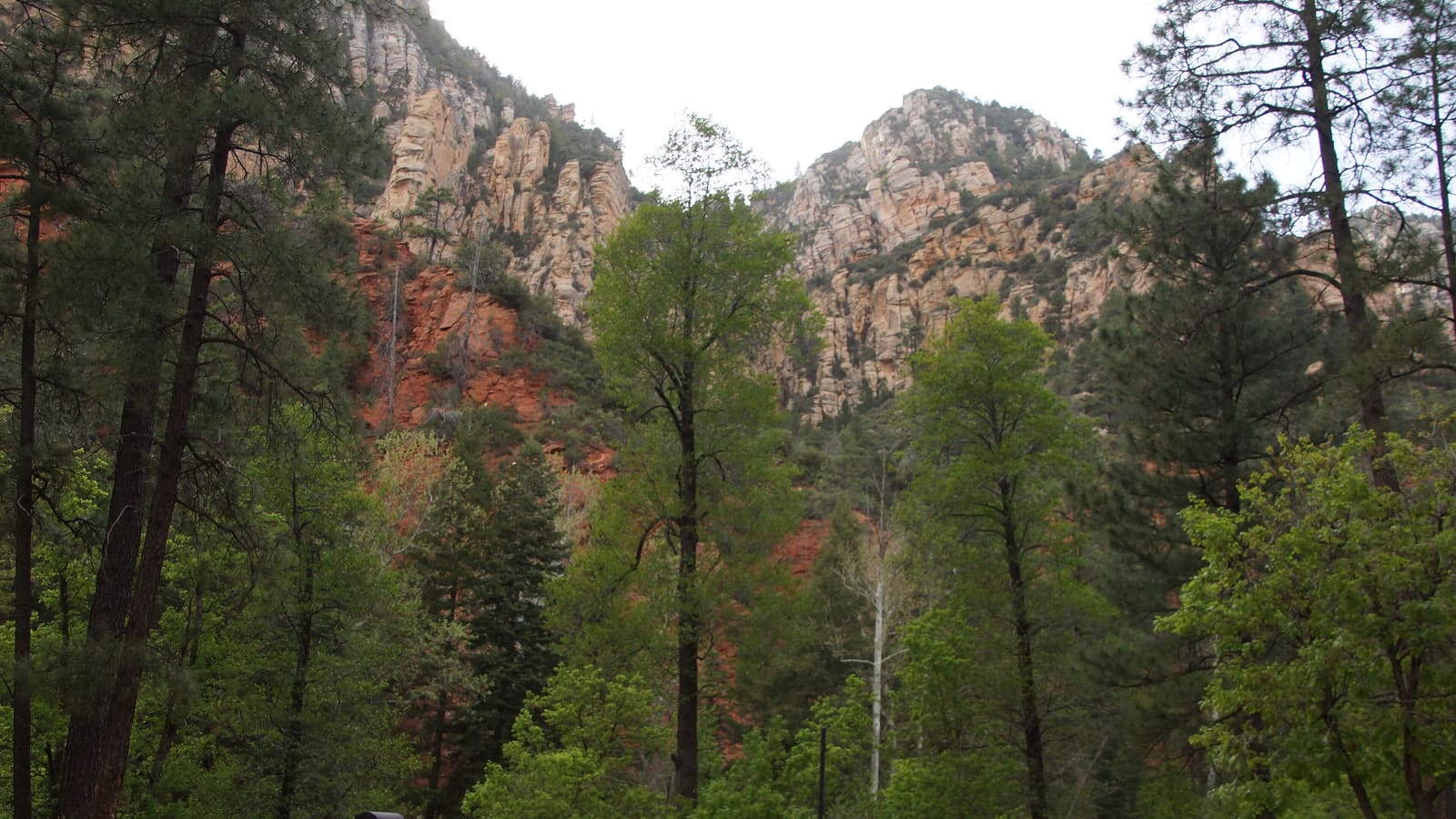
The two developed campgrounds closest to Sedona are both in Oak Creek Canyon on AZ-89A north of town. Manzanita Campground sits near Slide Rock State Park and offers tent and small sleep-in-vehicle sites with access to the creek (no trailers or large RVs) — it is normally the more popular and more scenic of the two, though it is closed as of this writing (see the notice above). Cave Springs Campground is further north, quieter, and in a dense riparian corridor. Both are managed by the Coconino National Forest and require reservations through Recreation.gov, particularly from spring through fall. Check Recreation.gov for current availability, fees, and closure status before planning your dates.
Both campgrounds are within 20 minutes of Uptown Sedona. The canyon drive on AZ-89A is one of the more dramatic approaches in the Southwest. For the timing of your Oak Creek Canyon visit alongside other Sedona activities, see our one-day Sedona itinerary.
2. Dispersed camping on Coconino National Forest land
The Coconino National Forest allows dispersed (primitive) camping on designated national forest land at no cost in most areas, but with rules that matter. In the Forest Service's designated dispersed zones near Sedona, camping is restricted to within about 300 feet of the designated road, and you should set up well away from water sources — check the Red Rock/Sedona Ranger District for the current area rules. Sites cannot be occupied for more than 14 days in any 30-day period. You are required to pack out all waste — no facilities exist. Fire rules vary by area and season: some designated dispersed zones near Sedona (including West Sedona) permanently prohibit wood and charcoal fires, and forest-wide fire restrictions frequently ban all campfires. Confirm the current fire restrictions with the Red Rock/Sedona Ranger District before planning any fire.
Dispersed camping is not available in all areas near Sedona — the immediate Red Rock area has restrictions. The Coconino National Forest Sedona Ranger District website publishes current open areas and fire restrictions. Always check before your trip, as restrictions change seasonally and without much advance notice.
3. Dead Horse Ranch State Park group and RV camping
Dead Horse Ranch State Park in Cottonwood, about 20 miles southwest of Sedona, offers developed camping with electric and water hookups, shower facilities, and group sites. It sits along the Verde River and is a practical base for visitors who want developed amenities without the competition for Oak Creek Canyon campground reservations. The Verde River Greenway trailhead is on-site. Reserve through the Arizona State Parks reservation system (azstateparks.com); check ahead for current availability and rates.
Cottonwood is also a reasonable base for visiting Jerome, just 8 miles up the mountain. For day trip logistics from the Verde Valley corridor, see our Sedona day trips guide.
4. What to bring and campsite logistics
Water: Oak Creek Canyon developed campgrounds have tap water; dispersed sites do not. Carry more than you think you need. Nights in Sedona's elevation can be cold even in summer — temperatures drop into the 50s Fahrenheit on summer nights and into the 30s in spring and fall. A three-season sleeping bag rated to at least 30 degrees Fahrenheit is appropriate for most of the year. A four-season or winter bag is worthwhile for December through February.
Bears are not a significant concern in the immediate Sedona area, but javelinas (collared peccaries) are common and will investigate food left out. Store food in a hard-sided container or vehicle. Rattlesnakes are active from spring through fall — standard precautions apply (watch where you step, do not reach into brush without looking).
5. Fire restrictions and seasonal considerations
Fire restrictions in the Sedona area are taken seriously and change frequently based on drought conditions, wind forecasts, and recent fire activity. In dry spring months (April through June), Stage 1 or Stage 2 restrictions are common. The 2020s have seen multiple significant fires in the Verde Valley region. Assume restrictions may be in effect any time outside of the monsoon window (mid-July through mid-September) and check the current status before your trip.
Summer camping (June through mid-July before the monsoon) brings extreme afternoon heat in lower-elevation dispersed areas. Sedona's summer daytime temperatures regularly exceed 100 degrees Fahrenheit, making midday camp life uncomfortable. Spring (March through May) and fall (September through November) are the most comfortable camping seasons. For how Sedona's seasonal weather affects outdoor plans across the board, see our best time to visit guide.
6. Alternatives to camping: glamping and cabin options
Sedona's popularity has produced a small but growing glamping market. Several properties offer furnished safari-style tents, yurts, and cabins in the red rock area. These typically run at rates between mid-range hotel stays and budget camping — verify directly with properties for current pricing. They offer the outdoor experience without tent logistics and are particularly popular with couples and groups who want camp aesthetics without sleeping on the ground.
For visitors debating between camping and a hotel stay, the primary practical factors are access to showers, proximity to trailheads, and budget. Dead Horse Ranch campground with full hookups and shower facilities is a practical middle ground. For a neighborhood-by-neighborhood breakdown of hotel options, see our Sedona neighborhood guide.
Book a Guided Sedona Experience
Guided jeep tours and hiking experiences let you explore the backcountry without a permit or navigation planning. Browse current tour options through Viator.
Browse Sedona Tours on Viator →Affiliate link — The Lowdown Guide earns a commission on qualifying bookings at no additional cost to you.