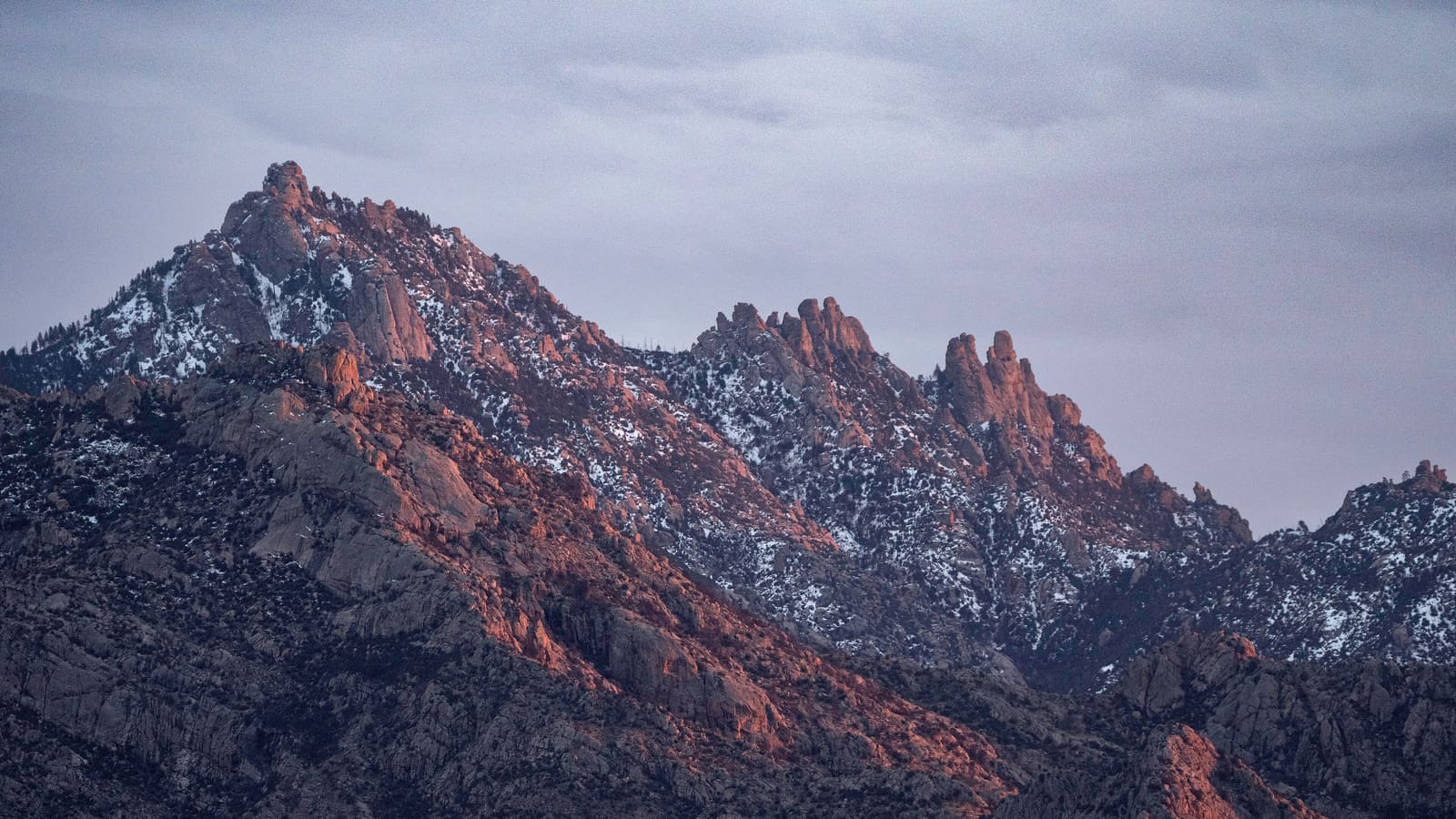
Winter: Tucson's Peak Season
Tucson's cool season, roughly November through April, is the stretch most visitors associate with the city, and for good reason. Daytime temperatures are mild and comfortable for a full day outdoors -- January and December average highs of 66.5°F and 65.5°F respectively in the 1991–2020 NOAA normals, rising to 75.8°F by March -- evenings turn cool, with average lows near 41°F in the two coldest months, and the Sonoran Desert scenery -- saguaro-studded hillsides, clear skies, mountain backdrops -- tends to look its best under winter light. This is also when snowbirds and winter visitors from colder climates arrive in large numbers, which is one reason it functions as the region's high season.
Because winter is peak demand, lodging rates and availability tighten up considerably, particularly around holidays and popular winter weekends. Booking accommodations and any guided activities well ahead of a winter trip is the more reliable approach than assuming last-minute availability, and it is worth checking current rate calendars directly with hotels rather than assuming off-peak pricing applies.
Spring: Wildflowers and Shoulder-Season Comfort
Spring, generally covering March and April, keeps much of winter's comfortable hiking weather while adding the possibility of a desert wildflower bloom, depending on how much rain the region received over the preceding winter. When conditions align, the desert floor and hillsides around Tucson can carry a noticeable wash of color from annual wildflowers and blooming cacti, and it is a popular window for hiking and outdoor photography as a result.
Spring also sits just ahead of the true heat of summer, and the climb is steep in the normals: average highs go from 75.8°F in March to 82.9°F in April and 91.8°F in May, so a comfortable early-March hike and a late-May hike are different propositions. Because bloom quality varies from year to year and is never guaranteed, checking a current desert wildflower report closer to your travel dates is a more reliable planning step than assuming a repeat of a bloom you may have seen or read about from a different year.
Summer: Heat and the Monsoon
Summer in Tucson, roughly May through September, is genuinely hot. In the 1991–2020 NOAA normals for Tucson International Airport, June is the hottest month with an average high of 101.2°F, ahead of July at 100.2°F and August at 98.6°F, and the airport averages about 68 days a year at or above 100°F. June is also near the bottom of the year for rainfall (0.23 inches of normal precipitation), though May is marginally the driest month at 0.20 inches. Daytime heat during these months makes extended outdoor activity difficult for much of the day, and visitors who travel in summer plan around it -- early morning outings, indoor or shaded activities in the afternoon, and a slower overall pace. Saguaro National Park's guidance is concrete: drink a quart of water per hour of hiking, and avoid the intense heat between 10 am and 4 pm.
The monsoon layers dramatic afternoon and evening thunderstorms on top of the heat, often following a hot, dry morning. The National Weather Service defines the monsoon season as a fixed calendar window -- June 15 through September 30 -- rather than a start date that shifts each year, though how stormy any given week inside that window turns out to be varies a lot. July and August are Tucson's wettest months by a wide margin (2.21 and 1.98 inches of normal rainfall, against 0.20 inches in May). These storms bring intense, fast-moving rainfall and a real risk of flash flooding, so two rules matter if you visit in this stretch: Turn Around, Don't Drown -- never drive or walk into a flooded wash or around a barricade, since as little as ten inches of water can float a car -- and "when thunder roars, go indoors," because the NWS is explicit that no place outside is safe during a thunderstorm. Some travelers specifically seek out the monsoon for its dramatic skies and lower summer rates, but it requires planning around both the heat and the storm risk.
Fall: An Underrated Shoulder Season
Fall, roughly October into November, is often overlooked in favor of the winter peak, but it deserves more attention than it usually gets. By this point summer's extreme heat has generally broken -- the monsoon season closes on September 30, and average highs fall from 95.1°F in September to 86.3°F in October and 75.1°F in November -- so daytime temperatures move back into a comfortable range for hiking and outdoor sightseeing, similar to what spring offers but without the wildflower bloom.
Demand and lodging rates during fall also tend to sit below the winter high season, which can make it an appealing window for travelers who prioritize comfortable weather and thinner crowds over the specific draws of winter or spring. As with any season, confirm current conditions ahead of a fall trip, since the exact timing of when summer heat breaks can shift from year to year.
Matching the Season to Your Trip Type
If hiking and time outdoors are the priority, winter, spring, and fall all outperform summer, with winter offering the most reliably comfortable temperatures and spring adding the chance of wildflowers in exchange for warmer afternoons later in the season. If the goal is a specific event, festival, or seasonal activity, check the relevant dates directly, since those can shift year to year and are not necessarily tied to the broader weather pattern.
Budget-conscious travelers who can tolerate heat sometimes deliberately target summer, when lodging rates generally drop and popular attractions see fewer visitors, accepting the trade-off of a more limited daily activity window built around early mornings and shaded or indoor time in the afternoon.
Practical Planning Notes
Whatever season you choose, book cool-season lodging well in advance given how tight the peak months can get, and check a current National Weather Service forecast in the days before any trip rather than relying purely on seasonal averages. Hydration and sun protection matter across every season in the desert, and more so as temperatures climb into late spring and summer: Saguaro National Park tells hikers to carry and drink a quart of water per hour on the trail in hot conditions, to start early in the morning or close to sunset, and to avoid the 10 am to 4 pm window entirely in the heat. If you are visiting between June 15 and September 30, add the monsoon rules to that list -- Turn Around, Don't Drown at any flooded wash or barricade, and get inside a substantial building or hard-topped vehicle as soon as you hear thunder.
Elevation is also worth factoring in -- nearby higher-elevation spots such as the Mount Lemmon area run noticeably cooler than the desert floor, which some visitors use to extend the comfortable window into the warmer months by shifting outdoor plans upward in elevation on especially hot days.