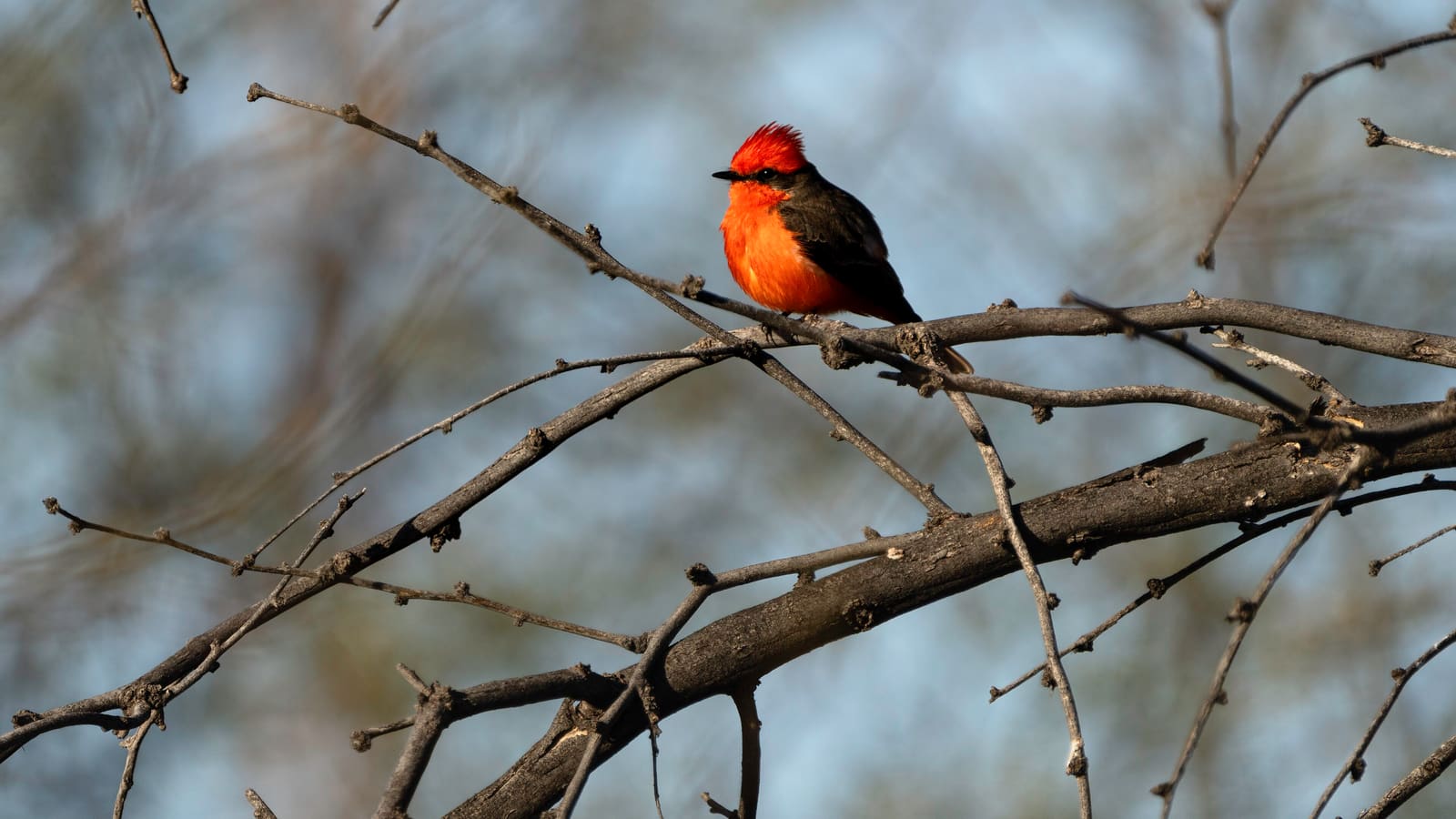
Why Tucson Is a Birding Destination
Tucson's status as a birding destination comes largely from geography rather than any single site. The city sits in the Sonoran Desert but is ringed by mountain ranges that rise sharply out of the desert floor, and it is within a reasonable drive of southeastern Arizona's broader network of canyons and sky-island ranges that draw birders from around the country and beyond specifically for the region's species diversity.
That diversity comes from the overlap of several ecological zones within a compact area -- desert, riparian corridor, oak woodland, and coniferous forest can all sit within a short drive of one another because of the elevation change the Sky Islands provide. Species associated with Mexico's Sierra Madre reach their northern range limits in this part of Arizona, which is part of why the region shows up so often in national birding literature.
The Sky Islands and Elevation Diversity
The Sky Islands are a series of isolated mountain ranges scattered across southeastern Arizona and into northern Mexico, separated from one another by desert basins that species associated with higher, cooler forest habitat generally cannot cross. This isolation functions ecologically much like islands in an ocean, and it is the reason a mountain range near Tucson can hold forest bird species more commonly associated with ranges much farther north, stranded at elevation as the climate shifted over a long timescale.
For birders, the practical effect is that a single mountain range can offer several distinct habitat zones within one trip -- desert scrub near the base, oak woodland at mid-elevation, and pine or mixed-conifer forest near the top. The Santa Catalina Mountains north of Tucson and the Santa Rita Mountains to the south, home to Madera Canyon, are the two ranges most commonly used for this kind of elevation-based birding near the city.
Madera Canyon
Madera Canyon, in the Santa Rita Mountains south of Tucson, has a long-established reputation as one of the premier birding sites in the region, built on a combination of oak-and-sycamore canyon habitat, established trails, and long-running feeder stations that draw a wide range of species into easy viewing range. Its reputation extends well beyond Arizona, and it draws birders specifically visiting the state for the canyon.
The Forest Service describes the Santa Ritas as rising nearly 6,000 feet from desert grassland to mixed-conifer forest, which is the whole reason the canyon works the way it does for birders. Practical notes: Madera Canyon sits on the Coronado National Forest, so the standard day-use fee of $8 per vehicle per day (or $10 per vehicle per week) applies at the developed sites, and a $40 Coronado annual pass or a federal interagency pass covers it. The canyon involves real elevation change and a genuine mountain environment, so even birders focused on the lower feeder areas should come prepared as they would for any canyon hike -- water, sun protection, and appropriate footwear. Check current road conditions and any seasonal access notes before making the drive from Tucson, since conditions can vary.
Sweetwater Wetlands
Sweetwater Wetlands is a constructed wetland within the city of Tucson, built using reclaimed water as part of the water treatment process, and it stands out as an unusual and genuinely valuable habitat in an otherwise dry urban landscape. Tucson Water, which built it in 1996 and still runs it, describes the site as a roughly 60-acre public park at 2511 W. Sweetwater Drive with about 1.5 miles of groomed gravel trails, restrooms and drinking water at the entrance, and more than 200 bird species recorded on site. Because it holds standing water in a desert city, it draws waterfowl and other water-associated species that are otherwise scarce around Tucson, and it functions as a reliable, accessible site without the drive that Madera Canyon or the higher Sky Islands require.
Its location within city limits also makes it one of the more practical options for visitors without a car or with limited time, since it can be worked into a shorter city-based itinerary rather than requiring a dedicated day trip.
Sabino Canyon for Birding
Sabino Canyon, in the Santa Catalina foothills at the edge of Tucson, adds another layer to the region's birding options through its riparian corridor along Sabino Creek. The shaded, water-fed vegetation along the creek supports a different mix of species than the surrounding desert slopes, and the accessibility of the canyon -- via the electric, open-air Sabino Canyon Crawler shuttle, which runs a roughly one-hour round trip with nine stops and an onboard audio tour, plus well-maintained lower trails -- makes it a comparatively easy site to work into a Tucson-based birding itinerary without the drive time that Madera Canyon requires. Budget for the Coronado National Forest day-use fee of $8 per vehicle per day to park, plus the shuttle fare on top of it.
Early morning is generally the best window for activity at Sabino Canyon, consistent with birding elsewhere in the region, and it pairs well with a broader day that also includes Sweetwater Wetlands given the relatively short distance between the two sites within the Tucson area.
Best Seasons: Spring and Monsoon
Spring migration is a notable season across the region, as birds moving between wintering and breeding grounds pass through southeastern Arizona's canyons and riparian corridors. The summer monsoon period is a second notable window, tied to breeding activity and to the seasonal arrival of species that track the monsoon rains, including some hummingbird species associated specifically with that period. Worth getting right: the National Weather Service defines the monsoon season as a fixed calendar window, June 15 through September 30, not a date that shifts each year -- though how wet and stormy any given week inside it turns out to be varies considerably.
Winter brings its own set of species, particularly at lower-elevation, water-associated sites like Sweetwater Wetlands, even though it is not typically framed as the region's peak birding season the way spring and monsoon are. Because timing shifts by species, site, and year, check current seasonal checklists for the specific locations on your itinerary rather than planning around a single fixed calendar window. Two authoritative places to do that: eBird, run by the Cornell Lab of Ornithology, which publishes live bar charts and recent sightings for individual hotspots including Madera Canyon and Sweetwater Wetlands, and the Tucson Bird Alliance (tucsonbirds.org) -- the local birding organization formerly known as the Tucson Audubon Society, renamed in 2024 -- which runs field trips and maintains regional birding resources.