Downtown Route 66 at Dusk
The historic downtown covered in the historic downtown walking guide has genuine neon signage along its Route 66 storefronts, and it photographs best in the window between sunset and full dark, when the neon reads clearly against a still-blue sky rather than competing with full daylight. The street is walkable and compact, so a single evening covers most of the downtown subjects. Weeknights tend to have lighter foot and car traffic than summer weekends if you want cleaner shots without much street activity in frame.
The Historic Depot
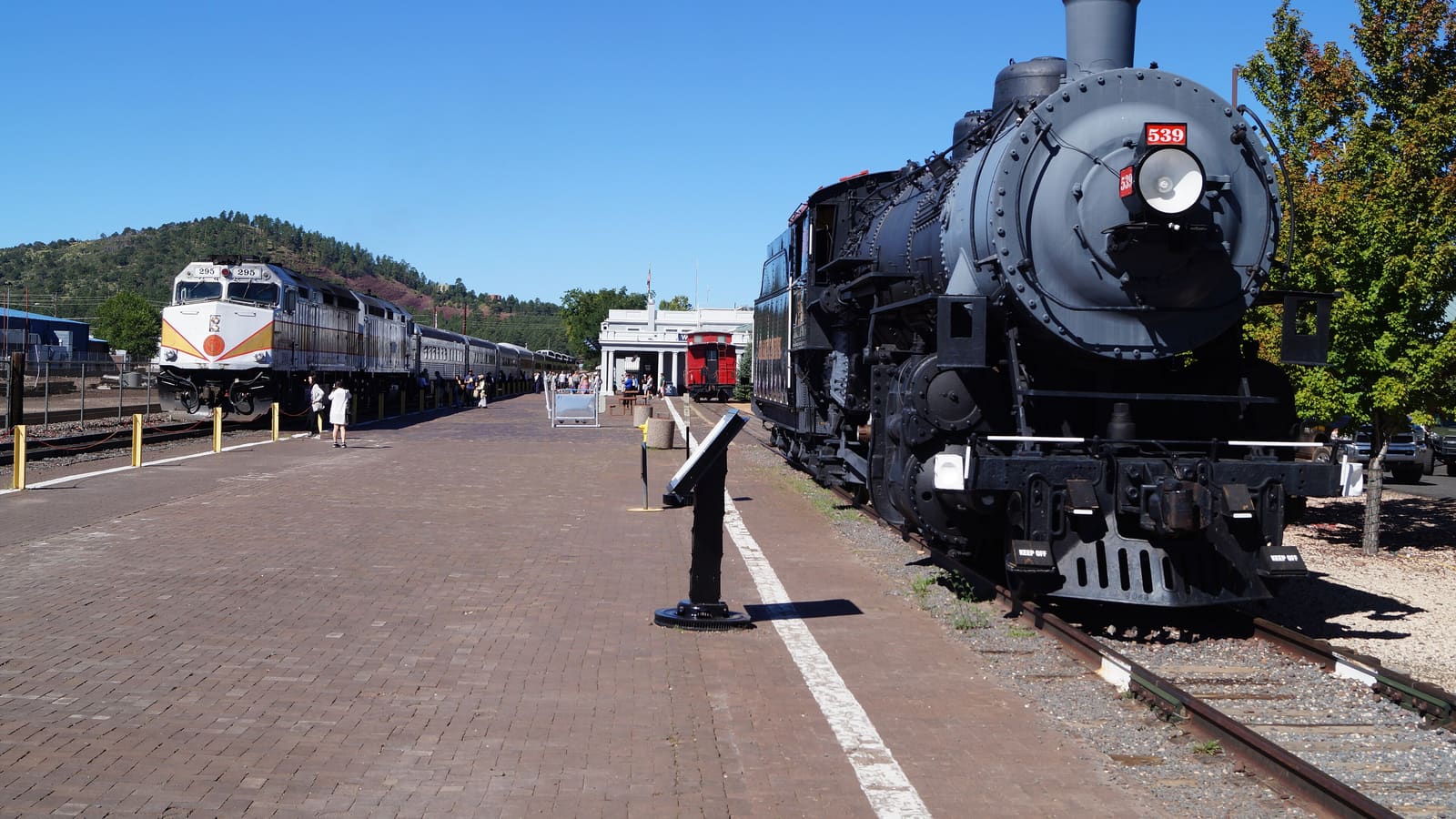
The Grand Canyon Railway's depot in Williams dates to 1908 and anchors the downtown from a photography standpoint the same way it does historically -- it's covered from a history and rail-travel angle in the Grand Canyon Railway guide. Morning light generally works well on the depot's east-facing features, and train departures add a moving subject to an otherwise static building if your timing lines up with the current schedule.
Bill Williams Mountain Fire Lookout
The trail to the Bill Williams Mountain summit is a genuine backcountry hike -- roughly 7 miles round trip with significant elevation gain to a staffed fire lookout tower, as covered in the best hikes near Williams guide -- and it rewards the effort with wide views over the surrounding forest and, on a clear day, distant landmarks. Trail access is seasonal, generally reliable spring through fall and limited or closed in winter snow, so this isn't a spot you can plan around in every season. Budget most of a day for the round trip, not a quick stop.
Sycamore Falls and the Kaibab National Forest
Sycamore Falls, reached via the Sycamore Rim Trail system in Kaibab National Forest, is a seasonal waterfall and canyon-rim subject that depends heavily on recent precipitation -- it can be a dramatic flow after snowmelt or rain and dry rock the rest of the year, so check recent conditions before planning a trip specifically around it. The broader Sycamore Rim area also offers ponderosa pine forest and canyon-rim views that photograph well regardless of the falls' current flow.
The Forest Lakes
Kaibab Lake, Dogtown Lake, and the smaller Cataract Lake near town all offer calm-water reflections of the surrounding ponderosa pine forest, generally best in the stiller light of early morning before any wind picks up. None of these are dramatic landscapes on the scale of the Grand Canyon, but they're an easy, low-effort stop if you're already out near Williams and want a forest-lake subject without a long drive. See the camping near Williams guide for more on each lake's location and access.
Night Skies
Williams doesn't carry a formal international dark-sky designation the way some nearby Arizona communities do, but it sits at a high, forested elevation with modest light pollution compared to a metro area, and Coconino County's dark-sky lighting rules apply here as they do across the region. Clear, moonless nights away from the brightest parts of downtown are the best bet for star photography; bring a tripod, since long exposures are essentially required for a usable night-sky shot at typical camera settings.
When to Go
Late spring through early fall covers the widest range of subjects -- the mountain summit trail is accessible, the falls have the best odds of flowing, and the lakes are ice-free. Winter narrows the list to downtown, the depot, and snow photography if a storm is moving through, similar to the seasonal tradeoffs described in the Williams in winter guide. Check current trail and road conditions before planning a trip around any single weather-dependent subject.