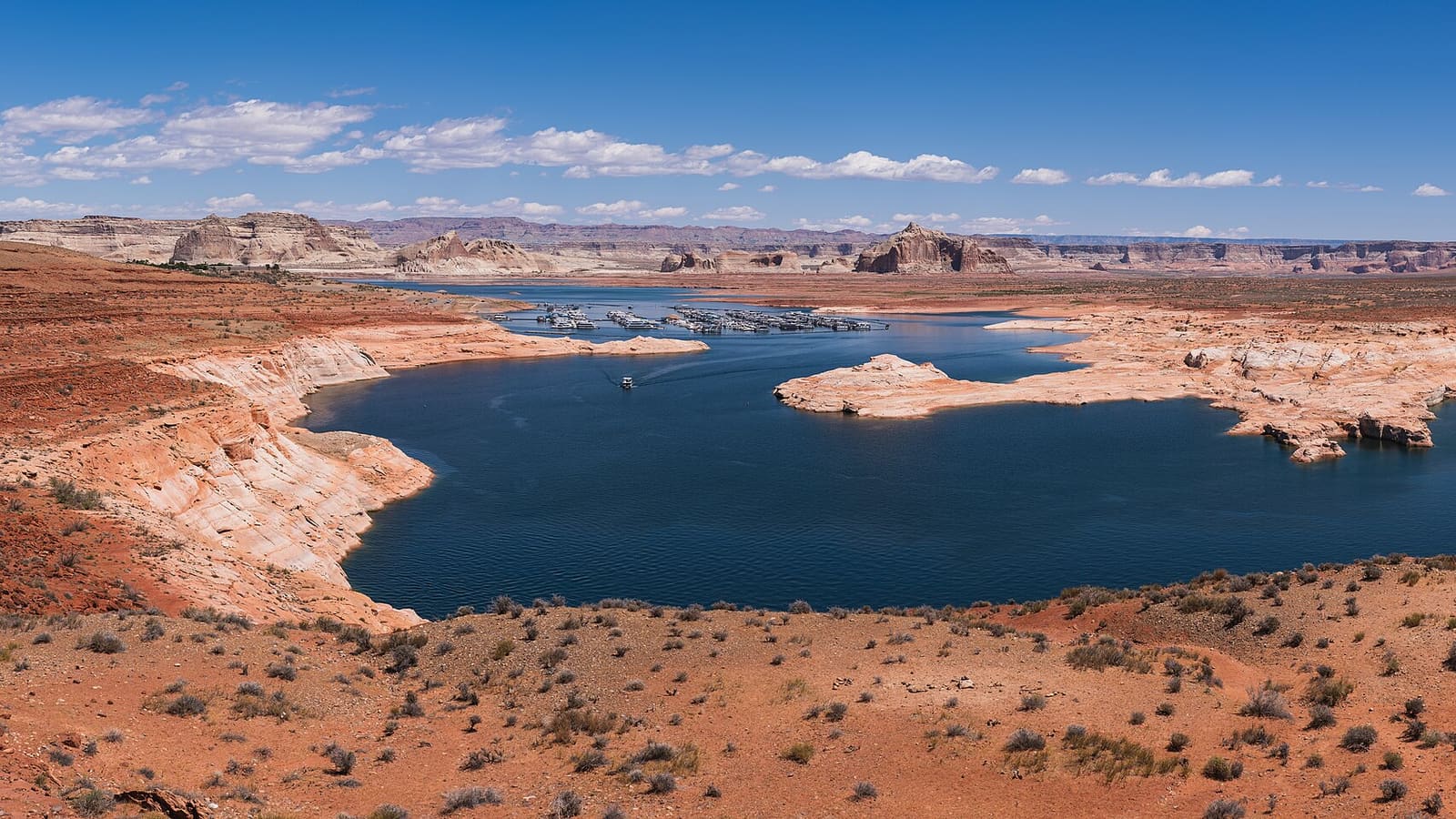
What Winter at Lake Powell Actually Feels Like
Page, AZ and the surrounding Lake Powell area sit at high desert elevation, which gives winter a different character than the coastal or lowland version of the season. Days are generally cool and often sunny, while nights turn cold. The National Park Service describes winters at Glen Canyon as moderately cold with nighttime lows often below freezing, and notes that temperatures in December and January can reach 0 degrees F. Pack for genuine cold after dark, not just for a chilly desert evening.
The single biggest change from summer is the crowd. Parking lots at popular overlooks that can fill early on a summer day often have open spaces on a winter weekday, and the drive along US-89 is typically quieter. For travelers who want to see Horseshoe Bend, Antelope Canyon, or Glen Canyon Dam without competing for a parking spot or a photo angle, winter is one of the best times to visit.
The tradeoff is the water, and it is a safety question as much as a comfort one. Lake Powell's surface temperature drops enough that swimming and water sports that depend on warm water become impractical for most visitors -- but the more important point is that cold water is dangerous, not merely unpleasant. The National Park Service warns that the water at Glen Canyon is cold and that remaining in it too long can produce hypothermia, which it describes as an emergency in which your body loses heat faster than it can replace heat and which can occur even at temperatures above freezing. The NPS also notes that since Lake Powell was created, over 150 people not wearing lifejackets have drowned. If you go out on the water in the off-season, wear a life jacket, dress for immersion rather than for the air temperature, and treat an unplanned entry into the water as a genuine emergency rather than an inconvenience. If your trip is built around a beach day or a swim in a side canyon, winter is not the season for it -- see our best time to visit guide for a month-by-month breakdown of when the water actually warms up.
Marina and Boating Services in the Off-Season
Marina operations scale down significantly in winter. Rental fleets are typically reduced, and some categories of boats -- particularly the larger houseboats -- have more limited availability than during the summer peak. A handful of marina facilities and launch ramps may close for portions of the winter or operate on shortened hours. Separately from the season, low water has closed major Lake Powell launch ramps for extended periods -- ramp availability now tracks the lake's elevation rather than the calendar, and the National Park Service publishes current ramp and marina status on its Changing Lake Levels page.
This does not mean the lake is inaccessible, but do not assume your preferred ramp is open. Which launch ramps are usable, and for which size of vessel, depends on the current lake elevation -- at low levels the National Park Service has closed several of the main ramps to motorized vessels while an auxiliary ramp carried the traffic. Check the NPS Changing Lake Levels page for current ramp status before you tow a boat to the lake. A winter boat trip on a clear, calm day can still be a genuinely striking experience with the canyon walls to yourself. What changes is the certainty -- fleet size, specific boat models, and even whether a given service is running on a particular week are all more variable than in summer.
If a winter boating trip is part of your plan, contact the marina concessioner directly before you arrive to confirm what is currently operating. Do not assume last year's winter schedule will match this year's -- staffing and service levels are adjusted annually. Our marinas guide covers which facility to check first depending on where you plan to launch.
Which Tours Still Run
Most land-based tours and attractions continue to operate through the winter, though hours are often shorter and some tour operators reduce their daily departure schedule. Antelope Canyon tours generally run year-round, subject to the Navajo Nation's current operating rules and weather-related closures. Navajo Nation Parks & Recreation lists the Lake Powell Navajo Tribal Park as closed on Thanksgiving Day, Navajo Nation Family Day (the day after Thanksgiving), Christmas Day, and New Year's Day -- all of which fall inside the off-season -- and a guide is mandatory for every Antelope Canyon location. Horseshoe Bend and the Carl Hayden Visitor Center at Glen Canyon Dam typically remain accessible as well, though the recreation area's facility hours vary through the year even where the park itself is open around the clock.
Water-based tours are the category most affected by the season. Boat trips to destinations like Rainbow Bridge depend on both the marina's operating schedule and lake conditions, and some operators reduce departures or pause entirely during the coldest months. The concessioner's Rainbow Bridge boat tour has also been listed as unavailable at recent Lake Powell water levels, and low water has meant a round-trip walk of about two miles from the dock to the bridge when tours do run -- so this is not purely a winter question. If a boat tour is central to your trip, confirm the current schedule and lake conditions with the specific operator before booking rather than assuming a summer-frequency schedule applies.
Scenic flights over the lake and surrounding canyons are one option that is less dependent on marina operations and lake levels, since they do not require a working launch ramp or a fully staffed marina. They are not weather-proof, though -- small aircraft are sensitive to wind and visibility, so build slack into your schedule -- see our scenic flights guide for how that option compares to a boat trip for seeing Rainbow Bridge and the canyon country from above.
What Closes or Scales Back
Beyond marina services, some campgrounds and visitor facilities around Glen Canyon National Recreation Area reduce staffing or close specific sections during winter. Concession services -- restaurants, gear rentals, and shops tied to the marinas -- often shorten hours or close on a rotating basis when visitor volume drops.
Road conditions can also play a bigger role in winter planning than in summer. Snow and ice are possible at elevation on some approach routes, even though Page itself sits in a warmer desert pocket than higher terrain nearby. Check current road and weather advisories before a winter drive, particularly if your route includes higher-elevation sections of Utah or northern Arizona. The Arizona Department of Transportation publishes live road conditions at az511.gov, and the National Weather Service Flagstaff office issues the winter forecasts and advisories covering the Page area.
None of this is fixed year to year -- NPS and marina concessioner schedules are adjusted based on staffing, demand, and conditions each season. Check current postings from the NPS (nps.gov/glca) and the marina operator before finalizing plans.
Why Some Travelers Prefer the Off-Season
For a specific type of traveler, winter is not a compromise -- it is the preferred season. Photographers gain low-angle light for most of the day rather than a narrow window at dawn and dusk. Hikers get cooler temperatures on exposed sandstone trails that can be uncomfortably hot in summer. Anyone who dislikes crowds gets overlooks, viewpoints, and even slot canyon tours with noticeably fewer people sharing the space.
Lodging and some tour pricing also tend to soften in the off-season compared to peak summer demand, though exact rates vary by property and operator and should be checked directly rather than assumed from general seasonal trends.
Driving the loop between Page and nearby overlooks is also a different experience in winter. Pullouts that require a wait for a parking spot in summer are often open on arrival, and popular short walks near the highway are more comfortable without the summer heat radiating off exposed rock. Wildlife sightings along quieter stretches of road can be more frequent too, since visitor traffic drops off sharply once the school year resumes in the fall.
The right call depends on what you came for. A trip built around houseboating, swimming, and full water access belongs in the warmer months. A trip built around sightseeing, photography, and land-based canyon exploration can work very well in winter -- and often works better, given the crowds it avoids. Whichever season you choose, confirm current hours and tour availability close to your travel dates rather than relying on a prior visit or a generic seasonal chart.