What Lone Rock Beach Is
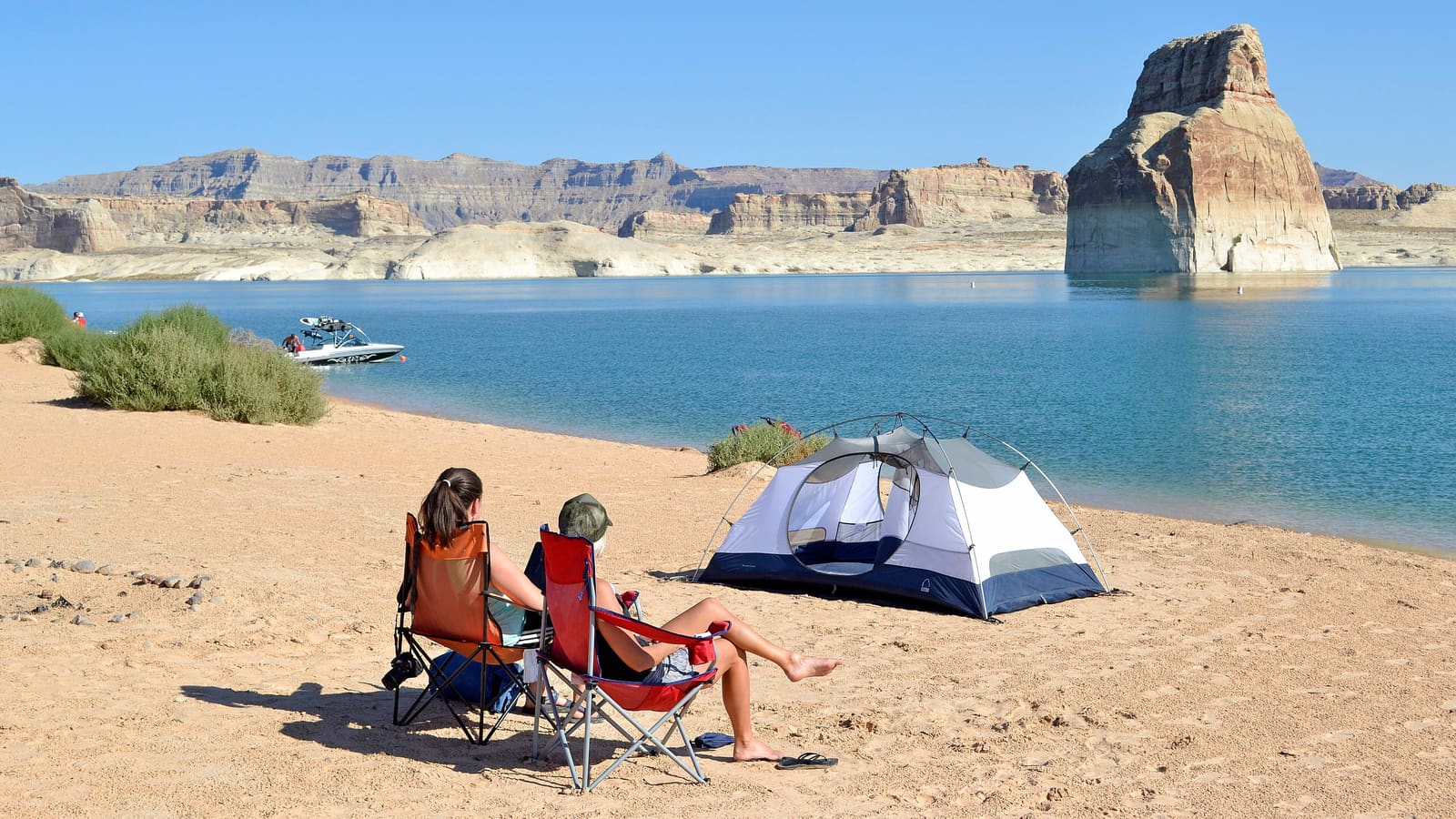
Lone Rock Beach takes its name from a large sandstone formation that rises out of the water near the shoreline, and it sits in the Wahweap area of Glen Canyon National Recreation Area, close to where Arizona meets Utah. Unlike most of the developed shoreline access points around Lake Powell, Lone Rock has no marked parking lot separating vehicles from the water -- the sand itself is the access road, the parking area, and the campground all at once.
That drive-on-the-sand character is what makes Lone Rock distinctive among Wahweap-area destinations. Visitors can pull a vehicle, and often a trailer or houseboat-support rig, close to the water's edge, set up camp, and launch small watercraft directly from the beach rather than a formal boat ramp. It is a popular option for anyone who wants informal, low-cost access to the lake without booking a marina slip.
Because the area is open and largely unstructured, conditions change with the season, the water level, and recent weather. What was firm, easy-to-drive sand on one visit can be soft and rutted on the next, so treat any prior trip report as a rough guide rather than a guarantee of current conditions.
Driving on the Sand: 2WD vs High-Clearance/4WD
The entry road and the beach itself are sand, and the sand's firmness varies a great deal by location and by how recently it has rained or been driven over. Near the entrance and along routes that see heavy traffic, the sand is often packed down enough for an ordinary two-wheel-drive car or a lower-clearance SUV to manage carefully. Further out, or after wet weather loosens the surface, the same vehicle can bog down quickly.
A high-clearance vehicle with four-wheel drive is the safer choice for anyone planning to camp overnight, tow a trailer, or drive beyond the first stretch of packed sand. Lower air pressure in the tires can help traction in soft sand, but that is a judgment call best made with local knowledge and a way to re-air the tires afterward -- if you are unfamiliar with sand driving, it is worth doing some reading or talking to NPS staff before attempting anything beyond the well-traveled entrance area.
Getting stuck is common enough at Lone Rock that it is worth planning for rather than treating as a remote possibility. Carry a shovel and traction boards or mats if you have them, and plan on self-rescue: the National Park Service states plainly that there is no guaranteed towing service if you get stuck in the sand. Driving slower and reading the sand ahead of you does more to prevent a stuck vehicle than trying to power through a soft patch.
Camping: Dispersed, Primitive, and Portable-Toilet Rules
Camping at Lone Rock is dispersed rather than assigned -- there are no individually marked, numbered sites the way there are at a typical developed campground. Campers choose a spot on the open sand, generally spacing themselves from neighboring groups, rather than checking in to a specific site number. This is closer in spirit to our broader Lake Powell camping guide than to a reserved-site campground.
Facilities are primitive by design. Per NPS, vault toilets are available year-round, and there is a flush toilet and an outdoor shower on the paved portion in summer, but no potable water, RV pumpout, or individual water/sewer/electric hookups at a campsite. Some form of portable-toilet or waste-disposal requirement typically applies to vessels and to camping in this kind of open, dispersed area, and generator and quiet hours are commonly enforced. Because specifics can change with the season and with NPS management decisions, confirm the current camping rules, any group-size limits, and waste-disposal requirements directly with Glen Canyon National Recreation Area before you set up.
A few rules are worth knowing before you arrive. Per the NPS, campfires are allowed in NPS-provided receptacles and along the shoreline below the high-water level of 3,700 feet, glass containers are not allowed, and fireworks are illegal; fire restrictions are a regular feature of hot, dry months and can be imposed any time of year. Lone Rock is also the only location within Glen Canyon National Recreation Area where non-street-legal vehicles may operate, and that ORV area is marked off by a post-and-cable barrier just south of the main access road -- worth knowing whether you came to ride or came to avoid the riding.
Shade is essentially nonexistent across the open sand, so most campers bring their own shelter, whether that is a vehicle awning, a pop-up canopy, or a trailer. Bringing more water than you expect to need, along with a way to secure trash and food from wind and wildlife, makes a meaningful difference to how comfortable an overnight stay is.
Day Use vs Overnight, Fees, and Permits
Lone Rock Beach is managed by the National Park Service as part of Glen Canyon National Recreation Area, and it draws both day-use visitors, who come for a few hours on the water, and overnight campers who stay one or more nights on the sand. Both categories generally involve a fee, and the overnight camping fee is typically separate from and in addition to the standard park entrance fee.
Because dispersed camping does not use a reservation system tied to individual numbered sites, availability is generally handled on a first-come basis rather than through advance booking, though this can change with park management decisions, especially during peak holiday weekends when the area fills up. An annual pass covering Glen Canyon NRA may apply toward the entrance portion of the fee, but the specifics of what a pass covers versus what requires a separate camping fee are set by the NPS and worth confirming directly.
Do not rely on older trip reports or third-party sites for current pricing, hours, or whether the beach is temporarily closed due to water levels or maintenance. Check the current NPS Glen Canyon fee and camping information before you go, and note that Lone Rock's access road and beach conditions have been closed or restricted in the past due to water level changes on Lake Powell.
Safety: Soft Sand, Sudden Weather, and Water Safety
Beyond the risk of a stuck vehicle covered above, Lone Rock's biggest safety consideration is how quickly conditions on an open lake can change. Wind can pick up with little warning on Lake Powell, turning calm water choppy within minutes, which matters for anyone launching a small boat, kayak, or paddleboard directly from the beach. Check a short-range forecast before heading out on the water and keep an eye on the sky, since storms visible in the distance can arrive faster than they appear to be moving.
One water-safety rule here is a requirement, not a suggestion. The National Park Service states that all humans 12 years old and younger must wear a lifejacket while at a marina, on a vessel, or in the waters of Lake Powell, and it highly recommends keeping that lifejacket on when playing on a beach. Beyond that, boaters must follow both federal and state regulations, and because Lake Powell straddles Arizona and Utah the state rules are not identical -- confirm the current requirements with Arizona Game and Fish or the Utah Division of Natural Resources for the side you are boating on. There are no lifeguards at Lone Rock or anywhere on Lake Powell, so supervision is entirely on the people in your group, and swim areas here are not marked or roped off the way a developed beach might be.
Because Lone Rock lets you keep a boat in the water right next to your campsite, carbon monoxide deserves specific attention. The National Park Service warns not to let people congregate around engines or the backs of vessels while engines or generators are running: on boats that vent exhaust out the back, this deadly gas collects under the swim step and in the spaces beneath the vessel, and it remains there long after the engine has been shut down. Do not let anyone swim or play under a swim step or under a boat, and use carbon monoxide detectors. The same logic applies on the sand -- never run a generator next to a tent opening or inside an enclosed camper or vehicle.
Heat is a serious factor for anyone camping through the day, since there is little to no natural shade across the sand and reflected heat and glare add to the exposure. Bring more water than you think you'll need, especially in the warmer months, and plan strenuous activity like setting up camp for the early morning or evening rather than the middle of a hot afternoon.
How Lone Rock Fits a Wider Lake Powell Trip
Lone Rock's location near Wahweap puts it within easy reach of Page, AZ, and the main marina and boat-launch infrastructure on the Arizona side of the lake, which makes it a practical base for a trip that mixes primitive camping with time on the water. If you are pairing a Lone Rock stay with boat rental, launch logistics, or marina services, our Wahweap Marina guide covers what is available nearby.
Because Lone Rock is a fully exposed, no-shade environment, timing matters more here than at a shaded or developed campground. Spring and fall tend to offer the most comfortable balance of temperature and crowd levels, while summer brings the most demand for water access alongside the most intense heat. Our best time to visit Lake Powell guide breaks down how the seasons affect the whole region, not just Lone Rock specifically.
If dispersed drive-on camping sounds like more than your group wants to take on, it is worth comparing it against the broader camping options covered in our Lake Powell camping guide, which includes more developed alternatives with defined sites and hookups for travelers who want fewer variables to manage.