Long Before Phoenix: The Hohokam and Their Canals
Centuries before Phoenix was founded, the Hohokam people built and maintained one of the most extensive irrigation canal systems in ancient North America across the Salt River Valley. Using hand tools and careful engineering, they dug canals that carried water from the Salt River out to fields across a wide stretch of desert, supporting a substantial farming population for generations. The Hohokam presence in the Valley spanned a long period before their canal-based settlements were largely abandoned, for reasons researchers still debate — prolonged drought and flooding cycles are among the leading explanations.
What matters for a modern visitor is that this history isn't just background — it directly shaped the city that came after. When American and other settlers arrived in the Salt River Valley in the 1860s, they didn't start from nothing; they found the remains of these ancient canals and rebuilt along many of the same routes, because the Hohokam had already solved the hardest part of farming the desert.
Founding a City on Old Foundations
The name "Phoenix" is often explained as a direct reference to this layered history — a new settlement rising, quite literally, out of the traces of a civilization that came before it. The area's early Anglo settlement in the late 1860s centered on reclaiming and extending those old canal alignments to irrigate farmland along the Salt River, and the townsite that grew up around that farming activity was incorporated as a city in the early 1880s.
Growth from there was steady rather than explosive at first. Phoenix became the Arizona Territory's capital in the late 1880s, a status it kept when Arizona became a state in 1912, cementing its role as the political and economic center of the territory-turned-state.
Growth Through the 20th Century
Phoenix's growth accelerated well beyond its original townsite footprint over the course of the 20th century. Agriculture, and later the arrival of air conditioning as a widely available technology, both played major roles — air conditioning in particular made year-round life in the Valley's extreme summer heat far more practical for large numbers of new residents, which helped fuel decades of rapid population growth from the mid-20th century onward. Federal investment during and after World War II, along with the rise of the aerospace and electronics industries in the Valley, added an economic base beyond farming.
By the second half of the 20th century, Phoenix had transformed from a mid-sized agricultural city into one of the largest cities in the country, with growth spreading outward into the surrounding Valley communities that make up the modern metro area.
Heritage Square and the Rosson House
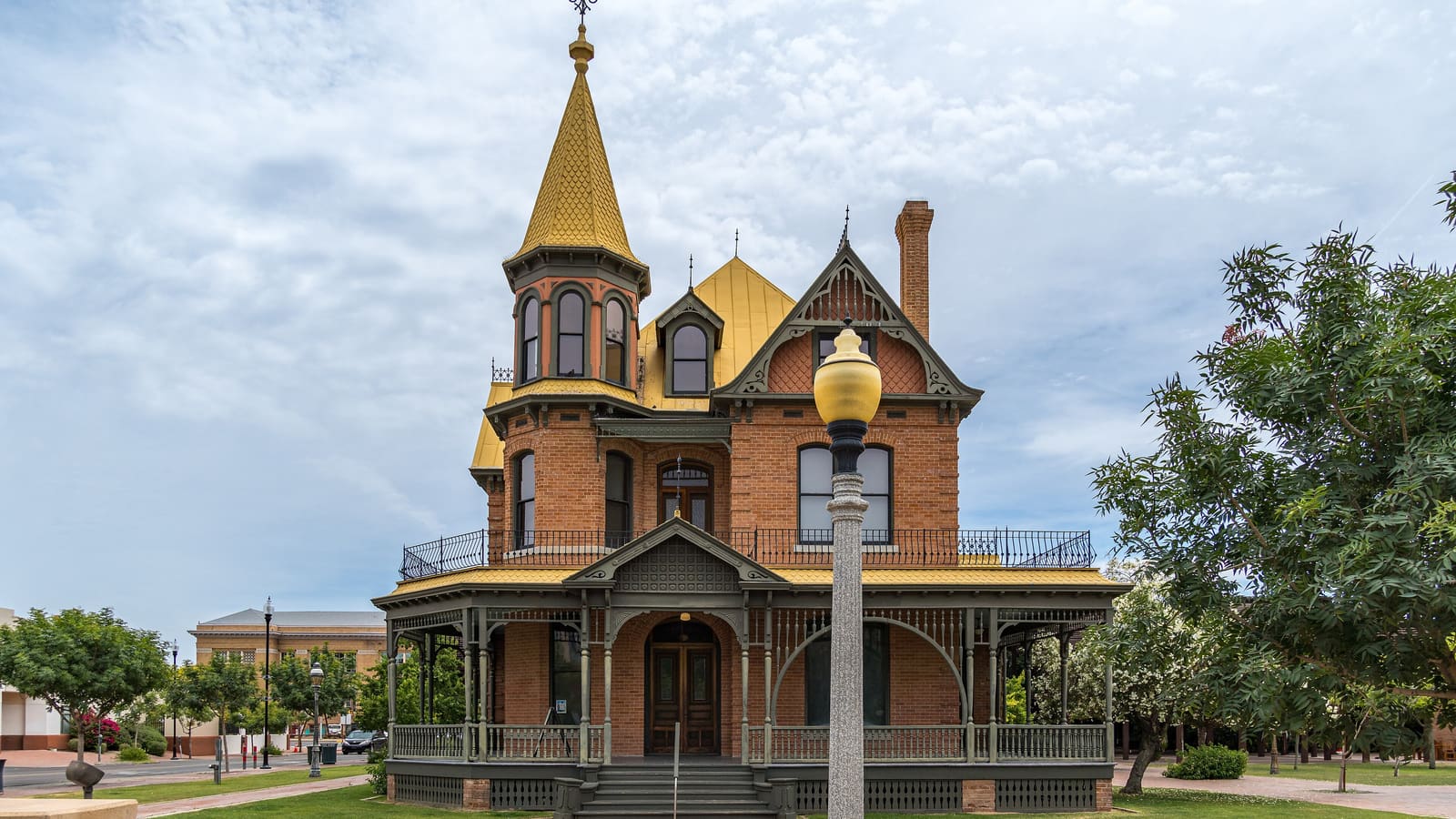
The clearest place to see Phoenix's early history today is Heritage Square, a block in downtown Phoenix that preserves several of the city's oldest surviving residential buildings from the original townsite era. Its centerpiece is the Rosson House, a Queen Anne Victorian home built in the 1890s and now restored and open for public tours — one of the few remaining structures that shows what a well-off Phoenix household looked like before the city grew into a major metro area.
Heritage Square is small enough to see in an hour or so, which makes it an easy add-on to a downtown day rather than a destination that needs a full afternoon on its own. Combine it with a stop at Phoenix's museums if you want a deeper dive into the city's history and culture beyond the square itself.
Other Historic Districts Worth Knowing
Beyond Heritage Square, several Phoenix neighborhoods carry their own layer of early-20th-century history in their architecture — bungalow districts and older residential pockets scattered through the central city that predate the Valley's postwar suburban expansion. These districts are less about a single landmark and more about a general feel: tree-lined streets and early-1900s home styles that stand in contrast to the newer construction that dominates most of the metro area today.
For getting between downtown's historic core and the rest of the city, our Getting Around Phoenix guide covers the light rail and driving basics that make a history-focused day workable without a rental car if you don't want one.