The Desert Climate, in Broad Strokes
Phoenix sits in the Sonoran Desert at a relatively low elevation, which means the two things that define most other places' weather — rain and humidity — barely factor into the picture here. The Valley gets very little annual rainfall, most of it concentrated into two short windows, and the air stays dry for the majority of the year. What actually swings from month to month is temperature, and it swings hard: a range of well over 40 degrees between the coolest winter mornings and the hottest summer afternoons is normal, not unusual.
That range is the whole story for trip planning. Phoenix doesn't really have "bad weather" days in the way a rainy or snowy climate does — it has a temperature dial that runs from comfortable to genuinely dangerous, and knowing where that dial sits during your travel dates matters more than checking a forecast for rain.
Winter (Roughly December Through February)
Winter is Phoenix's high season, and the weather explains why. Daytime highs typically sit in a comfortable, jacket-optional range, mornings and evenings can be genuinely cool, and outdoor activity — hiking, golf, patio dining — is available at any hour of the day without heat as a factor. It's also when the Valley's population swells with seasonal visitors escaping colder climates elsewhere, so expect the fullest hotels, restaurants, and trailheads of the year. For a deeper look at this season specifically, see our Visiting Phoenix in Winter guide.
Nights can still get cold enough to want a real jacket, especially in January, so don't assume "desert" means "warm after dark" — pack layers rather than summer clothing only.
Spring (Roughly March Through April)
Spring is when a lot of frequent visitors say the Valley is at its best. Daytime temperatures climb steadily but usually stay comfortable through most of March and into April, desert wildflowers can put on a real show in good rain years, and it's still cool enough for a full day of hiking without planning around a heat cutoff. This is also Cactus League spring training season, which adds its own crowds and its own reason to visit — see our Phoenix Spring Training Guide if that's part of your trip.
By late April, the shift toward summer is already noticeable. Afternoon highs start climbing out of the comfortable range, and by the very end of the month a hike that felt easy in March starts requiring an earlier start time.
Summer (Roughly May Through September)
This is the season that defines Phoenix's reputation, and for good reason — it's long, and the heat is real rather than a minor inconvenience. Afternoons from June through August routinely reach temperatures where extended time outdoors becomes a genuine safety concern, not just a comfort issue. Mornings, evenings, and air-conditioned indoor attractions become the default plan, and most outdoor activity gets compressed into the first couple of hours after sunrise.
Summer isn't a reason to skip Phoenix entirely — hotel rates typically drop, pools and water features become the main attraction rather than an afterthought, and the desert's summer sky and monsoon storms have their own appeal if you're prepared for the heat. Our Phoenix Summer Survival Guide covers exactly how to handle it day to day.
The Monsoon: A Summer Sub-Season of Its Own
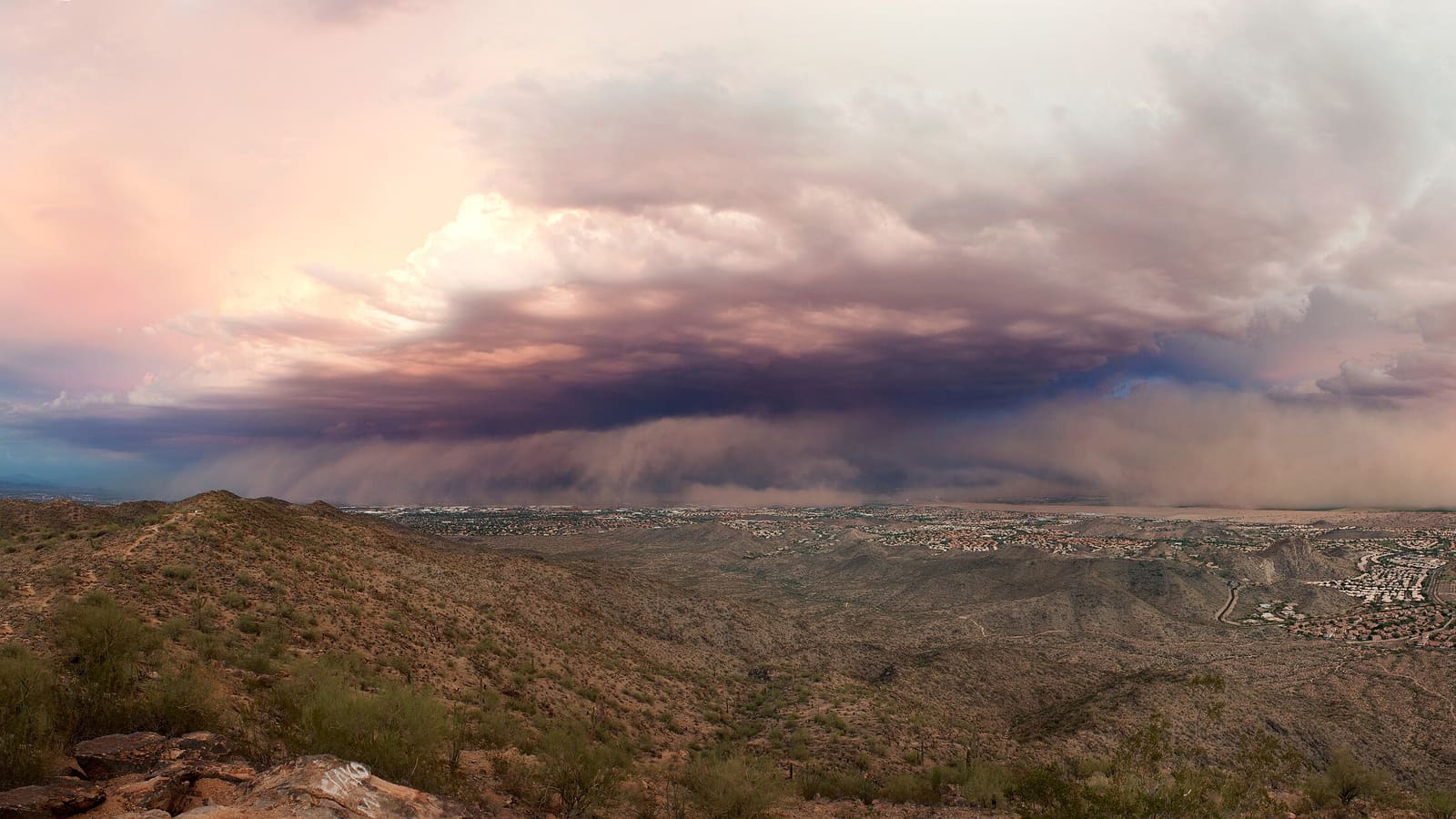
From June 15 through September 30 — the fixed calendar dates the National Weather Service uses for Arizona's monsoon season — the Valley gets its monsoon: a stretch of summer where humidity climbs and thunderstorms become possible, sometimes arriving suddenly with strong wind and dust. Storms are typically short and localized rather than steady all-day rain, but they can be intense while they last, and dust storms in particular can reduce visibility fast enough to matter if you're driving.
Monsoon weather doesn't cancel a summer trip, but it's worth checking the forecast day-of during these months rather than only the week before, since conditions can shift quickly.
Fall (Roughly October Through November)
Fall is the mirror of spring — a gradual cooldown from summer's peak heat back into comfortable territory. Early October can still run warm, closer to late summer than true fall, while by November the Valley has settled into the same mild range that carries through winter. It's a quieter season than winter or spring for tourism, which makes it a solid option if you want comfortable weather without winter's peak crowds and pricing.
Planning a Trip Around the Season
If flexibility allows it, spring and fall give you the best combination of comfortable temperatures and manageable crowds. Winter offers the mildest, most reliable weather but comes with the highest prices and busiest attractions. Summer is the value season and works well if you plan your days around the heat — mornings outdoors, afternoons indoors — rather than fighting it. Whatever season you land on, check Things to Do in Phoenix for activities that fit that time of year.