Not the Same Thing as the Train Ride
Most visitors hear about "the depot" in the context of boarding the Grand Canyon Railway, covered in full in our Grand Canyon Railway guide. The building itself is a separate subject worth its own visit: a piece of railroad-era architecture that predates Route 66 running through town, sits at the center of the historic downtown district, and doesn't require a train ticket to appreciate. This guide covers the depot and the adjoining Fray Marcos Hotel as a historic building, not as a transportation option.
Built in 1908 by the Railway and the Fred Harvey Company
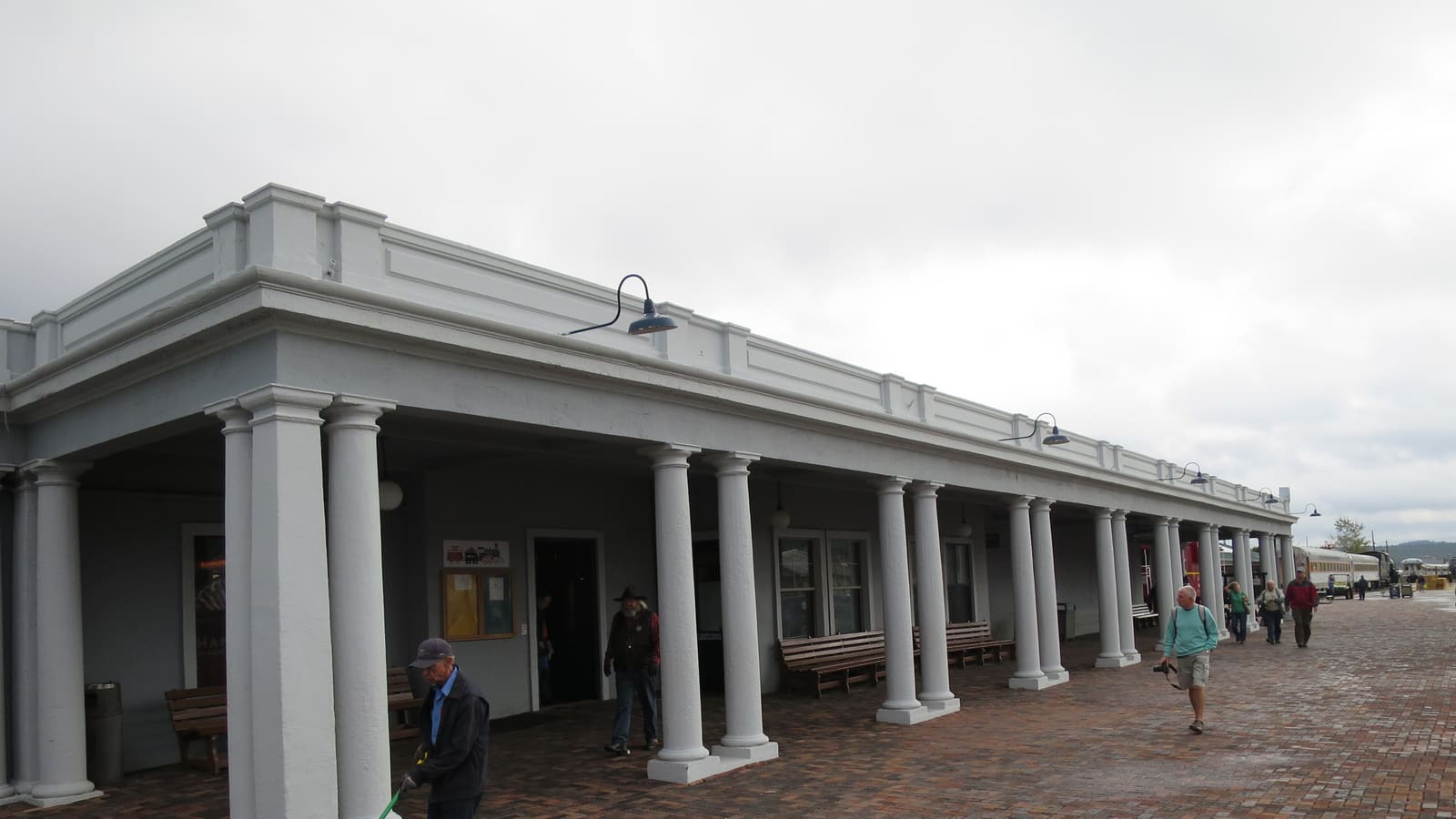
The Williams Depot and the adjoining Fray Marcos Hotel were built in 1908 by the Atchison, Topeka and Santa Fe Railway, with the hotel operated as one of the Fred Harvey Company's chain of Harvey House hotels serving rail passengers across the Southwest. The two structures were designed in the Mission Revival style, a look common to early-1900s Southwestern railroad architecture -- arched openings, stucco-finished walls, and a low, wide roofline. What sets the building apart structurally is its construction material: it was built almost entirely of poured concrete, making it one of the largest and oldest examples of poured-concrete construction anywhere in Arizona at the time it went up.
The Fray Marcos Hotel Today
The Fray Marcos no longer operates as a hotel -- it stopped lodging overnight guests some time ago -- and the building today houses the Grand Canyon Railway's ticket counter and gift shop instead. That's a practical detail worth knowing if you're expecting a working hotel lobby: what you'll find is a retail and ticketing space inside a century-old railroad building, which is a different experience but still lets you see the interior rather than only the exterior.
Added to the National Register of Historic Places in 1984
Both the depot and the Fray Marcos Hotel were added to the National Register of Historic Places in 1984 -- the same year Williams lost its Route 66 through-traffic when the final stretch of I-40 bypassed the town. That timing is part of what makes the depot significant locally: it's a fixed point of continuity from the town's railroad-founding era straight through the highway era that came after it, covered in more depth in our Williams history guide.
What You Can See Without a Train Ticket
The depot grounds are open to walk, and vintage rolling stock is typically parked out front near the platform -- both free to view whether or not you're boarding that day's excursion. Combine a look at the depot with a walk through the rest of the historic downtown district, since the depot sits at one end of that same walkable core.
Visiting Tips
Depot-area access and what's parked out front can change with the train schedule and season, so treat any specific detail about equipment on display as something to confirm rather than count on. If your main interest is the building itself rather than riding the train, an early-morning or late-afternoon visit tends to mean fewer crowds around the platform, since most of the day's foot traffic clusters around scheduled departure and arrival times.