Quick Verdict
Tucson's photography draw comes down to two things: saguaro-forest desert right at the edge of the city, and genuinely dark skies protected by some of the strictest outdoor-lighting rules in the country. Gates Pass, a roadside overlook west of downtown, is the classic sunset shot and the easiest one to fit into a short visit. From there, Saguaro National Park's two districts, the twin-towered Mission San Xavier del Bac, and the desert-to-pines drive up Mount Lemmon each add a different kind of shot. None of these locations require special access or a paid photography permit for ordinary personal or hobbyist shooting, but several sit in real desert terrain with real heat, storm, and wildlife hazards -- worth reading the safety notes below before you plan a sunrise or sunset shoot around cliffs, washes, or canyon trails.
Gates Pass: Tucson's Classic Sunset Overlook
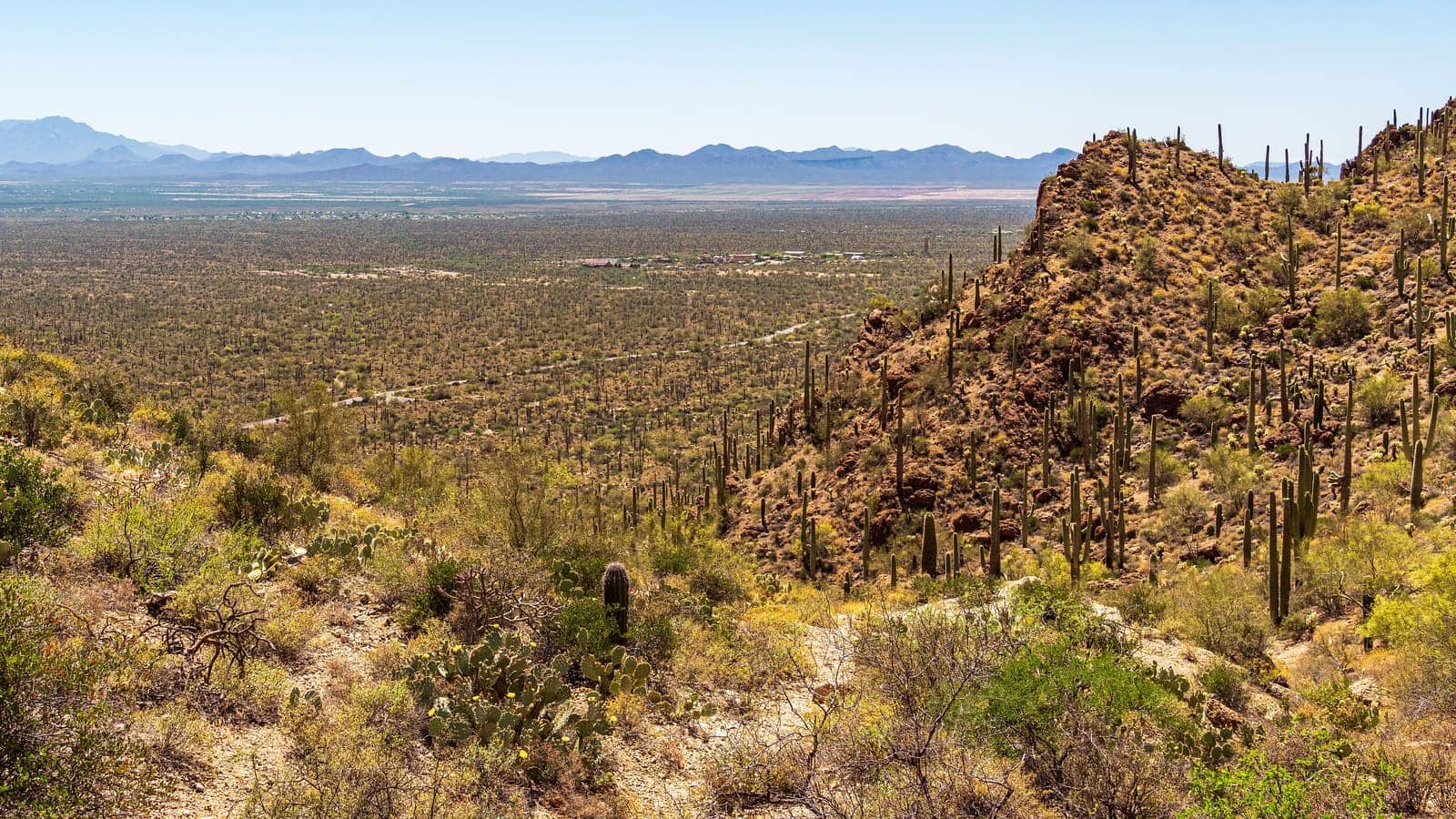
Gates Pass, a mountain pass on Gates Pass Road west of downtown, is the single most reached-for sunset photography spot around Tucson: a roadside overlook facing west across a saguaro-studded stretch of Tucson Mountain Park toward the sinking sun. It sits directly on the route between the city and both Saguaro National Park's west district and the Arizona-Sonora Desert Museum, which makes it easy to fold into a longer afternoon rather than a dedicated trip.
The overlook itself is a free roadside pullout rather than a ticketed site, and it gets genuinely crowded with other photographers in the final half hour before sunset on clear evenings -- arriving thirty to forty-five minutes early buys you a better spot along the railing and time to scout foreground saguaros before the light gets good.
Saguaro National Park: Two Districts, Two Different Shots
Saguaro National Park splits into two separate districts on opposite sides of Tucson, and they photograph differently. The west district (Tucson Mountain District), closer to Gates Pass, tends to read as denser saguaro forest with the Tucson Mountains behind it. The east district (Rincon Mountain District) backs up against the taller Rincon Mountains and includes the paved Cactus Forest Loop Drive, which gives easy pull-off access to open desert compositions without much hiking. See our full Saguaro National Park guide for current entrance fees, hours, and how the two districts compare in more detail.
Spring wildflower bloom (roughly March through April, though timing shifts year to year with rainfall) and the saguaro's own bloom season (generally May and into June) both add color and interest beyond the cactus silhouettes themselves, but bloom timing is genuinely weather-dependent -- check current park updates rather than planning a trip around a fixed calendar date.
Mission San Xavier del Bac
South of the city on the Tohono O'odham Nation, Mission San Xavier del Bac -- nicknamed the 'White Dove of the Desert' -- is a working Spanish colonial mission church and one of the more distinctive architectural photo subjects in the region. Its white stucco exterior and ornate facade stand out sharply against the desert around it, and one of its two bell towers was famously never finished, a detail long-time visitors and local guides point to and that's worth looking for when you're there. See our full mission guide for visiting etiquette -- it's an active parish, not a museum, so photograph respectfully, particularly during services.
Morning light tends to work best on the exterior, since the facade faces roughly east and can end up backlit and harsh later in the day.
Sabino Canyon and the Santa Catalina Foothills
Sabino Canyon, in the Santa Catalina foothills at the edge of the city, offers a different subject entirely: a shaded desert riparian corridor rather than open cactus forest, with creek-fed vegetation and canyon walls. Early morning is the best light window here, both for the canyon itself and because it's the coolest part of the day for the walk in. See our Sabino Canyon guide for how the shuttle and trail system work, and our best hikes near Tucson guide for nearby trails including the popular Seven Falls route.
Mount Lemmon: Desert to Pines in One Drive
The Catalina Highway climbs from Tucson's desert floor to pine forest at the top of Mount Lemmon in roughly the ecological equivalent of driving from Mexico to Canada, and that transition is itself a photographic subject -- saguaros give way to oak, then pine, over the course of one drive. Winter can bring snow to the summit while the desert below stays warm, which is a genuinely striking contrast shot when conditions line up. See our Mount Lemmon scenic drive guide for how to time the climb and what to expect at the top.
Night Skies and Tucson's Dark-Sky Status
Tucson is the birthplace of the modern dark-sky movement -- the International Dark-Sky Association (now DarkSky International) was founded there in 1988 -- and the city and Pima County maintain outdoor-lighting ordinances specifically to protect dark night skies for both research observatories and ordinary stargazers, even though Tucson itself has not been certified by DarkSky International as an International Dark Sky Community (a distinction currently held by nearby communities such as Tubac, not Tucson). That makes Tucson a genuinely workable base for night-sky and Milky Way photography without driving hours into the wilderness, particularly from elevated, west-facing spots like Gates Pass or from Saguaro National Park's more open desert stretches on a clear, moonless night.
For a more structured astrophotography outing, Kitt Peak Observatory southwest of the city runs public evening programs -- check current program offerings and reservation requirements before you drive out, since availability changes by season.
Field Safety: Heat, Storms, and Snakes
Most of the spots on this list put you outdoors at sunrise or sunset, on desert trails or roadside overlooks, often during the two seasons with the most real hazard -- late spring heat and the summer monsoon. None of that should stop you; it should change how you plan the shoot.
Heat. In NOAA's 1991–2020 normals, Tucson International Airport averages a high of 101.2°F in June, 100.2°F in July, and about 68 days a year at or above 100°F. Saguaro National Park's guidance applies directly to any desert shoot: drink one quart of water per hour spent outside, and "avoid the intense heat during the hours of 10 am - 4 pm. Start early in the morning or close to sunset" -- which happens to line up with the best light anyway.
Monsoon storms and flash floods. If you're shooting between June 15 and September 30 (the National Weather Service's fixed monsoon window), remember that canyon and wash terrain floods fast. The NWS rule is Turn Around, Don't Drown: never drive or walk into a flooded wash, since as little as 12 inches of water can float a car or small SUV.
Lightning. The NWS is unambiguous on this: "NO PLACE outside is safe when thunderstorms are in the area." If you can hear thunder, you're close enough to be struck. Get into a substantial building or a hard-topped vehicle and stay there at least 30 minutes after the last thunder -- this matters most at exposed overlooks like Gates Pass and on Mount Lemmon's ridges, where afternoon storms build first.
Rattlesnakes. Arizona Game and Fish notes that in warm desert areas rattlesnakes are most active from March through October, which overlaps most of the best photography season. Watch where you place your hands and feet around rocks and brush while chasing a composition, and give any snake you see a wide berth. If someone is bitten, AZGFD's guidance is to stay calm, call 911 and get medical care without delay -- do not cut the wound, attempt to suck out venom, apply a tourniquet, or ice it.
Frequently Asked Questions
What is the best time of day to photograph Gates Pass? +
The final hour before sunset is the classic window, when the low sun backlights the saguaros along the ridge. It's also the most crowded time with other photographers, so arriving thirty to forty-five minutes early helps secure a good spot.
Do I need a permit to photograph in Saguaro National Park? +
Ordinary personal and hobbyist photography does not require a special permit -- standard park entrance fees apply instead. Commercial shoots involving crews, models, or equipment beyond a handheld camera typically do require a permit; check current National Park Service policy before planning anything beyond casual photography.
Is Mission San Xavier del Bac open to photographers? +
Yes, it's a working parish that welcomes respectful visitors, including photographers, outside of active services. Photograph considerately, especially indoors and during Mass, and see our mission guide for current visiting etiquette.
Is Tucson good for night sky and astrophotography? +
Yes. Tucson is the birthplace of the modern dark-sky movement -- the International Dark-Sky Association was founded there in 1988 -- and the city and Pima County enforce outdoor-lighting rules that keep skies genuinely dark close to the city, particularly from elevated, west-facing spots on a clear, moonless night, even though Tucson itself is not a certified International Dark Sky Community.
What's the best season for photographing saguaros in bloom? +
Saguaro blooms generally appear around May into June, and desert wildflowers more broadly tend to peak roughly March through April, though both are weather-dependent and shift year to year. Check current Saguaro National Park updates before timing a trip around bloom season.
Plan the Trip
Book a Tucson Base
Compare hotels near the Tucson Mountains or the Catalina foothills, close to the spots above.
Search Hotels on Expedia
Guided Options
Browse guided Tucson desert and stargazing tours to pair with your own shooting.
Browse Tours on Viator
The Lowdown Guide earns a commission on qualifying bookings at no additional cost to you. Details such as prices, hours, distances, and access rules change — always verify with official sources before you go.